
How do you get rid of radon gas in a basement?
RadonYou get rid of radon in a basement with an active sub-slab mitigation system: a pipe and a fan that pull the gas out from under your floor and vent it above the roofline before it reaches you. Test first to confirm you have a radon problem. A full system typically runs $900 to $6,000, and most homes land around $1,950 to $2,250, and a test runs $50, credited toward the job if you move ahead.
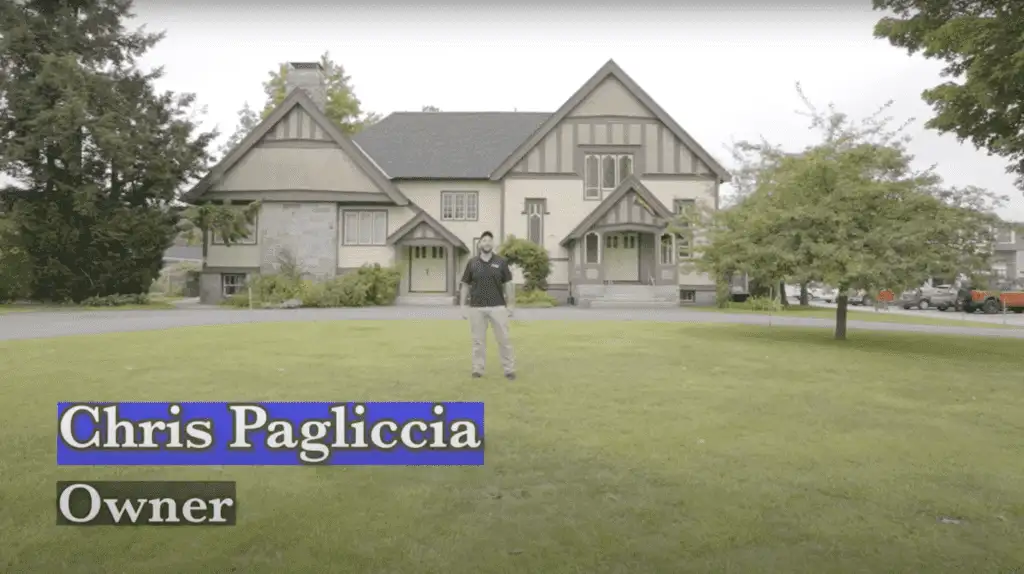
I’m Chris, and we install these all over New Hampshire, Maine, and Massachusetts. Here’s how it actually works.
Why it’s down there
Radon is a gas that seeps up out of the ground. You can’t see it or smell it. It works its way through the slab, through the floor wall joint, and any little gap, then it pools in your basement because that’s the lowest point in the house.
Opening windows or running a fan upstairs won’t fix it. The gas is coming from under your foundation, so that’s where you have to deal with it.
The actual fix
The fix is a pipe and a fan. Simple as that.
We seal the obvious openings in your slab first. Then we cut in a pipe, set a quiet fan, and run that pipe up and out so the gas vents above your roofline instead of sitting in your living space. That’s an active sub-slab depressurization system. The fan creates suction under the floor and pulls the radon out before it ever gets to you.
It’s a clean install. Usually one day.
If your basement is dirt or fieldstone instead of a poured slab, we do it a little differently. We lay a sealed barrier over the dirt and pull from under that. That’s a sub-membrane system. We install those too.
Test before you do anything
Don’t let anyone sell you a system before you have a number.
Step one is a radon test. The EPA action level is 4.0 pCi/L. At that number or above, you fix it. Between 2 and 4, the EPA says consider fixing it. Below 2, you’re fine and you don’t need us yet (EPA, epa.gov/radon).
A test is cheap. A radon test runs $50, credited toward the job if you move ahead, credited toward the job if you move ahead. NH DHHS has guidance on testing too, and your county may have low-cost test kits.
Get the number first. Then decide.
What drives the cost
A full mitigation system typically runs $900 to $6,000, and most homes land around $1,950 to $2,250. The price moves with the house.
Where the system can run matters. A short, simple path out is cheaper. A run that has to snake through finished space or around the house costs more.
What’s under your floor matters. A poured slab is straightforward. A dirt or fieldstone crawl needs that sub-membrane system, which is more work, so it runs a bit more.
How many spots we pull from matters. Some houses have a split slab or an addition with its own footing. That can mean a second suction point.
We give you the exact number after a free inspection, and you get the quote within 24 hours.
A little NH context
Our granite ground puts out a lot of radon. New Hampshire homes test high more often than a lot of the country. That’s just our geology. It doesn’t mean your house is unsafe. It means you should test, especially if you’ve got a basement bedroom or a finished lower level where people spend real time.
Our radon guy is Branden. We call him B-Radon. He’s state certified, and so are we (RMS-113966).
The system carries a 10-year warranty. One note on that. The warranty covers the system, not your radon level. We don’t guarantee a specific pCi/L reading unless we put that in writing. After we install, you retest on your own to confirm the drop. A working fan moves the gas out, and that’s what it’s built to do.
One more thing worth knowing. If you’ve got water issues down there too, a mitigation pipe and a wet floor don’t go well together long term. A damp basement and radon often show up in the same house. If that’s you, look at our basement waterproofing and crawl space services pages while you’re at it.
Every job we do is backed by the 603 guarantee. Read more on the radon side at our radon mitigation hub.
Ready when you are
Call us at 603-610-1770 or book your free inspection. Free estimate, quote within 24 hours, and we’ll tell you straight whether you even need a system yet!
Related questions
Can I get rid of radon myself without a system? Not reliably. Sealing cracks and ventilating help a little, but they won’t pull the gas out from under the slab. The EPA recommends a fan-based mitigation system to bring levels down and keep them down (EPA, epa.gov/radon).
How long does a radon mitigation install take? Usually one day for a standard sub-slab system. A dirt or fieldstone crawl that needs a sub-membrane barrier can take a bit longer because there’s more to seal.
Do you retest the radon level after install? No, that part’s on you. We install and warranty the system. You retest on your own to confirm the level dropped. A working fan moves the gas out.
Why does New Hampshire test high for radon? Our granite bedrock. It naturally releases more radon than softer ground in other parts of the country. That’s why testing matters here, especially in basement bedrooms (NH DHHS).
More questions like this
- What is the major source of radiation in our homes?
- What mask should I use to filter radon while installing a fan
- What should you do if you find radon in your home?
- What was your radon level before and after the mitigation system?
- Why are rain gutters sometimes used for radon mitigation systems?
- Why is radon more prominent in homes?
- Will portable home air cleaners reduce radon?
- Can asbestos block radon that’s outside? It is in my basement floor