
How much does a typical radon mitigation system cost?
RadonA typical radon mitigation system runs $900 to $6,000, and most homes land around $1,950 to $2,250. Most homes need one active sub-slab system. Bigger or trickier houses cost more.
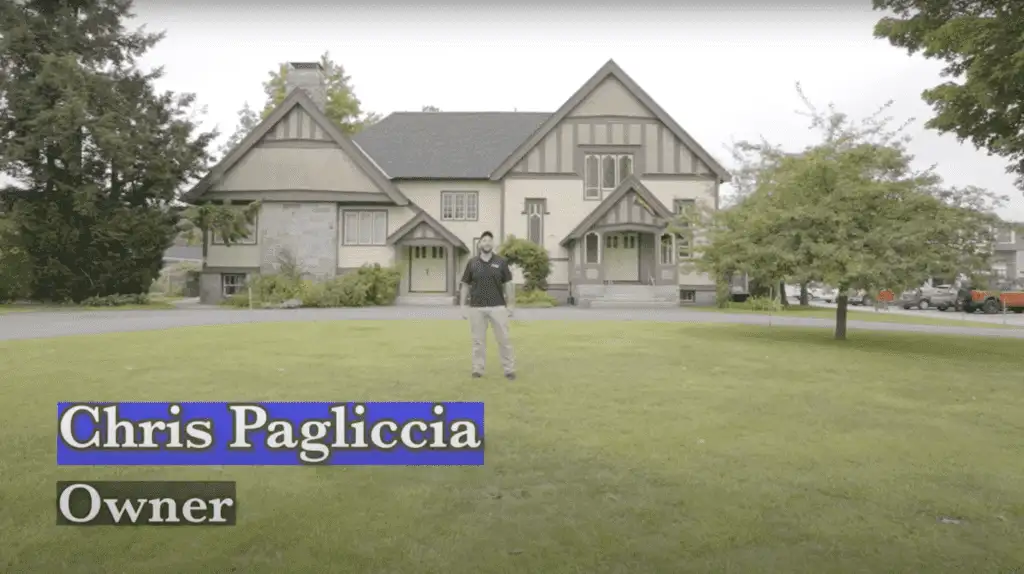
I’m Chris, and we install these all over New Hampshire, Maine, and Massachusetts. Let me walk you through what you’re paying for.
What you’re actually buying
Radon is a gas that seeps up out of the ground and into your basement. You can’t see it or smell it. The fix is a pipe and a fan.
We seal the obvious openings in your slab. Then we cut in a pipe, set a fan, and run that pipe up and out so the gas vents above your roofline instead of pooling in your living space. That’s an active sub-slab depressurization system. The fan pulls the gas out from under the floor before it ever gets to you.
It’s a clean install. Usually one day.
What drives the cost
The price moves with the house. Here’s what we look at.
Where the system can run. A short, simple path out is cheaper. A run that has to snake through finished space or around the house costs more.
What’s under your floor. A poured slab is straightforward. A dirt or fieldstone crawl space needs a sub-membrane system instead, where we lay a sealed barrier over the dirt and pull from under that. We do install those. They take more work, so they cost more.
How many spots we have to pull from. Some houses have a split slab or an addition with its own footing. That can mean a second suction point.
Your radon number. A higher starting level sometimes needs a stronger fan or a tighter seal. Not always, but sometimes.
So $900 to $6,000, and most homes land around $1,950 to $2,250 is the typical figure. We give you the exact number after a free inspection, and you get the quote within 24 hours.
When you actually need this
Test first. The EPA action level is 4.0 pCi/L. At that number or above, you fix it. Between 2 and 4, the EPA says consider fixing it. Below 2, you’re fine and you don’t need us yet.
If you’ve never tested, that’s step one. A test is cheap. A radon test runs $50, credited toward the job if you move ahead. NH DHHS has guidance on testing too, and your county may have low-cost test kits.
Don’t let anyone scare you into a system before you have a number. Get the number, then decide.
A little NH context
Our granite ground puts out a lot of radon. New Hampshire homes test high more often than a lot of the country. That’s just our geology. It doesn’t mean your house is unsafe. It means you should test, especially if you have a basement bedroom or a finished lower level where people spend time.
Our radon guy is Branden. We call him B-Radon. He’s state certified, and so are we (RMS-113966).
The system carries a 10-year warranty. One note on that: the warranty covers the system, not your radon level. We don’t guarantee a specific pCi/L reading unless we put that in writing. After we install, you retest on your own to confirm the drop. The fan does the work, and a working fan moves the gas out.
If you’ve got water issues down there too, a mitigation pipe and a wet floor don’t mix well long term. See our basement waterproofing and crawl space services pages. And every job we do is covered by the 603 guarantee.
Read more on the radon side at our radon mitigation hub.
Ready when you are
Call us at 603-610-1770 or book your free inspection. Free estimate, quote within 24 hours, and we’ll tell you if you even need a system yet.
Related questions
What’s the EPA radon action level? 4.0 pCi/L. At or above that, fix it. Between 2 and 4, the EPA says consider it. Below 2, you don’t need a system. Test before you do anything (EPA, epa.gov/radon).
Do you install radon systems for dirt or fieldstone crawl spaces? Yes. Those get a sub-membrane system. We lay a sealed barrier over the dirt and pull the gas from under it. It’s more work than a slab, so it runs a bit more.
Do you retest the radon level after install? No, that part’s on you. We install and warranty the system. You retest on your own to confirm the level dropped. A working fan moves the gas out.
Why does New Hampshire test high for radon? Our granite bedrock. It naturally releases more radon than softer ground in other parts of the country. That’s why testing matters here, especially in basement bedrooms (NH DHHS).
More questions like this
- Can asbestos block radon that’s outside? It is in my basement floor
- Can radon levels of 100 be mitigated effectively, and if so how much?
- Did you have radon mitigation done in your home? What things should you know first?
- Do ceiling fans reduce radon?
- Do radon mitigation systems decrease the value of your house?
- Does it matter if I test for radon in the summer or the winter
- How can airflow and HVAC systems affect radon levels throughout a house?
- How can I mitigate radon in an older house with no access to the crawl space?