
A Concord radon test tells you what is in the air; the house layout determines how to address it. 603 checks foundation zones, sumps, crawl areas, and the exterior route before pricing a system from $900 to $6,000.
Begin with a trustworthy measurement
Radon cannot be identified by smell, dampness, or the age of a basement. Testing is the starting point. We review where the device sat, how long it ran, and whether closed-house conditions were followed before treating the number as a design input.
The EPA action level is 4.0 pCi/L. A reading at or above that level calls for mitigation; results from 2.0 to 4.0 deserve consideration as well. After installation, another test confirms the actual result.
The slab is not always one zone
A Concord house may have an original basement, a later addition, a slab step, or a crawl section. Concrete that looks continuous from above may be divided below. We test pressure communication and plan suction points around those divisions rather than assuming a single hole reaches every area.
Cracks and utility penetrations are sealed as part of the pressure system, but surface sealing by itself is not radon mitigation. The fan creates the pressure difference that directs soil gas into the pipe before it reaches the living space.
Existing systems deserve a real check
A running fan does not prove an older system still works. We look at the manometer, pipe joints, fan noise, exterior termination, sump cover, and any changes made since installation. Finishing a basement, adding a slab, or replacing a furnace can change the conditions around a system.
If the fan has stopped, the right replacement depends on the pressure and flow the system needs. Installing a larger fan without measuring can add noise and energy use without fixing a poor suction layout.
Keep the route serviceable
The system monitor must remain visible. Sump lids need to open for pump service without destroying the seal. Fans and electrical connections should be reachable. Exterior pipe should clear windows and terminate above the roof edge. Good design includes the next inspection, not just installation day.
603 radon projects range from $900 to $6,000. A simple fan repair and a multi-zone system are different scopes. The proposal identifies the work and the 10-year system warranty in writing.
Bring these details to the inspection
- The radon report or monitor history, not only the highest number.
- The location of any sump, crawl section, addition, or sealed floor covering.
- Information about an existing fan or an old pipe that may be reused.
- Upcoming finishing or real-estate dates that affect access and testing.
Keep the system understandable
The homeowner should be able to identify the fan, manometer, suction pipe, sealed sump if present, and discharge point. Labels and a simple route explanation make future service faster. They also help a buyer or inspector distinguish an active system from an abandoned pipe.
Do not unplug the fan for noise, storage, or seasonal convenience. Radon mitigation is designed to run continuously. If the sound changes, the liquid columns in the manometer level out, or work is performed on the slab, arrange a check and retest rather than assuming the system still has the same pressure field.
How a 603 project moves from question to closeout
1. Establish the history
We ask you to describe the problem in plain language before showing us what someone else proposed. That gives the house a chance to speak for itself.
2. Inspect the connected area
The inspector checks the symptom, surrounding structure, moisture or pressure clues, and the route a crew would actually need. Constraints are documented early.
3. Put the scope in writing
A useful quote connects every charge to a task. Options are labeled as options, and a hidden unknown is not converted into a confident sales claim.
4. Confirm before work starts
Before tools start, the lead confirms the work area and any homeowner decisions. Progress is explained at natural checkpoints without turning the day into a presentation.
5. Walk through the result
The final review covers operation and warranty in the same language used in the proposal. Any recommended monitoring or testing is written down.
Three numbers belong in the file
Keep the pre-work radon result, the post-work result, and the normal manometer position after installation. Together they show why the system was installed, how the house responded, and what the operating indicator usually looks like.
Add the fan model, installation date, and pipe route photographs. That small record helps with service, future renovation, and a home sale. It is more useful than relying on a sticker that may fade or paperwork that never identifies the system.
Retest when the house changes
A completed radon system is designed for the house inspected. Major finishing, slab cutting, an addition, crawl-space work, or ventilation changes can alter air movement. Put a radon retest on the closeout list for those projects instead of assuming the earlier result transfers forever.
During ordinary ownership, a periodic measurement provides evidence that the system continues to manage indoor levels. Keep the exterior termination clear, do not enclose the fan inside conditioned space, and tell contractors what the pipe is before they relocate or disconnect it.
Opening windows does not remove the source
Ventilation can change a short test and may temporarily dilute indoor radon, but it is not a dependable mitigation system. Homes return to normal closed conditions, weather changes, and soil gas continues to enter. Active sub-slab or sub-membrane pressure control addresses the entry pathway continuously, and proper testing verifies the indoor result.
What a Concord radon visit cannot guarantee
Radon changes with weather, building operation, and measurement length. The estimate can define suction, sealing, routing, equipment, and testing, while the completed measurement shows the indoor concentration. We will not promise a number merely because a similar system worked elsewhere. The house provides the evidence, and any adjustment follows that result.
If a property transaction is involved, schedule enough time for closed-house test conditions, installation, and retesting. A calendar that allows one result and no correction window turns normal diagnostic work into avoidable closing pressure. Keep the laboratory or monitor report with the contract.
Concord is context, not a diagnosis
Concord's median housing unit dates to 1970 in the 2023 American Community Survey. The local mix is broad enough that we do not infer a foundation system from the neighborhood. We verify what supports the house and what has changed before proposing a repair.

What 603 work looks like
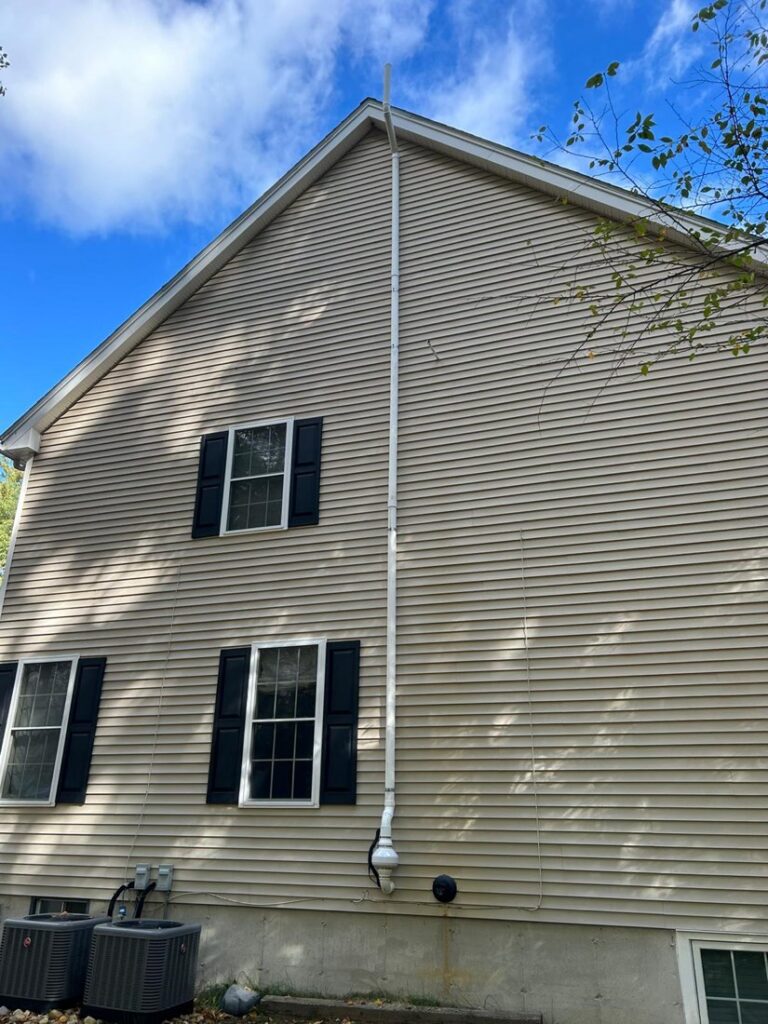
603's Concord radon scope includes a 10-year system-integrity and component warranty. Performance is demonstrated by testing, not inferred from the warranty.
What a customer said about this kind of work
Questions Concord homeowners ask
What radon level should a Concord homeowner act on?
EPA recommends fixing homes at 4.0 pCi/L or above and considering action between 2.0 and 4.0 pCi/L. Use a properly conducted test to guide the decision.
Does a running radon fan prove the level is low?
No. The fan and manometer show that the mechanical system is operating. Only an indoor radon test reports the concentration in the house.
Can 603 check an older mitigation system?
Yes. The inspection can review the fan, manometer, pipe joints, suction layout, sealed openings, and discharge before recommending repair or redesign.
Related help
See the full radon mitigation service, find every town on the service-area map, or read straight answers to basement questions.
Get a free inspection in Concord
We will look at the actual house, explain what needs attention and what does not, and give you a written estimate.
Housing-year reference: U.S. Census Bureau, 2023 ACS 5-year table B25035. Radon-level reference: U.S. EPA action guidance.
Common questions about radon
- How can airflow and HVAC systems affect radon levels throughout a house?
- How can I mitigate radon in an older house with no access to the crawl space?
- How do I test for radon in my basement to make sure the levels are safe?
- How do you get rid of radon gas in a basement?
- How much does a typical radon mitigation system cost?
- How much radon is dangerous if I’m going to live in the basement of a house?
- How quickly do radon levels change?
- I have a radon mitigation system that blows air out of my house. Is that normal?
- I sleep in the basement. Should I be scared of radon?
- If a basement’s concrete cracks, will radon get into the air inside the house?
- If our radon test came back above 12, will a mitigation system really get our home to a safe level?
- Is a bedroom average radon level of 2 pCi/L safe, or should I look into mitigation?