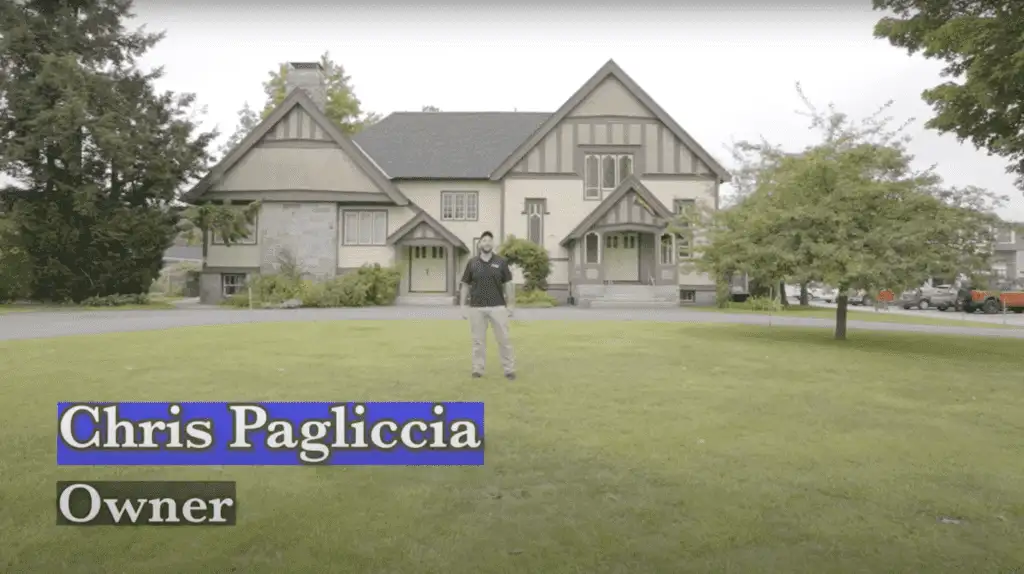

An Exeter radon system has to reach each foundation section and end in a safe, serviceable route. 603 measures before choosing suction points or a fan. Radon work typically costs $900 to $6,000.
Test the house you actually live in
A radon measurement is useful only when the test conditions are known. We review device placement, duration, windows, doors, and unusual weather or ventilation. If the basement configuration changed after an older test, a current measurement gives the system designer better information.
EPA’s action level is 4.0 pCi/L, with mitigation worth considering between 2.0 and 4.0. Radon varies, so the post-installation test is part of proving performance rather than an optional victory lap.
Treat every foundation section
An Exeter property may combine a basement, an addition on slab, and a crawl area. Soil gas does not care that those spaces were built in different years. We identify the boundaries and check pressure communication so the suction plan reaches each relevant section.
A crawl requires a sealed membrane connected to the mitigation system. An open sump needs a serviceable airtight cover. Slab cracks and penetrations are sealed where they undermine the pressure field, but sealant alone does not replace active suction.
Design around the exterior
The fan sits outside conditioned space. Pipe routing has to clear windows, doors, decks, walkways, and future service areas, then terminate safely above the roof edge. We discuss visibility and access during the estimate instead of moving the system into a poor location on installation day.
The route also affects noise. Pipe supports, fan selection, and distance from bedrooms all matter. A system should be measurable and maintainable without becoming the loudest equipment at the house.
Repair versus replace
If an existing system is present, we check its manometer, fan, joints, suction point, cover seals, and discharge. A stopped fan may be the only failure; a functioning fan attached to a poor layout may require a different solution. Measurements decide.
603 radon work ranges from $900 to $6,000 and carries a 10-year system warranty. The exact route and included sealing belong in the written proposal.
Have these ready
- Recent test results and any long-term monitor graph.
- The age and model of an existing fan if available.
- Locations of sumps, additions, crawl spaces, and floor drains.
- Real-estate or construction deadlines that affect closed-house testing.
What a customer said about this kind of work
Coordinate radon before finishing
If a basement renovation is coming, design the radon route first. New walls can hide cracks and sumps, change access to the suction point, and force pipe into a visible corner. A system installed before framing can be protected in the plan without burying its monitor or service joints.
Retest after major slab, foundation, or ventilation work. The original result proved the house under its earlier conditions. A new opening, sealed crawl, or altered heating system can change air movement. Testing is inexpensive evidence compared with assuming an old number still describes a remodeled space.
How a 603 project moves from question to closeout
1. Establish the history
We ask for the measurement history and planned changes to the house before deciding where work belongs. Future renovations can be relevant today.
2. Inspect the connected area
The inspection checks the actual foundation sections, penetrations, equipment, and exterior route. We look for conflicts that would make a standard layout inappropriate.
3. Put the scope in writing
The quote names the design and its assumptions in ordinary language. Electrical work, sealing, testing, permits, and repair of finishes are assigned explicitly.
4. Confirm before work starts
On the workday, the team walks the route once more and protects nearby surfaces. A field adjustment is explained with its reason and recorded.
5. Walk through the result
The system is demonstrated at handoff and the follow-up test is discussed. Warranty service is easier when the homeowner knows which indicator and records to keep.
Ask how the system will be retested
The quote should state who supplies the post-mitigation test, when it begins, and how results are delivered. If a real-estate closing is involved, leave enough time for installation, proper testing, and a correction if the first design needs adjustment.
A contractor should also explain what the manometer shows and what it does not. It indicates pressure in the pipe, not the radon concentration in the room. Only a radon measurement answers the indoor-air question.
Use testing, not reassurance
The system can look excellent and still needs a post-mitigation measurement. Run the test according to instructions and save the complete result. If the number remains elevated, the next conversation should focus on pressure communication and untreated foundation sections, not on whether the fan is visibly spinning.
Continue to test periodically and after meaningful building changes. A monitor alarm, flat manometer, damaged pipe, or silent fan deserves attention. Do not wait for a property transaction, when limited time can turn a straightforward service visit into a closing problem.
The manometer is not a radon detector
The liquid indicator shows that the fan is creating pressure in the pipe. It cannot report the radon concentration in the room. A normal manometer reading is useful operating evidence, but indoor performance must be measured with a radon test. Keeping both records prevents a working fan from being confused with a verified result.
What Exeter radon design still has to prove
Pressure testing guides the layout, but indoor testing after installation proves the result. Slab divisions or concealed footings can require adjustment. The 603 scope explains the planned system and how a correction would be handled; it does not substitute confidence for a measured post-work concentration.
Do not place a test beside the sump, directly under a supply register, or in another unusual location unless the test instructions call for it. Device placement should represent the lowest occupiable area. Record whether windows and exterior doors stayed closed, note unusual ventilation, and keep the exact start and stop times. Those details make a result more useful when the system is designed or checked later.
Exeter is context, not a diagnosis
Exeter's median housing year is 1978 in the 2023 American Community Survey. It is a reminder to inspect instead of guessing. Renovations, old drainage work, additions, and the way a basement has been used can matter more than the year on a tax record.

What 603 work looks like
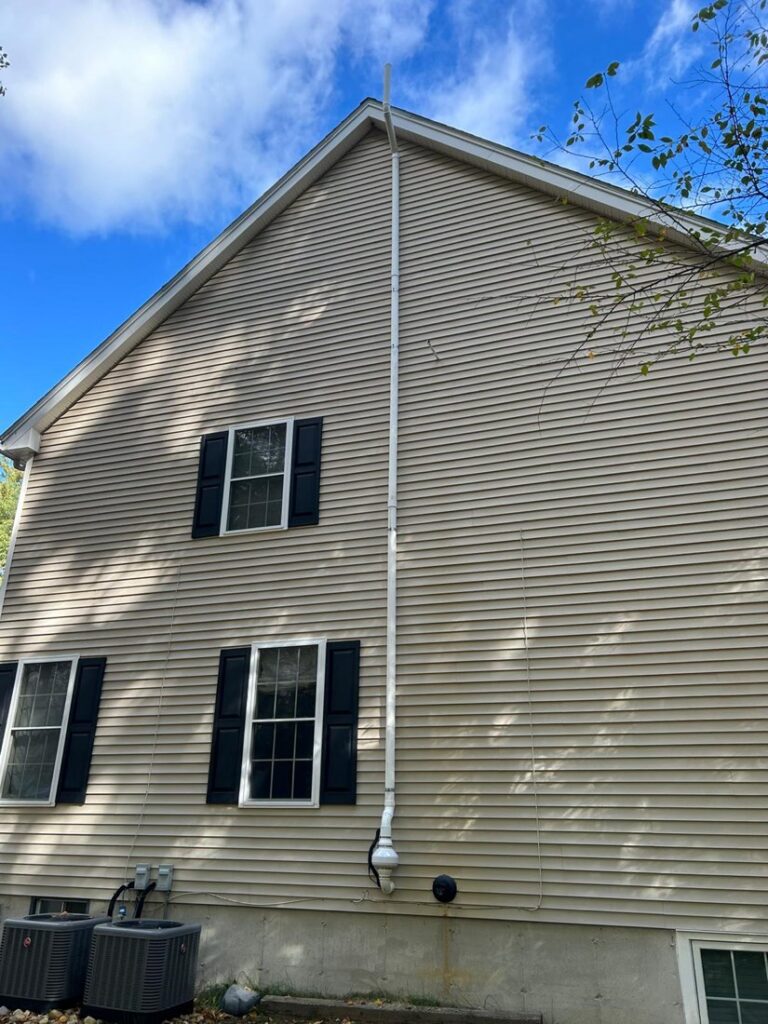
The Exeter radon system carries a 10-year integrity and component warranty. Follow-up measurement remains necessary because a warranty is not an indoor-air test.
Questions Exeter homeowners ask
Can an Exeter crawl space be part of a radon system?
Yes. A gas-tight membrane can be sealed over the soil and connected to active suction when the design includes that foundation section.
Why might a radon system need two suction points?
Separate slabs or poor pressure communication can leave one section untreated. Diagnostic measurement shows whether another connection is necessary.
What happens if my radon fan stops?
The manometer may flatten and indoor levels can rise. Leave the pipe intact, contact 603 for service, and retest after operation is restored.
Related help
See the full radon mitigation service, find every town on the service-area map, or read straight answers to basement questions.
Get a free inspection in Exeter
We will look at the actual house, explain what needs attention and what does not, and give you a written estimate.
Housing-year reference: U.S. Census Bureau, 2023 ACS 5-year table B25035. Radon-level reference: U.S. EPA action guidance.
Common questions about radon
- I sleep in the basement. Should I be scared of radon?
- If a basement’s concrete cracks, will radon get into the air inside the house?
- If our radon test came back above 12, will a mitigation system really get our home to a safe level?
- Is a bedroom average radon level of 2 pCi/L safe, or should I look into mitigation?
- My house’s radon mitigation system’s fan is getting louder. Is that a problem, and what should I do?
- My radon level in my living room is 3.0. How concerning is this?
- Radon was a big deal 30 years ago. Is it still something New England homeowners need to test for and fix?
- The radon test at the home we are buying came back high (6.8). Is it a dealbreaker, and can it be fixed?
- What are the potential risks of being exposed to high levels of radon?
- What are the signs of radon under a house, other than a high test result?
- What is a mitigation system for radon?
- What is a radon test?