
The repair for a Concord foundation crack depends on whether it leaks, moves, or belongs to a larger structural change. 603 measures the wall and separates sealing from stabilization. Typical crack repair costs $1,000 to $3,000.
Read the crack in context
A crack is an observation, not a complete diagnosis. We note its direction, width, displacement, moisture, location, and whether doors, floors, or nearby walls have changed. A thin vertical crack in poured concrete is a different decision from a horizontal opening in a block wall or a stair-step pattern through mortar joints.
Concord homeowners often want to know whether the mark can simply be sealed. Sometimes it can. The responsible answer comes after checking whether the wall is still in plane and whether loads are moving elsewhere.
Water repair and structural repair are different jobs
Polyurethane injection is used when the main problem is leakage through a stable poured-concrete crack. The material follows the opening and forms a flexible seal. Structural epoxy is selected when bonding the concrete is part of the repair. Neither product braces an inward-moving wall or supports a settling footing.
If movement is present, the scope may shift to carbon-fiber straps, steel bracing, a support wall, or piers. The visible crack may still be repaired, but it is no longer the first item in the sequence.
Monitoring gives you better information
If the inspection does not find urgent movement, simple documentation can be more useful than an immediate cosmetic patch. Take one wide photograph, one close view with a ruler, and add the date. Repeat from the same position after a season or a known weather event. Fresh dust, a broken paint bridge, or measurable widening is easier to discuss than memory.
Do not cover the area with framing before the decision is made. A finished surface can turn a straightforward recheck into demolition.
What the written scope should say
The proposal needs to identify the crack type, repair material, preparation, access, finish limits, and warranty. If stabilization is recommended, it should name the method and the area being treated. “Foundation repair” is not enough detail for a homeowner comparing bids.
Typical crack repair is $1,000 to $3,000. That range does not include structural stabilization disguised as crack sealing. 603 separates the two so the price matches the problem.
Before 603 arrives
- Leave the full crack visible from end to end.
- Gather older inspection reports or listing photos if they show the same wall.
- Note sticking doors, sloped floors, or new drywall cracks above the area.
- Tell us whether the opening leaks and what kind of weather triggers it.
What “watch it” should mean
Monitoring is a real recommendation only when the homeowner knows what to record and when to call again. We identify the points to photograph, a reasonable interval, and symptoms that should shorten that interval. A dated note is more reliable than drawing a thick line across the wall and hoping it tells the story.
Call sooner if the two sides shift out of plane, the opening changes quickly, water entry worsens, or related doors and floors begin to move. If the crack stays unchanged, that evidence is useful too. It can prevent a cosmetic mark from being sold as a major structural emergency.
How a 603 project moves from question to closeout
1. Establish the history
The appointment opens with the homeowner’s observations and any photos from the event. We preserve useful evidence instead of rushing to cover it.
2. Inspect the connected area
Inspection follows the path from symptom to likely source, including adjoining rooms, exterior endpoints, and systems that may interact with the repair.
3. Put the scope in writing
The resulting estimate gives quantities and locations where they matter. It also says what is not included, which is often the most valuable sentence in a contract.
4. Confirm before work starts
Crew members protect the route, review the day’s sequence, and keep the critical area visible until the relevant repair is complete. Cleanup is part of the plan.
5. Walk through the result
Closeout is practical: show the system, explain ordinary checks, document the work, and identify the condition that should trigger a service call.
Separate reassurance from evidence
A confident salesperson can still be wrong about a crack. Ask what was measured, whether the wall is displaced, which nearby symptoms were checked, and why the proposed material fits. If monitoring is recommended, ask what change should trigger another visit.
For structural work, ask what load or movement the repair is designed to address and whether engineering or permits apply. For injection, ask how the surface will be prepared and what the warranty actually covers. The explanation should survive after the appointment ends.
Keep the repaired crack readable
Photograph the completed area before shelving or finishes return. If the work was a leak repair, note the next substantial weather event and check the treated line. If the recommendation included structural monitoring, keep the agreed measurement points accessible.
A new crack somewhere else is not automatically a warranty failure at the treated area. Record its position and call for guidance. The documentation from the original inspection helps determine whether it is connected movement, an unrelated shrinkage mark, or simply something that was previously hidden.
Crack width is not the only decision
A narrow opening can leak badly, while an old wider mark may remain stable. Direction, displacement, location, wall shape, and change over time provide the missing context. Online rules that use one width as a universal boundary are too crude for a repair decision. Measurement is useful when it is combined with inspection of the wall and the loads around it.
When a Concord crack needs another professional
Some conditions call for engineering or a broader structural review before repair: material displacement, rapid change, multiple connected symptoms, or uncertainty about loads. 603 will explain what triggered that recommendation. A free inspection can organize the evidence and a likely path, but it should not be presented as stamped engineering when the project requires that discipline.
When you obtain a second opinion, give that inspector the same photos and history but ask for an independent read before sharing the first solution. Agreement on the condition is more meaningful when it is not produced by copying another bid.
Concord is context, not a diagnosis
Concord's median housing unit dates to 1970 in the 2023 American Community Survey. The local mix is broad enough that we do not infer a foundation system from the neighborhood. We verify what supports the house and what has changed before proposing a repair.

What 603 work looks like
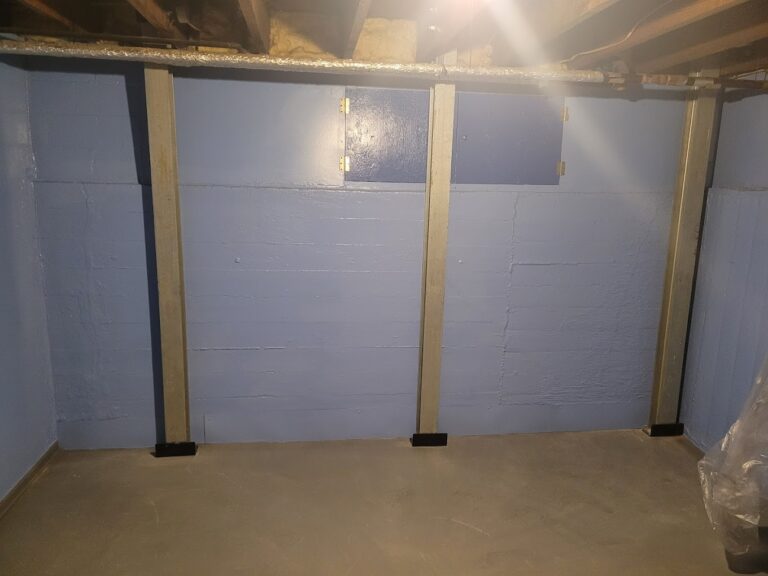
A non-structural polyurethane injection is warranted for 10 years against leakage through the treated area. Structural epoxy has a separate 10-year structural-bond warranty.
What a customer said about this kind of work
Questions Concord homeowners ask
Can a vertical crack in a Concord foundation be repaired from inside?
Often, when it is a stable poured-concrete crack and interior access is clear. The material and approach still depend on leakage, movement, prior patches, and wall condition.
What does a horizontal foundation crack suggest?
It can accompany inward wall movement, so 603 checks alignment and displacement before discussing a surface repair. The crack alone does not select the stabilization method.
Is monitoring a crack an acceptable plan?
Yes, when inspection finds no urgent condition and the homeowner has clear measurement points and follow-up triggers. Dated photographs make monitoring useful.
Related help
See the full foundation crack repair service, find every town on the service-area map, or read straight answers to basement questions.
Get a free inspection in Concord
We will look at the actual house, explain what needs attention and what does not, and give you a written estimate. When a crack appears with wall movement, a low floor, or a weak sill or column, the broader Concord foundation repair page explains the next inspection path.
Housing-year reference: U.S. Census Bureau, 2023 ACS 5-year table B25035.
Common questions about foundation cracks
- What are the reasons and purposes of underpinning service?
- What are the signs of an unstable foundation, and what damage may it cause?
- What can be done to fix a house’s foundation after it is built?
- What can cause a crack between staircase and its wall?
- What causes foundation cracks? Are they always indicative
- What causes horizontal cracks on basement walls?
- What causes vertical foundation cracks?
- What do you mean by honeycomb in concrete?
- What does a “slab” basement mean in a real estate context?
- What does it mean when people say a building is settling?
- What is a sill plate on a house and what is its purpose? How should it be repaired if it rots?
- What is foundation waterproofing?