
A radon result is a reason to design and test a mitigation system, not a reason to hide pipe in the first available corner. 603 plans the Portsmouth suction field and route, then provides a written estimate. Work ranges from $900 to $6,000.
A radon number needs a plan, not panic
A high test result tells you to investigate and mitigate; it does not tell you where the pipe should go. We review the test conditions, foundation footprint, slab divisions, crawl areas, sump openings, additions, and exterior route before choosing suction points. The aim is a system that lowers soil-gas pressure beneath the house and can be checked after installation.
EPA recommends action at 4.0 pCi/L and consideration between 2.0 and 4.0 pCi/L. A short-term result is useful for the first decision. A post-mitigation test is what shows how the completed system performs in that house.
Route the system as part of the building
Portsmouth homes can make pipe routing the hardest part of the job. The fan belongs outside conditioned space, the discharge needs to terminate safely above the roof edge, and the run cannot block a window, service panel, walkway, or future maintenance. We trace that route during the estimate rather than asking the installer to improvise beside the truck.
Inside, the pipe and suction point have to work with the actual slab. Additions and separated floor sections may not communicate beneath the concrete. A pressure-field test helps show whether one point reaches the needed area or another connection is required.
Open sumps and crawl sections matter
An uncovered sump is a direct opening to the soil. A radon plan may include a durable, serviceable lid that seals around pipes and wires. A dirt crawl section needs a gas-tight membrane connected to the suction system. Pulling on a slab while leaving a nearby soil floor open is an incomplete approach.
We also look for combustion appliances before a fan is selected. Depressurization work should not create a backdrafting problem. The inspection records the nearby equipment and the installer checks the completed arrangement.
What should appear in the proposal
A useful radon quote names the suction approach, fan location, interior and exterior pipe route, electrical responsibility, sealing included, system monitor, and post-work testing. If the layout may need a second point, that possibility should be discussed before installation.
603 radon work ranges from $900 to $6,000, with the house layout and number of suction zones driving the spread. The system carries a 10-year warranty on integrity and components. Radon levels are verified by testing, not promised by a slogan.
Get ready without disturbing the test
- Save the full test report, including start and stop times.
- Note additions, slab steps, crawl spaces, and sump locations.
- Keep normal closed-house test conditions if a measurement is still running.
- Point out bedrooms, patios, windows, and equipment near likely pipe routes.
What a customer said about this kind of work
Plan for the test after installation
The installation is not the finish line. We leave the system operating and provide the information needed for a follow-up radon measurement. The device should be placed in the lowest area that could be occupied and run under the test provider’s instructions. That result belongs with the home’s records.
A continuous monitor can show trends, but a single spike is not the same as a long-term average. Watch the pattern and the manometer rather than turning the fan off to see what happens. If the indicator changes or the fan becomes unusually loud, call before the next real-estate deadline forces a rushed decision.
How a 603 project moves from question to closeout
1. Establish the history
We begin by reading the test or symptom history with you, because a dry morning or one isolated number rarely explains the whole decision.
2. Inspect the connected area
The inspector then checks the building assembly, nearby equipment, and practical route for the proposed work. Measurements are tied to the condition they support.
3. Put the scope in writing
Your estimate separates required work from options and states who owns demolition, electrical, drainage, finish repair, and testing. Ambiguity is not a feature.
4. Confirm before work starts
On installation day, the team verifies the plan before opening concrete or bringing material through the house. The work area is protected and kept serviceable.
5. Walk through the result
The closeout explains what was installed, what to watch, and when a result needs testing rather than visual judgment. Questions after the crew leaves still deserve an answer.
Compare radon quotes by layout
One suction point is not a quality grade. It is right only if it creates the needed pressure field. Ask how the contractor checks communication beneath divided slabs, what happens at a crawl or sump, where the fan will sit, and where the pipe ends above the roof.
Confirm who provides electrical work and follow-up testing. Ask whether the monitor remains visible and how fan service works later. A tidy route with clear responsibilities is worth more than a quote that lists a fan model but says nothing about the house.
What to do after mitigation
Run the follow-up test while the system operates continuously and the house follows the test instructions. Save the report instead of only writing down its lowest reading. If a long-term monitor is used later, compare averages over similar periods rather than reacting to each hourly change.
Look at the manometer occasionally and listen for a change in fan sound. The two liquid levels should remain offset from each other at the normal operating position recorded during closeout. If they become equal, contact 603 and arrange a system check rather than turning the fan on and off.
A bigger fan is not automatically a better system
Radon performance depends on pressure beneath the foundation, not on fan size alone. An oversized fan attached to a poorly communicating slab can add sound and operating cost without reaching the missing zone. We use layout and measurement to choose the system. If one section remains outside the pressure field, the answer is to correct the design rather than sell horsepower as certainty.
What the Portsmouth radon estimate is promising
The estimate covers the design and installation described, not a guess about every condition beneath concrete. Diagnostic work reduces that uncertainty, and post-mitigation testing measures the outcome. If the initial pressure field does not reach a divided section, correction is based on measurement. That is different from offering an indoor-number guarantee before the system exists.
You can compare another contractor’s route against the same constraints. The winning bid should reach the required zones, preserve service access, terminate safely, and include a real follow-up test. Price without those four answers is not a complete comparison.
Portsmouth is context, not a diagnosis
Portsmouth's citywide median housing year is 1958 in the 2023 American Community Survey. That number cannot identify the foundation, floor, drainage, or previous repairs at one address. We confirm those details in the house.

What 603 work looks like
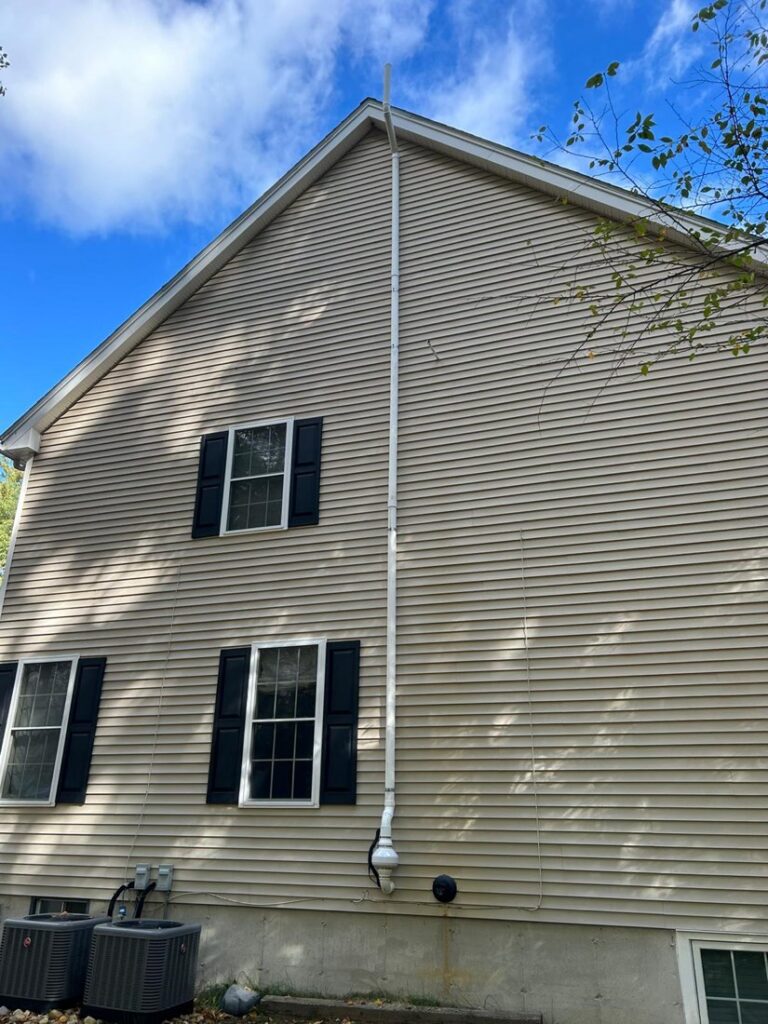
The Portsmouth proposal states a 10-year warranty for system integrity and components. It does not promise a particular radon level unless the signed writing specifically does so.
Questions Portsmouth homeowners ask
Where can a Portsmouth radon fan be installed?
The fan stays outside conditioned space. Its location depends on the suction route, windows, doors, decks, bedrooms, electrical access, and a safe discharge above the roof edge.
Is one suction point enough for my house?
Only pressure-field testing can answer that. Divided slabs, additions, and crawl areas may require another connection even when the basement appears continuous.
When should radon be retested after mitigation?
Follow the testing instructions after the system is operating, then test periodically and after substantial slab, foundation, crawl-space, or ventilation changes.
Related help
See the full radon mitigation service, find every town on the service-area map, or read straight answers to basement questions.
Get a free inspection in Portsmouth
We will look at the actual house, explain what needs attention and what does not, and give you a written estimate.
Housing-year reference: U.S. Census Bureau, 2023 ACS 5-year table B25035. Radon-level reference: U.S. EPA action guidance.
Common questions about radon
- Do radon mitigation systems decrease the value of your house?
- Does it matter if I test for radon in the summer or the winter
- How can airflow and HVAC systems affect radon levels throughout a house?
- How can I mitigate radon in an older house with no access to the crawl space?
- How do I test for radon in my basement to make sure the levels are safe?
- How do you get rid of radon gas in a basement?
- How much does a typical radon mitigation system cost?
- How much radon is dangerous if I’m going to live in the basement of a house?
- How quickly do radon levels change?
- I have a radon mitigation system that blows air out of my house. Is that normal?
- I sleep in the basement. Should I be scared of radon?
- If a basement’s concrete cracks, will radon get into the air inside the house?