
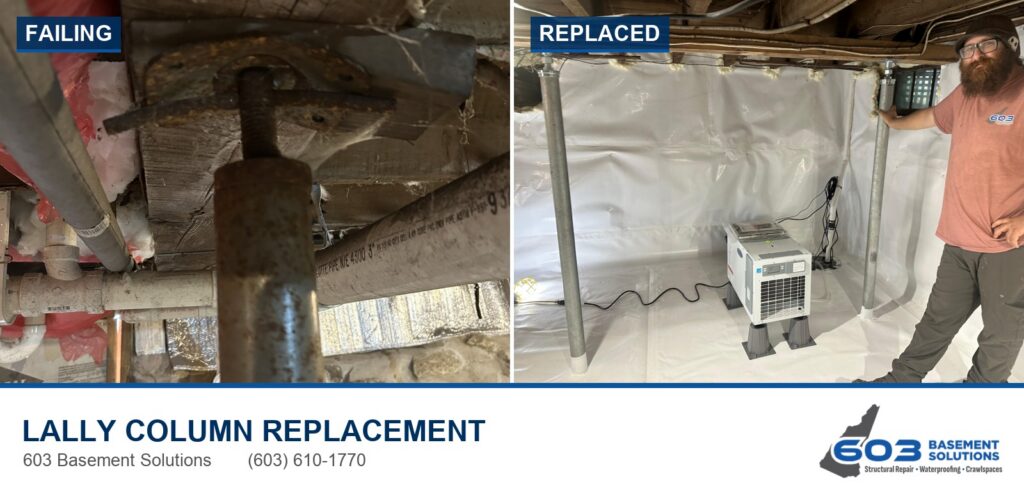
Replacing a lally column in New Hampshire typically costs about $1,300 to $2,500 per column, and 603 Basement Solutions backs the work with a 10-year floor-support warranty. A simple swap of a rusted post on a sound footing sits at the low end. Add a new or rebuilt footing, jackhammering through the slab, or a job in a tight finished basement, and you move toward the top of the range. The number is per column, so a house that needs two or three supports is two or three times that. Below is exactly what goes into the price, the warning signs that tell you a column needs attention, and the New Hampshire code and frost rules that a quote should already account for.
Lally column cost at a glance (603, NH Seacoast)
| Job | What it involves | Typical cost per column |
|---|---|---|
| Straight replacement | Swap a rusted or failing column on a sound existing footing | ~$1,300 |
| Replacement with footing work | New or enlarged concrete footing, slab jackhammered and re-poured | toward ~$2,500 |
| Tight or finished space | Limited access, finished ceiling or floor to work around | upper end of range |
Lally column replacement runs about $1,300 to $2,500 per column, with a 10-year floor-support warranty. Most homes need more than one. The only way to get your real number is an on-site look, but the factors below tell you where your job lands in that range.
What a lally column is and what it does
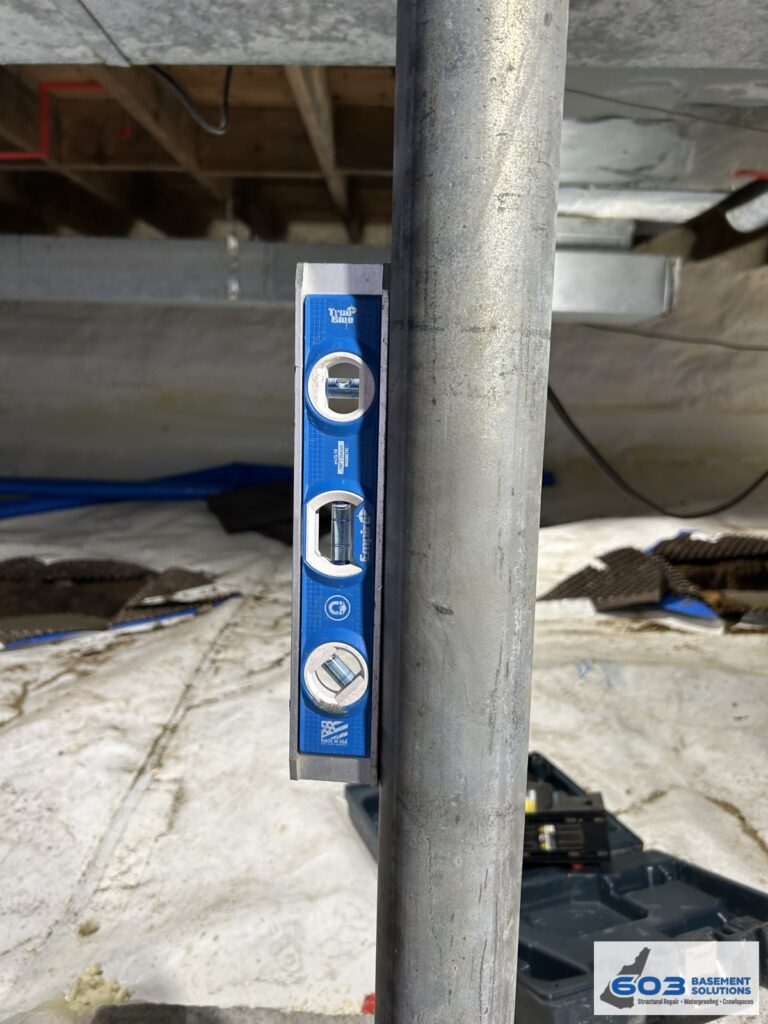
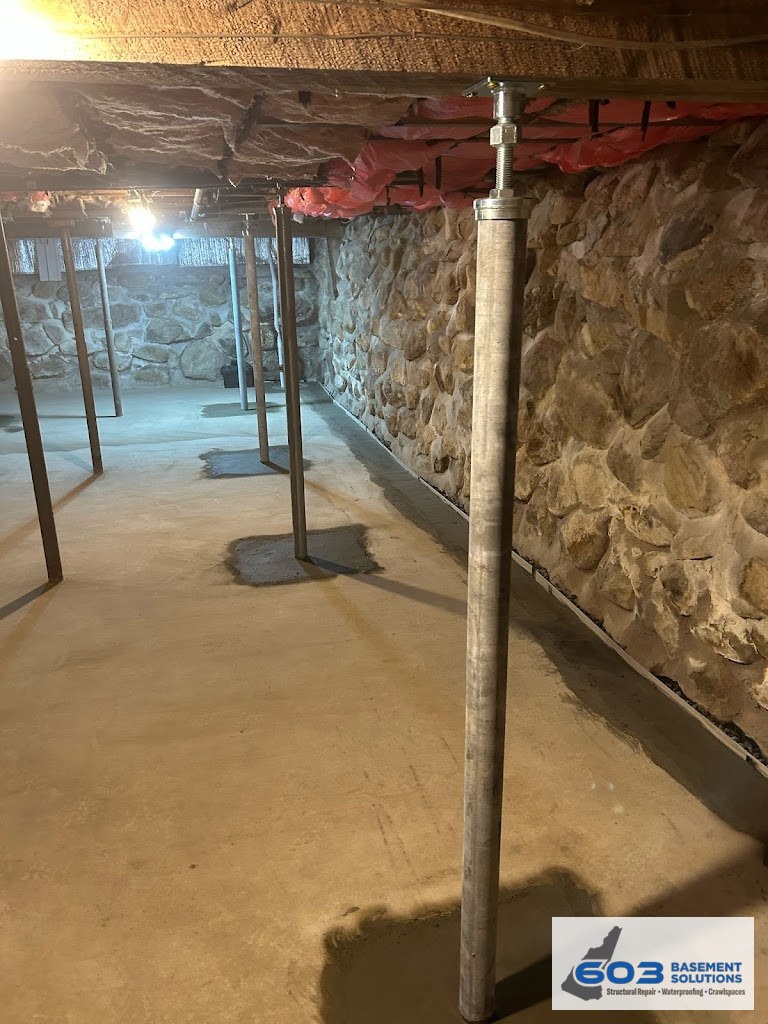
A lally column is a steel post, usually a round pipe filled with concrete, that carries the weight of a main beam (the girder) down to a footing in the basement floor. That beam holds up the floor joists above, so the column is part of the load path that keeps your first floor flat. New Hampshire’s adopted building code requires these steel columns to be at least 3-inch-diameter Schedule 40 pipe (ASTM A53 Grade B) and restrained against sideways movement at the bottom (IRC 2021, Section R407.3). That is the minimum a code-compliant replacement has to meet.
Homeowners run into lally columns most often when one starts to fail. In older Seacoast homes around Exeter, Kingston, Hampton, Stratham, Portsmouth, and Brentwood, decades of basement moisture take a toll on steel, and a column that was fine for forty years can rust through at the base where it meets the floor.
What a lally column replacement costs
Lally column work is priced per column, and the bid is built from a few clear pieces:
The column itself, on a sound footing. A straightforward replacement, where the existing concrete footing is solid and the crew is just removing a failed post and setting a new one, sits at the low end, around $1,300. This is the most common scenario.
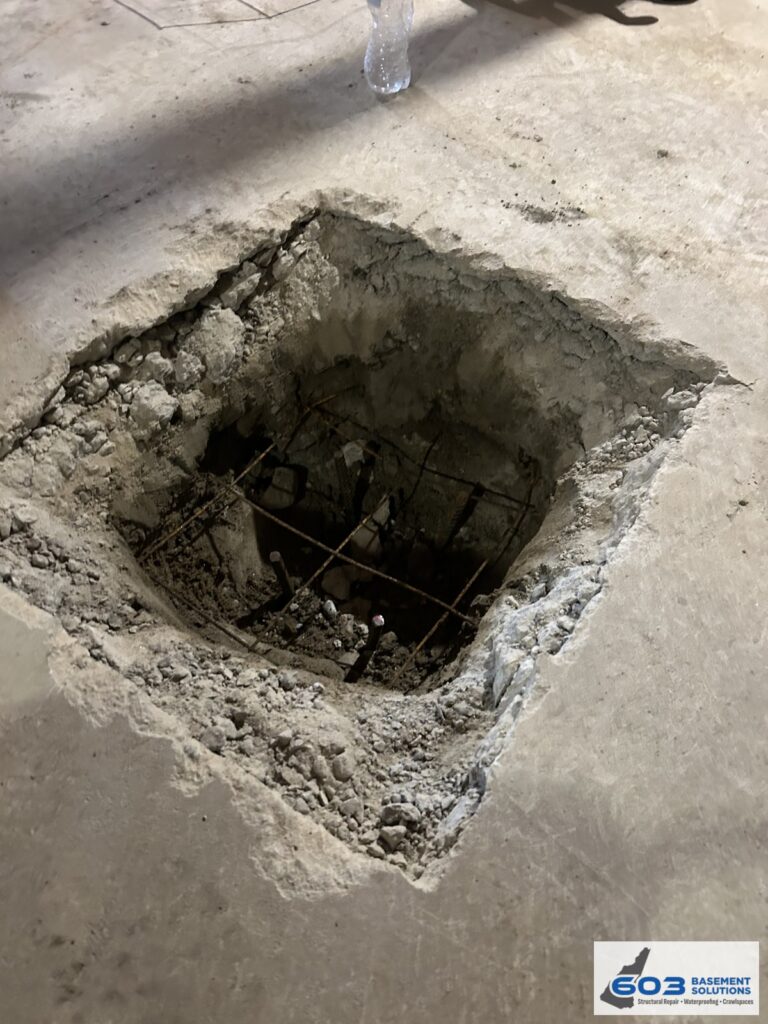
Footing work. If the existing footing is too small, cracked, or missing, the crew has to break out the slab, dig, and pour a proper footing before the new column goes in. That is the single biggest add-on and pushes the job toward the top of the range.
Access and finish. A column in an open, unfinished basement is quick. One behind a finished wall or under a finished ceiling means careful demo and restoration, which adds labor.
So a useful way to read your estimate is: (per-column price for each support) + any footing or slab work + access. Get those three right and you are within range.
Why the price is a range, not one number
You will see contractors quote a single flat figure for a lally column. Two columns in the same town can be priced very differently, because the column is cheap and the work around it is what costs money: the footing, the slab, how level the beam has to come back, and whether the basement is finished. A range of $1,300 to $2,500 per column reflects that real spread rather than a round sales number.
Warning signs your lally column needs attention
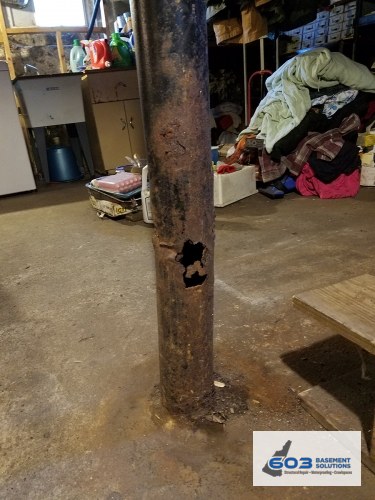
A failing column rarely announces itself. These are the signs homeowners in NH basements should not ignore:
- Rust or flaking at the base. The bottom of the column, where it meets the damp slab, is where steel corrodes first. Surface rust is a watch item; deep pitting or a column that has thinned out is a replace-now item.
- A leaning or out-of-plumb post. A column that is no longer vertical has shifted on its footing or is buckling under load. Lateral movement at the base is exactly what the code (R407.3) requires the column to be restrained against, so a leaning post is a real red flag.
- The footing is cracked or sinking. If the concrete pad under the column has cracked or settled, the column can drop with it, and replacing the post alone will not fix the problem.
- Sagging or bouncy floors above. When a column loses capacity, the beam it supports starts to drop, and you feel it as a dip, a slope, or a springy spot in the floor overhead. If you are seeing this, read our guide on what to do when your floors are uneven or sagging.
- Doors and windows on the first floor that suddenly stick. When the beam moves, the framing above it racks slightly, and openings stop closing square.
For a deeper look at how these columns fail and what the replacement involves, see failing lally columns: signs, risks and replacement cost.
The New Hampshire code and frost rules a quote should cover
This is where a local crew earns its keep, and where an out-of-state or generic quote can miss real costs.
Footing depth and frost. Under New Hampshire’s adopted residential code (IRC 2021, Section R403.1.4), footings have to sit at least 12 inches below undisturbed ground, and any footing exposed to frost has to extend below the local frost line and may not bear on frozen soil (R403.1.4.1). An interior basement lally column footing under a heated, slab-protected basement is generally shielded from frost, but the rule matters the moment a support is near an unheated area, a crawl space, an attached garage, or an exterior slab. Frost depth across New England commonly runs 4 to 5 feet (Team Engineering, regional reference), and the exact figure for your town is set by your local building official, so confirm it for your jurisdiction.
Footing size. The column is only as good as the pad under it. Industry practice for a basement lally footing is a thicker, wider pad than a typical floor slab so the load spreads into the soil, which is why “just the post” is the cheap scenario and “post plus footing” is the expensive one.
Permits and a structural engineer. Replacing a like-for-like column on a sound footing is often routine work. But once you are adding columns, changing the support layout, re-leveling a beam, or pouring new structural footings, your town may require a building permit, and a structural engineer may need to size the column and footing for the actual load. 603 handles permitting and brings in an engineer when the job calls for it, so the support is sized correctly and signed off, not guessed.
Why this is not a DIY job
A lally column carries part of your house. Set it on a footing that is too small, fail to restrain the base, or take the beam load down too fast, and you can crack the slab, drop the beam, or create a worse problem than the one you started with. The code requirements for column size, lateral restraint, and footing depth exist for a reason. A professional install puts the right column on the right footing, brings the floor back toward level in a controlled way, and leaves you with work that is permitted and warrantied rather than a temporary post you will pay to fix again.
What sets 603 apart on structural work
Most foundation companies sub out their structural and lifting work. 603 Basement Solutions self-performs helical and structural installs in-house. The crew that inspects your basement and quotes the lally column is the crew that does the work and stands behind the 10-year floor-support warranty, with no handoff and no second contractor in the middle. 603 is licensed and insured and has served the NH Seacoast since 2021.
Lally column replacement in NH Seacoast, southern Maine and northeastern MA
603 Basement Solutions replaces and installs lally columns from its base in East Kingston, NH, across the NH Seacoast and Rockingham County, southern Maine, and northeastern Massachusetts, including Exeter, Kingston, Hampton, Dover, Stratham, Portsmouth, Plaistow, Seabrook, and Brentwood. Replacement runs about $1,300 to $2,500 per column with a 10-year floor-support warranty, and the only way to get your exact number is a free on-site assessment where we check the column, the footing, and the beam it carries. Call (603) 610-1770 or request a visit below.
Get a free structural assessment →
See also: structural & foundation repair · failing lally columns · uneven or sagging floors · helical pier cost
Frequently asked questions
How much does it cost to replace a lally column in NH? Lally column replacement typically runs about $1,300 to $2,500 per column in the NH Seacoast, and 603 backs the work with a 10-year floor-support warranty. A straight swap on a sound footing sits near the low end; adding a new footing, jackhammering the slab, or working in a tight finished space moves it toward the top. Most homes need more than one column, so the total scales with the number of supports.
Why is there such a wide price range for a single column? Because the column itself is the cheap part. The cost is driven by the work around it: whether the existing footing is sound or has to be broken out and re-poured, how level the beam needs to come back, and how easy the column is to reach. A simple replacement and a replacement that needs a new footing in a finished basement are very different jobs.
Does replacing a lally column need a permit in New Hampshire? Often a like-for-like replacement on a sound footing is routine, but once you add columns, change the support layout, or pour new structural footings, your town may require a building permit and, in some cases, a structural engineer to size the support for the load. Permit triggers vary by NH town, so confirm with your local building department. 603 handles permitting and engineering when a job calls for it.
What are the signs that a lally column is failing? Rust or flaking at the base where the post meets the slab, a column that is leaning or out of plumb, a cracked or sinking footing, and sagging, sloping, or bouncy floors above. First-floor doors and windows that suddenly stick can also point to a beam that is dropping. Any of these is worth an inspection before the problem reaches the floor.
How deep does a lally column footing have to be in NH? Under New Hampshire’s adopted residential code (IRC 2021, R403.1.4), footings sit at least 12 inches below undisturbed ground, and any footing exposed to frost has to extend below the local frost line and cannot bear on frozen soil. Interior heated basements are generally protected from frost; supports near unheated areas, crawl spaces, or exterior slabs are where frost depth, commonly 4 to 5 feet in New England, comes into play. Your local building official sets the exact figure.
Can I replace a lally column myself? It is strongly discouraged. A lally column carries part of your home, and the code sets minimums for the steel size, the lateral restraint at the base, and the footing depth. An undersized footing or an uncontrolled load transfer can crack the slab or drop the beam, costing far more to fix than a professional install. 603 does the work to code, permitted where required, and warrantied for 10 years.
Does 603 sub out its structural work? No. 603 Basement Solutions self-performs its helical and structural installs in-house. The crew that inspects and quotes your lally column is the crew that does the work and stands behind the warranty, with no second contractor in the middle.
Bouncing or sagging floors anywhere in NH, MA or ME? We will tell you whether it is the column, the beam, or the footing under it.
Read about supplemental support and lally columns, compare the broader basement support beam replacement costs, or review the signs behind uneven or sagging floors.
Call 603-610-1770 or book your free inspection. Free estimate, written quote within 24 hours.