

Quick Answer
A sagging or uneven floor does not automatically mean the foundation is failing. The problem may sit in a joist, beam, sill, support column, footing, or the soil below the house. What matters is the pattern: where the floor changes, whether it is getting worse, and what the supports below it look like. 603 Basement Solutions follows that load path from the floor down before recommending a repair. If several rooms slope together, the floor feels soft, or doors have changed along with it, schedule an inspection.
What Uneven or Sagging Floors Look Like
Start with what your feet and eyes can tell you. One low board is a different problem from a whole room falling toward the same support line.
A low path across the room
The dip follows a beam or support line instead of one loose floorboard.
Bounce or softness
The floor moves under load, especially near a wall, beam, or long joist span.
A gap that changed
Trim, flooring, or a door opening has separated since you last checked it.
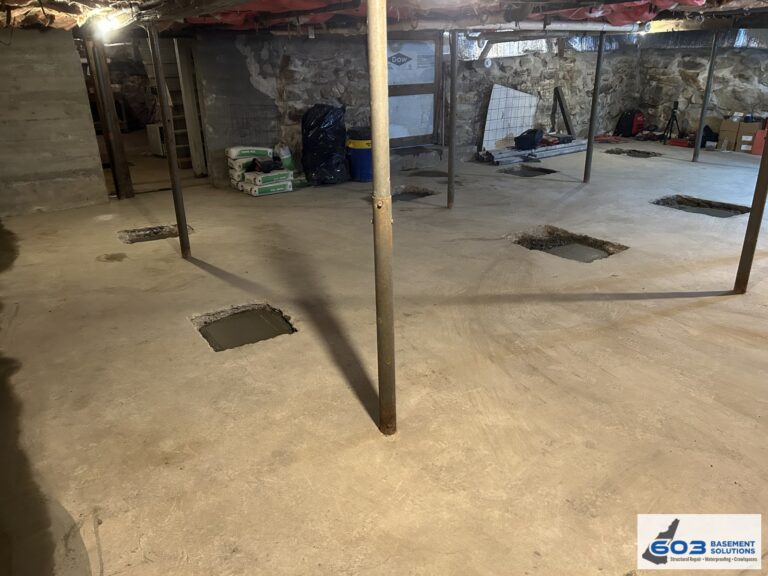
Damage below
A post is rusted, a sill is soft, or a beam shows splitting, rot, or an old cut.
How Serious Is This Problem?
The shape and history matter more than the fact that the floor is not perfectly level.
A small, unchanged slope in an older house with firm framing and no connected symptoms may only need a baseline and periodic recheck.
Book an inspection when the slope is new, the floor bounces, a support looks damaged, or several symptoms line up over the same area.
Move faster if a support has lost contact, wood is actively failing, the floor changes quickly, or the affected area feels unsafe to use.
Common Causes
A weak joist or beam
Long spans, old cuts, splitting, rot, or prior alterations can let the framing deflect.
A failing support column
A post may corrode, lean, sit on an inadequate base, or stop carrying the beam above it.
Sill or rim-joist deterioration
Moisture at the top of the foundation can damage the wood that transfers wall and floor loads.
Footing or foundation movement
The support may be sound while the bearing below it moves. That calls for a different repair.
When This May Not Be a Foundation Problem
- A loose finish floor, worn subfloor, or isolated joist can create a dip without foundation movement.
- Older houses are rarely laser-level. A stable slope may be history rather than an active failure.
- Seasonal humidity can change wood flooring and sticky doors. The broader pattern decides whether structure is involved.
How 603 Diagnoses the Problem
We do not start by choosing a jack or a pier. We start under the part of the floor that changed.
- Ask when the change appeared and whether it is still moving.
- Map the low, soft, or bouncy area upstairs.
- Inspect joists, beams, sills, columns, and the points where they meet.
- Check moisture and rot where wood bears on or near masonry.
- Follow each load to its footing or foundation support.
- Recommend monitoring or the narrowest repair that fits the evidence.
What the Pattern Can Point To
| What you see | What it can indicate | What 603 may inspect | Possible next step / repair path |
|---|---|---|---|
| One soft patch | Subfloor or isolated joist damage | The floor assembly directly below | Localized framing repair |
| A dip along a beam | Beam deflection or weak supports | Beam condition, columns, and footings | Beam or column work |
| Soft wood at the outside wall | Sill or rim deterioration | Moisture source and sound bearing | Sill or beam replacement |
| Several rooms slope toward one area | Support or foundation movement | Floor elevations and the full load path | Monitoring, support work, or piering |
Possible Repair Options
The weak point decides the work. These are the service owners for the framing, support, and foundation repairs that may follow.
Lally column replacement
A new column and suitable footing may fit when the beam needs a dependable interior support.
Sill or beam replacement
Damaged wood must be exposed and evaluated before a replacement plan is written.
Helical piers
Piers may fit when measurements connect the floor change to settlement at the foundation.
Structural and foundation repair
Use the main service owner when more than one part of the load path needs work.
What Happens If You Ignore It?
A stable old slope can stay stable. An active support problem usually does not repair itself. Continued movement can open trim gaps, change door operation, strain finishes, and move more load onto nearby framing. The sensible first step is a baseline. If the readings and condition stay put, monitoring may be the answer.
Real Experience with 603
Eric's review is a useful example of a floor symptom leading to support work. Your floor still needs its own diagnosis.
Questions Homeowners Ask
Do all sagging floors need to be jacked level?
No. The first job is to find the weak or moving part. Some floors need local framing or support work, while a stable old slope may only need monitoring.
Can a lally column fix a sagging floor?
It can when the beam needs a properly located support and footing. It will not repair rotten joists, a damaged sill, or foundation settlement somewhere else.
Will fixing floor joists level both floors of a house?
Only if the joists are the cause. A slope that continues through more than one level may point to a beam, support line, wall, or foundation below.
How quickly should a sagging floor be repaired?
Prompt review makes sense when movement is new, the floor feels unsafe, or a support has visibly failed. A stable condition can be measured first and scheduled from the findings.
Can moisture cause a floor to sag?
Yes. Moisture can damage joists, beams, sills, and the area where wood bears on masonry. The water source and the damaged structure both need attention.
Have the Floor and Supports Checked
We will map the low area, inspect below it, and tell you if monitoring or a focused repair is enough.