

Quick Answer
For structural foundation concerns, 603 Basement Solutions serves homeowners in Merrimac, Massachusetts for settlement, inward wall movement, uneven floors, failed columns, and damaged sills or beams. The measured condition may lead to pier support, wall stabilization, column or framing work, sill replacement, a crack-specific repair, or monitoring. 603 provides the inspection and written estimate at no cost.
Decide what needs repair now and what needs a baseline
Several symptoms can appear together without sharing one cause. We separate the urgent condition from evidence that should be measured and watched.
The result is a staged plan. Each phase needs a defined area, reason, outcome, and trigger for the next decision.
Merrimac housing context without the guesswork
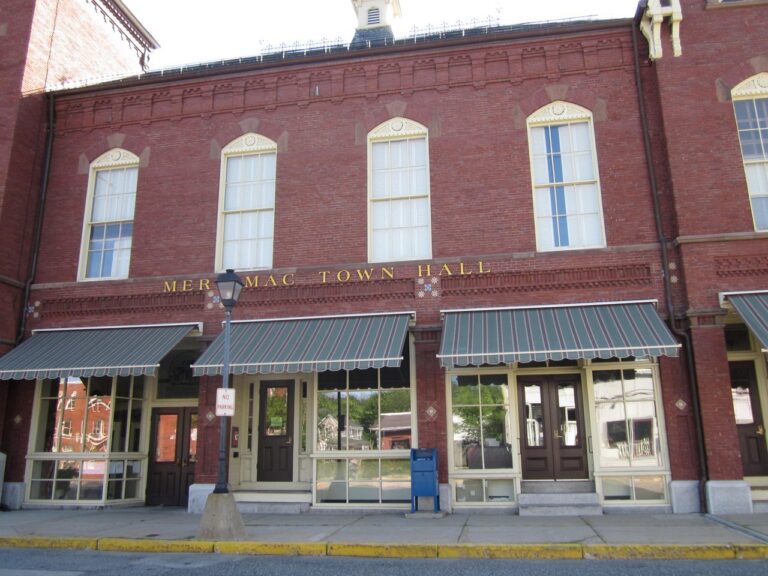
The 2023 American Community Survey places Merrimac’s median housing year at 1984. That townwide midpoint cannot date one foundation, addition, or alteration.
Bring records from the actual address. Earlier inspections, renovation photographs, and repair invoices can show when a condition first appeared.
Foundation Problems, Inspection Points, and Possible Repairs in Merrimac
| What you are seeing | What 603 inspects | Possible repair |
|---|---|---|
| A section of the foundation seems to have dropped | Follow the settled section from rooms above to its contact with the ground | Helical or push piers may be designed where competent bearing is needed |
| The wall leans toward the basement | Map the wall movement and inspect cracks, construction type, and outside conditions | Carbon fiber, steel bracing, or another designed system may apply |
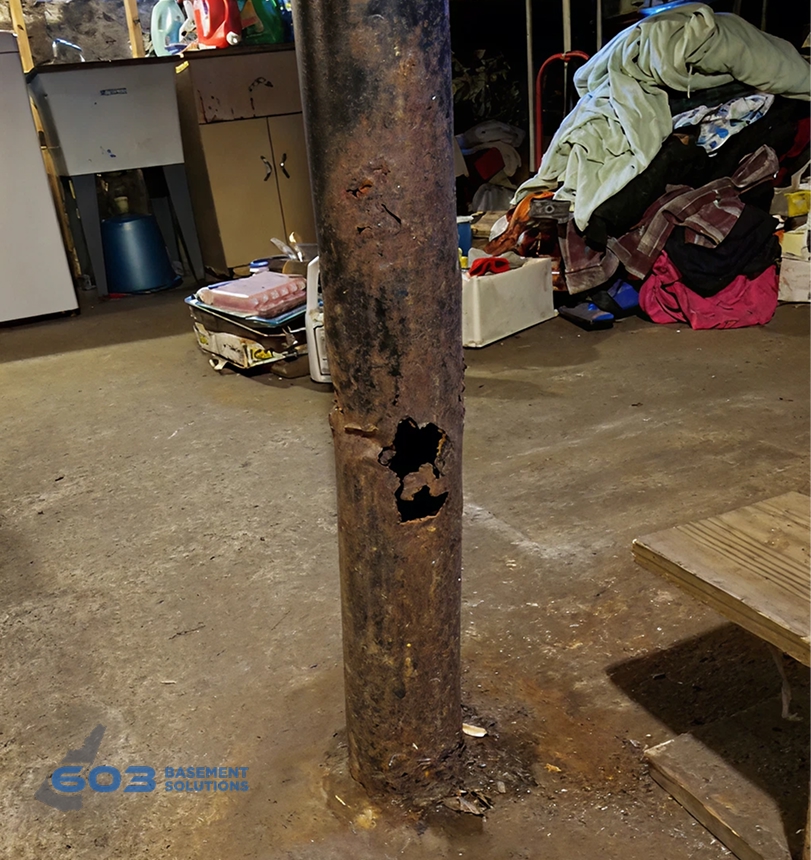
| A floor sags near a beam or interior post | Trace joists through beams, posts, connections, and supporting footings | The failed post or framing member can be corrected after loads are safely supported |
| One concrete opening leaks after rain | Read the pattern in context with the rest of the foundation and structure | Focused crack repair may fit after structural movement is ruled out |
603 confirms the failed component before pricing work at a Merrimac property.
Put the visible clue in the right lane
A crack has no earlier photograph
Create a fixed reference before deciding whether it is changing.
One floor line feels low
Trace joists, beam, posts, bases, and footings before adding support.
A wall moves at one end
Measure its full height and length, including restraint and openings.
Several repairs are proposed
Give each phase its own measurement and completion test.
Sort observations by decision
Mark repair, monitor, cosmetic, water-related, or outside scope beside every location.
A complete list prevents one visible crack from absorbing unrelated floor, wall, or drainage concerns.
Give monitoring a real trigger
Choose fixed points, a repeatable method, a date, and an amount of change that matters.
A note to keep an eye on it is not a plan. The next inspection should answer a named question.
Build phases around load paths
Finish urgent stabilization before work that could cover its connections or alter its measurements.
Later phases should refer to the same drawing. This keeps a future scope from starting with a new set of labels.
Run a five-minute triage before choosing a phase
Stand at the original concern and identify the connected wall, floor, beam, or footing. Add one wide photograph and one measurement.
Now list nearby observations that do not yet connect. Keep them visible without making them part of the first repair.
Choose the phase that protects safety and later evidence. Write why every deferred item can wait.
Price each phase against its own boundary
Separate installed units, access, temporary work, design, utilities, restoration, and monitoring. Keep future phases outside the signed total.
If a quantity remains unknown, state how the crew will measure it. Name who approves the final count.
A staged plan should not create surprise work. It should create smaller, understandable decisions.
Close the loop on monitored items
At every phase closeout, repeat nearby reference points and update their status. Record change, no change, or invalid reference.
Attach new photographs without overwriting the originals. Keep dates and measurement methods visible.
A monitored item leaves the list only after a documented decision.
Phase floor support from beam to bearing
Map the Merrimac floor grid, joists, beam, posts, bases, and footings before assigning the first support phase.
603’s lally columns run from $1,300 to $2,500 each. Separate beam work, footings, adjustment, and access. Treated support carries a 10-year settlement warranty.
Phase wall work around measured movement
Record wall shape, displacement, restraint, openings, and the exact treated length. Keep stable crack work outside this phase.
603 prices steel power braces at $1,300 each and carbon-fiber straps at $850. The marked stabilized section carries a 25-year warranty within written tolerances.
Phase pier work around the settling section
Connect Merrimac interior readings to the same exterior foundation section. Show brackets, access, quantity, and the target.
The first three 603 helical piers are $2,700 each, then $2,200 per additional pier. Engineered work carries a 25-year warranty. List restoration separately.
Use a phase cover sheet
Give each phase a treated area, starting evidence, repair outcome, price, owner, and completion test. Put future work below a separate heading.
List conditions that could change the order. A new measurement should reopen only the branch it affects.
Record why deferred work can wait. A planned pause needs evidence, not a blank date.
Keep later work from rewriting phase one
Use the same wall, beam, post, and corner labels through every phase. Do not rename locations when another contractor joins.
Attach change orders to the observation that caused them. Preserve the earlier record instead of replacing it.
At final closeout, assemble every phase in date order. The homeowner should see one structural history.
End every phase with a homeowner decision
Review what was treated, what remains, and which measurement would change the plan. Give the homeowner the current drawing.
Do not carry an unexplained open item into the next phase. Mark it as monitored, excluded, or assigned.
Set the next review date only when another reading will answer a useful question.
Give the next inspector a useful starting point
Leave one page with location labels, current readings, photographs, completed phases, monitored items, and future triggers.
Include measurement methods and original files. A later contractor should not need to recreate the timeline from invoices.
Mark unavailable evidence as unavailable. An honest gap is safer than a confident reconstruction.
List every finish or utility change completed between phases. These changes may alter access or reference surfaces.
Protect active measurement points during storage and cleaning. Replace a damaged label without moving the underlying point.
When the property changes hands, transfer the detailed packet with the summary. The evidence provides the limits that a summary cannot carry.
Merrimac inspection worksheet
- Label the Merrimac evidence. Number every wall, beam, post, crack, opening, and exterior corner.
- Assign one current decision. Mark repair, monitor, or unrelated beside each numbered item.
- Write the next trigger. State what measurement or observation would reopen a monitored condition.
- Close one phase at a time. Save quantities, photographs, readings, changes, and warranty before beginning another phase.
Merrimac foundation questions
Can a repair be split into phases?
Yes, when the order protects the structure and each phase has a clear boundary.
Does monitoring mean nothing is wrong?
No. It means another repeatable reading is needed before selecting work.
Should finishes wait?
They should not cover required connections, evidence, or access before closeout.
What if the crack is stable?
A stable opening may remain in the focused Foundation Crack Repair lane.
What 603 brings to the inspection
603 is licensed and insured, has worked in more than 5,000 homes, and self-performs helical-pier installation and structural lifting. The inspection and estimate are free. We normally send the written quote within 24 hours.
We will tell you when the house needs a smaller repair or a period of monitoring. If work is proposed, the scope should name the treated area, quantities, outcome, exclusions, and warranty.
Why Homeowners Choose 603 for Foundation Repair
The review and repair imagery below provide practical proof for a Merrimac homeowner deciding who should inspect the structure.
Get the Merrimac load path checked
We will measure the structure, explain the repair boundary, and give you a written scope you can compare.
Sources: U.S. Census Bureau, 2023 ACS 5-year table B25035. The city image caption links its Wikimedia Commons source and license. 603 supplied the confirmed service, pricing, warranty, and operating information. Work imagery shows a 603 repair method. See Structural and Foundation Repair or the Foundation Crack Repair service.