Movement may be involved
- A crack that is getting wider or longer
- One slab section sitting above or below another
- Floors sloping with new wall or trim gaps
- Doors starting to stick near the same area
- Repeated cracking after an earlier patch




Existing slab repair across NH, ME & MA
Cracked or uneven slab? We check what moved before we recommend a repair. One crack does not automatically mean your foundation is failing.
Slab foundation repair addresses movement or damage in the concrete foundation that supports the building. The repair should match the cause, not just cover the crack you can see.
A concrete line can come from normal shrinkage. It can also point to settlement, a drainage problem, or movement under part of the home. Those are different problems. Treating them as one is how homeowners pay for the wrong repair.
603 repairs existing slab foundations in New Hampshire, Maine, and Massachusetts. We inspect the slab, the surrounding structure, and the pattern of movement before we write a scope.
A slab foundation carries the walls and loads above it straight into the ground. That makes it different from a basement floor poured inside separate foundation walls. The concrete can look similar from above, but the repair decision is not the same.
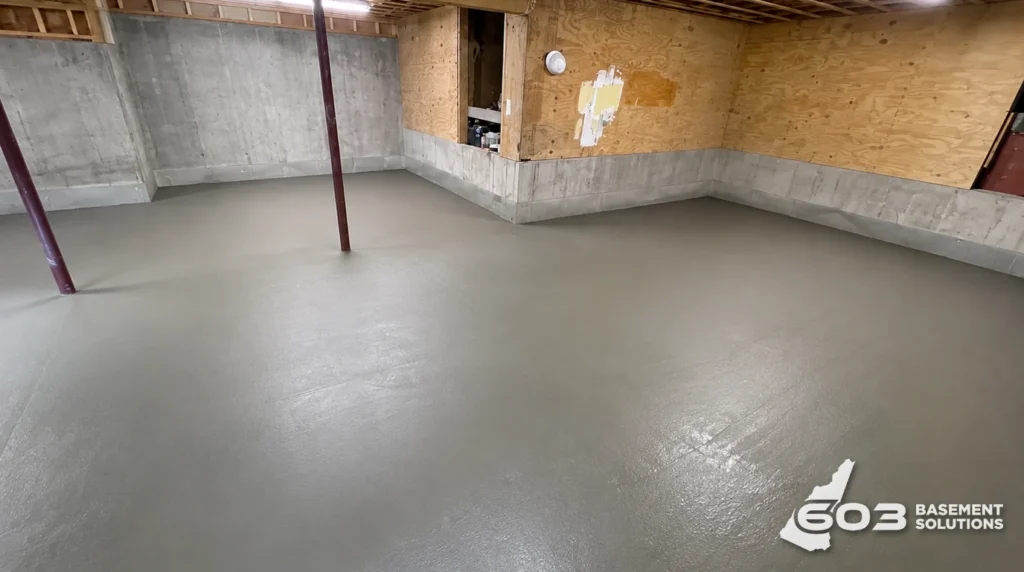
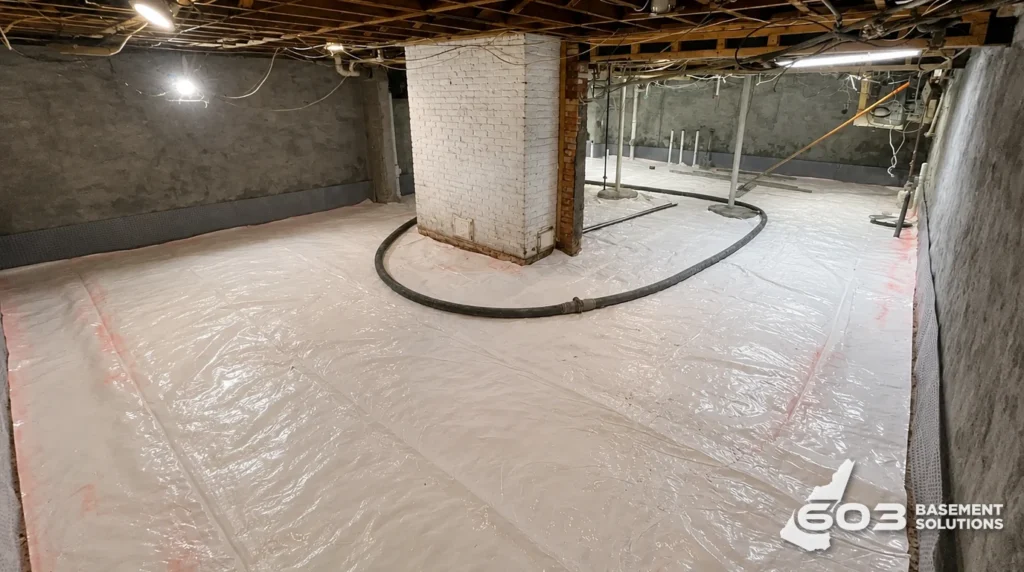
This service sits inside our broader structural and foundation repair work. A leaking but stable crack may belong under foundation crack repair instead.
A slab moves when the support below it changes, the concrete itself is damaged, or another part of the building puts stress where it does not belong.
Water is often part of the story. Poor grading, a downspout, or a leak can weaken support below part of the slab. Soil can also settle at different rates. New England freeze and thaw cycles may add movement along exposed edges.
The slab may be badly cracked or deteriorated. It may also be showing movement that began at a footing, wall, or interior support. We need to see the room, the structure above it, and the conditions around the home. One close-up photo cannot show us all of that.
We will tell you when we do not see a structural repair job.

Floor coverings can hide the slab, so we follow the symptoms through the house. Nearby floors, walls, and doors should tell a consistent story.
If the crack is thin, dry, and unchanged, the right first step may be to document it and watch it.
A stable crack that leaks or needs a focused repair may not require structural work.
When settlement is moving the building, the plan may need to transfer loads to more reliable support. We choose the method after the inspection.
A badly broken or deteriorated section may be a replacement job. We do not sell a patch when the slab is past a focused repair.
More than one repair can appear in the same scope. Stabilizing movement does not automatically seal a leaking crack, and replacing damaged concrete does not correct an active water source by itself. We spell out which part of the job solves which problem.
We also separate stabilization from lift. The first goal is dependable support. Any attempt to recover lost elevation depends on the slab, the rest of the structure, and what can move safely. We will not promise a perfectly level floor before we inspect it.
You get a written scope that connects the symptoms, the cause we found, and the repair we recommend. We send the quote within 24 hours.
The scope should be clear about the affected area. It should also tell you whether the job is a focused crack repair, structural stabilization, concrete removal and replacement, or a combination. If drainage or another water source needs attention, that belongs in the conversation too.
Finished flooring, utilities, and tight work areas can change access. We identify those conditions before the job. Sometimes the answer is to wait. If the crack is stable and the house is not moving, documenting it may be smarter than opening the floor.
| Service | What it owns | First question |
|---|---|---|
| Slab foundation repair | An existing slab that supports the building | Is the structure moving? |
| Foundation crack repair | A focused crack that needs sealing or repair | Is the crack stable? |
| Concrete leveling | Settled concrete that may still be sound enough to save | Is this structural, and is the concrete still serviceable? |
| Concrete Slab Pouring | A new or replacement structural slab | Does the existing concrete need repair or replacement? |
Those lines matter. A walkway edge is not the same thing as the slab holding up your house. We keep the diagnosis and the quote tied to the right service.
There is no honest flat price for slab foundation repair. Size, cause, structural movement, access, and the repair method all change the scope.
A stable local crack and a settled building slab are nowhere near the same job. We inspect first, explain the repair, and price the house in front of us. The inspection and estimate are free.
Removal and replacement, finished-floor access, utilities, and the amount of structural support can all change the work involved. Slab-specific pricing remains UNKNOWN until we inspect the home and write the scope. We do not turn a national cost range into a 603 quote.
Compare load-path, movement, and repair decisions by town. Work photographs illustrate a method, not a completed job in each town.
These local guides explain the inspection and repair decision. Work images illustrate methods, not completed jobs in each town.
Yes, many slab-foundation problems can be repaired. The right plan depends on whether the issue is a stable crack, local concrete damage, or movement under the building.
No. Concrete cracks for more than one reason. A crack that is changing, displaced, or paired with movement elsewhere deserves an inspection. A thin, unchanged crack may need a smaller response.
We first determine whether the crack is moving and what caused it. The repair may involve monitoring, a focused crack repair, structural stabilization, or replacing damaged concrete. We do not choose from the photo alone.
A slab crack is one visible condition. A foundation problem means the building’s support has moved, weakened, or been damaged. We check the slab and the rest of the house to see whether they are connected.
Sometimes. A focused repair may make sense when the damage is local and the surrounding slab is sound. Wider movement or badly deteriorated concrete can require a larger scope. The inspection defines that boundary.
Price depends on the cause, affected area, access, and repair design. 603 does not have an approved one-price schedule for this service. We provide a written quote after a free inspection.
Warranty terms depend on the repair system in the written proposal. We will put any applicable coverage in writing before the work starts.
Leave a changing or displaced crack visible if you can do so safely. A fresh patch can hide the pattern we need to inspect. Take dated photos and note changes instead. Active water or a safety issue still deserves prompt attention.
Yes. 603 Basement Solutions serves homes in New Hampshire, Maine, and Massachusetts. The page does not represent an office in every town. We confirm the service address when you book the inspection.
We will inspect the slab, explain what moved, and tell you whether it needs structural repair. If it does not, we will say so. You get a written quote within 24 hours.