
Crack in your Milford foundation? It’s usually the weather. The Granite Town freezes hard all winter, then thaws and freezes again, over and over, on top of solid granite bedrock. That push-and-release flexes the wall until it cracks. Milford has a second wrinkle. About a quarter of its homes went up before 1940, the oldest stock in the historic downtown and along the Souhegan, so those foundations have had a lot of winters to settle. We fix the crack at the cause and keep water out. Free inspection, written quote in 24 hours.
Foundation crack repair in Milford runs $1,000 to $3,000 for most homes. A simple hairline epoxy fill sits at the low end. Structural cracks that need carbon-fiber straps or piering cost more. We’ll tell you which one you actually have before you spend a dollar.
What causes foundation cracks in Milford
Two things drive most of the cracks we see in Milford. Cold and age.
Start with the cold. Southern New Hampshire winters drop below freezing, climb back up, and drop again, over and over. Milford gets about 53 inches of snow a year (NOAA 1991-2020 normal, nearest station Nashua 2 NNW, ncei.noaa.gov). Each freeze locks moisture in the soil against your foundation. The thaw lets it go. Run that cycle all season over Milford’s granite-bedrock ground and the wall slowly flexes until it cracks. Nobody publishes an exact freeze-thaw count for Milford. But the hard-freeze, repeated-thaw winter is normal for this part of NH.
Then there’s the ground itself. When your house was built, the soil right around the foundation got dug out and dropped back in as looser fill. We call that disturbed backfill. It drains slow and holds water against the wall, while the packed native soil farther out doesn’t. Milford’s wet shoulder seasons keep that ground moving, and a moving wall is a cracking wall.
Older homes feel both of these more. The median Milford home went up in 1976, but the stock is split: about a quarter of homes were built before 1940, mostly in the historic downtown around the Oval and along the Souhegan (U.S. Census ACS, tables B25035 and B25034, censusreporter.org). Homes that old usually carry older, early-masonry foundations that settle and crack as they age. The newer poured and block homes from the build wave after 1960 crack too. Usually from freeze-thaw, not age.
How we fix it
We match the repair to the crack, not to a sales sheet. Here’s what that means.
- Epoxy injection locks a non-moving crack back to full strength. Best for stable structural cracks.
- Polyurethane injection stays flexible, so it’s the right call for a crack that’s still moving or leaking.
- Carbon fiber straps reinforce a wall that’s cracking under pressure, and we do it without tearing the whole foundation apart.
- Piering (helical or push piers) is for a foundation that’s settling. We stabilize it and bring it back toward level.
One hairline crack and your basement is dry? You probably don’t need a full system yet. We’ll say so. Fill the crack, keep an eye on it, and call us when it’s actually time.
Fix that foundation crack at the cause
Crack in your Milford foundation? Freeze-thaw winters and old pre-1940 homes do this. 603 fixes the crack at the cause, not the surface. Free inspection.
What foundation crack repair costs in Milford
| What you have | Typical Milford range |
|---|---|
| Foundation crack repair (most homes) | $1,000 – $3,000 |
| Carbon-fiber straps (per strap) | $850 each |
| Power brace (per brace) | $1,300 per brace |
| Helical piers (settling foundations) | $2,700 first 3 piers, then $2,200 each |
These are 603’s own New Hampshire ranges, not national averages. Your number comes down to how many cracks you have, whether they’re moving, and whether the wall needs structural reinforcement. We give you the real range after a free inspection, with a written quote inside 24 hours. No surprise line items.
Non-structural crack injection carries a 10-year warranty on leakage through the treated area. Wall stabilization work carries a 25-year warranty against further inward movement within design tolerances.
Milford: local context
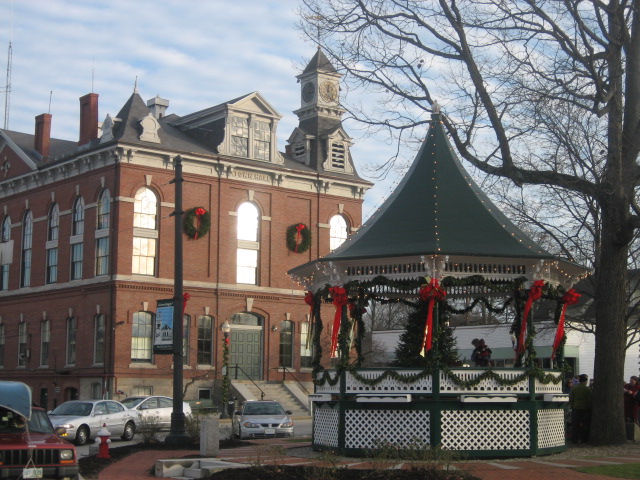
Milford is the commercial center of the Souhegan Valley in Hillsborough County. It’s literally “The Granite Town,” named for the old quarries that shipped Milford granite as far as the pillars of the U.S. Treasury Building (Wikipedia, Milford, New Hampshire, en.wikipedia.org). That granite-and-river setting shapes the cracks we see street to street.
- The town sits on granite and the older Massabesic Gneiss Complex, the bedrock it was named for (Williams College, A Brief Geologic History of Milford, sites.williams.edu). Hard rock plus a freeze-thaw climate is the classic recipe for foundation movement and cracking over time.
- The Souhegan River runs right through the center of town, and the village was built on both banks. So a good share of homes sit on or near low ground. The Souhegan basin flooded bad in May 2006 (6 to 14 inches of rain in two days) and again in April 2007 (heavy rain plus fast snowmelt), with nearby Wilton and Greenville hit hard (USGS, Flood of May 2006 / April 2007 in New Hampshire, pubs.usgs.gov). Spring snowmelt raises the water table near the river. Saturated ground moves more, and moving ground opens cracks. For any street-specific flood question, check the FEMA panel for that parcel first.
- Milford has the oldest housing stock in the region. About a quarter of its homes were built before 1940, among the higher pre-war shares of the towns we cover (U.S. Census ACS, table B25034, censusreporter.org). Homes that old usually carry older, early-masonry foundations that settle and crack with age. Most folks in town own their place (about 60 percent, median value near $357,800; U.S. Census ACS, tables B25003 and B25077, censusreporter.org), so these are families fixing a house they plan to keep. Good news: most of what we find on these homes is a crack-repair job, not a rebuild.
- One more thing, since you’re already sealing cracks. Hillsborough County is the most-tested county in NH, and its radon testing runs an estimated mean of 5.3 pCi/L across 5,528 pre-mitigation tests (American Lung Association / CDC tracking data, 2008-2017, lung.org). Hillsborough is EPA Radon Zone 2 (moderate, predicted 2 to 4 pCi/L), not Zone 1; only Carroll County is Zone 1 in NH (EPA Map of Radon Zones, New Hampshire, epa.gov). Radon is home-by-home on Milford’s granite and gneiss, and more than a third of NH homes that get tested come back at or above the 4.0 pCi/L action level (NH DHHS Radon Program, dhhs.nh.gov). So test your own home no matter the zone. Radon enters through the same cracks and seams you’re already sealing, so a radon test ($50, credited toward mitigation if you proceed) pairs naturally with foundation work in the Granite Town.
We’re based in East Kingston and cover NH, ME, and MA, including Milford and the Souhegan Valley towns around it. If you’re in Milford, odds are we’ve worked nearby. Licensed and insured, BBB A+ accredited, Google 4.9 stars across 250 reviews.
What a recent customer said
I have an old field stone foundation that needed some repair and due to some settling in one corner there was crumbling. They repaired the damage and took care of other trouble areas as well as installing a lally column to prevent further settling. Great job and all of these guys are friendly and always respond to your calls right away.
Chris Allder, ★★★★★ Google review
Frequently asked questions
Why do foundations crack in Milford?
Most Milford foundation cracks come from freeze-thaw and age. Winters drop below freezing, climb up past it, and drop again, over and over, on top of the town’s granite bedrock. That cycle flexes the wall until it cracks. Milford also has the oldest housing stock in the region, with about a quarter of homes built before 1940, so those foundations have had decades to settle. We fix the crack at the cause, not just the surface.
How much does foundation crack repair cost in Milford?
For most Milford homes, foundation crack repair runs $1,000 to $3,000. A simple hairline epoxy fill sits at the low end. Structural cracks that need carbon-fiber straps ($850 each) or piering cost more. We give you a written quote within 24 hours of a free inspection, so you know the real number before you commit.
Do all cracks in a Milford basement need repair?
No. If it is one hairline crack and the basement is dry, you probably do not need a full system yet. We will tell you to fill it and watch it. Cracks that are moving, leaking, or widening do need a real fix, because they get worse with each Milford freeze-thaw season, especially on the town’s older foundations. We help you tell the difference for free.
Ready to get started?
Free inspection, free estimate, and a written quote in your hands within 24 hours.
Serving Milford, NH and the surrounding towns. Foundation crack repair is one part of 603’s full structural and foundation repair service, alongside bowing walls, settling foundations, and sill and beam work. Not sure a crack is all you’re dealing with? Start with our foundation crack repair overview, or a free on-site inspection. When the visible crack lines up with settlement or a sill, beam, or post problem, review the complete Milford foundation repair path.
Common questions about foundation cracks
- What’s the best way to fix a foundation problem in an older home?
- When cracks appear on a concrete basement floor of an
- Which is the best option: brick or stone foundation?
- Why are building foundations not made of steel?
- Why are the cracks in my basement foundation wall forming a zigzag pattern?
- Why do foundation repairs on your house cost so much?
- Why do I need groundworks before construction?
- Why do people use 2×6 instead of a 2×4 sill plate?
- Why is my house sinking into the ground? Is there any way to repair it without tearing down the house?
- Would you rather have a house with a full basement or on a slab?
- A potential 6-floor residential property has too many thin lally columns in the basement. Are they safe, and can they be fixed?
- Are Ramset nails more likely to create a crack in a residential