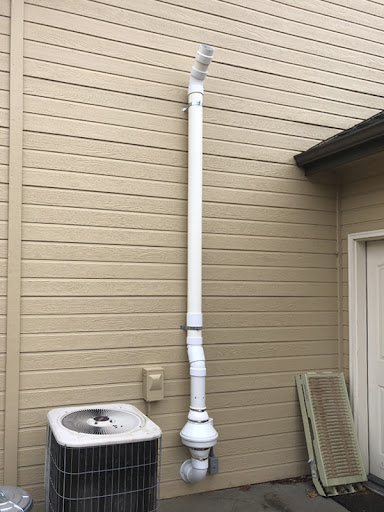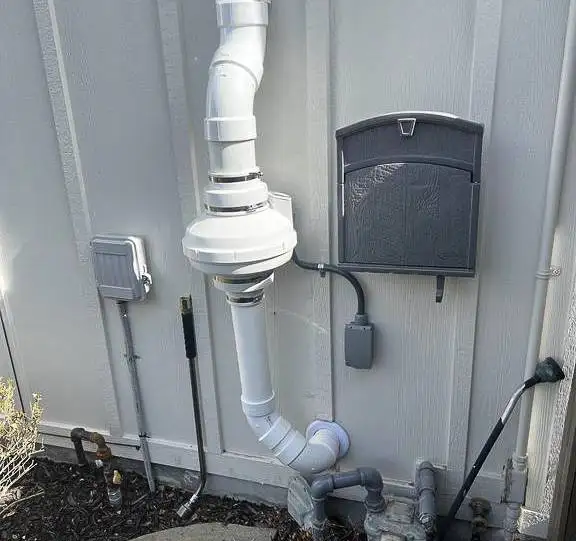



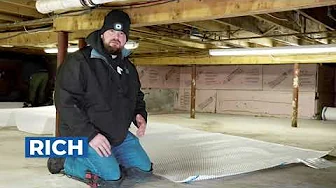
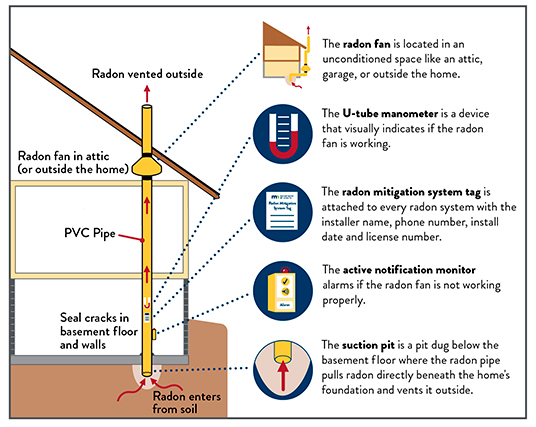
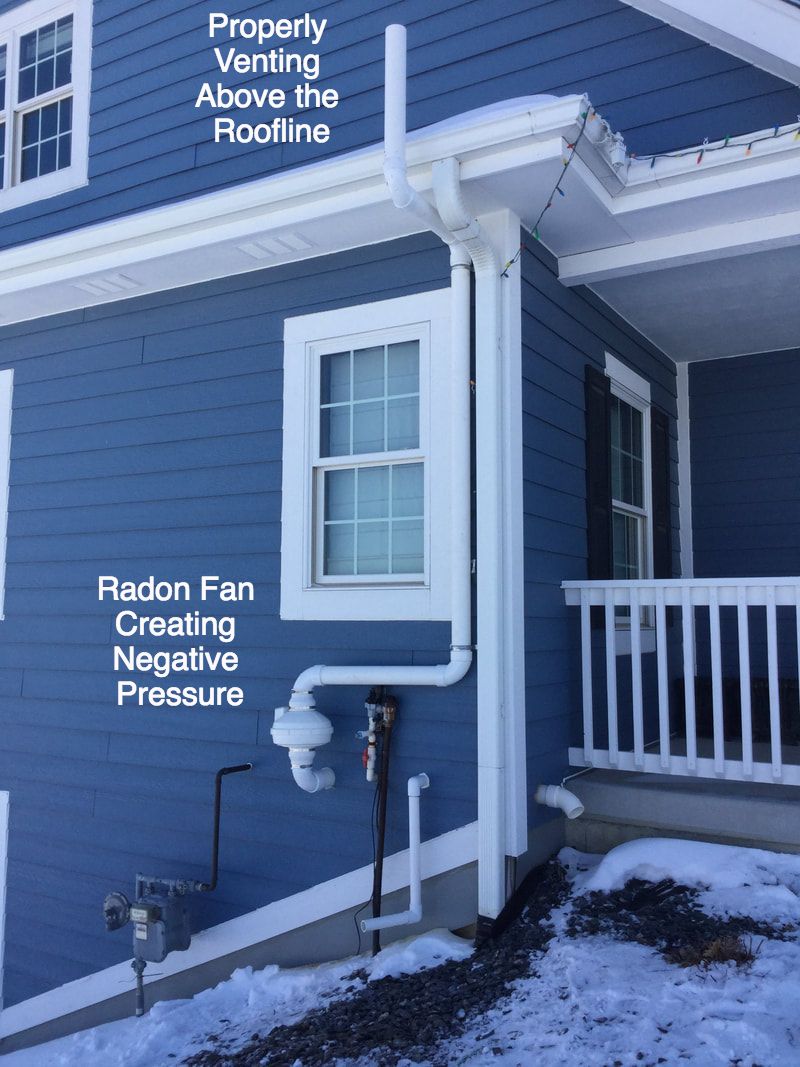

Lexington has a real radon reason to test, and it starts in the ground. The Bloody Bluff fault zone runs right through town and exposes granite bedrock at the surface (Boston Geology Society) — and granite is the uranium-bearing rock that feeds radon up into homes. Lexington sits in Middlesex County, one of only three Massachusetts counties the EPA designates Radon Zone 1 (highest risk, predicted indoor average above 4 pCi/L; EPA Map of Radon Zones). Of homes tested in the 02420/02421 area, 36.8% (95 of 258) came back at or above the 4.0 pCi/L action level (CDC Environmental Health Tracking Network). Because of that Zone 1 status, Massachusetts code (780 CMR App. F) requires radon-resistant construction in every new Middlesex home. Statewide, MA DPH estimates 650,000 homes exceed 4 pCi/L. We test first — that's $50, credited toward the job if you proceed. Radon mitigation runs $900–$6,000 (most jobs $1,950–$2,250). We also install crawl-space sub-membrane depressurization. Certified, RMS-113966. Licensed and insured.
"We had basement encapsulation and radon mitigation completed from 603 basements and are very happy with the results. The entire process was great from the consultation/quote through the completion of the job. They answered all of my questions about anything basement related and also were reasonably priced. We have a continuous radon detector and our numbers reduced from 18 to less than 2! We have another basement project to do later this year and will no doubt use them again! Thank you 603 basements!" — SHAUNA MULLENIX, 5★ (Google)
Lexington is in Middlesex County, which the EPA designates Radon Zone 1 — the highest of three zones, meaning a predicted average indoor radon screening level greater than 4 pCi/L. Only three Massachusetts counties are Zone 1: Essex, Middlesex, and Worcester (EPA, Map of Radon Zones: Massachusetts).
The Bloody Bluff fault zone runs through Lexington and exposes granite bedrock at the surface (Boston Geology Society). Granite is a uranium-bearing rock, and as uranium decays it produces radon gas that can move up into homes. Combined with Lexington's older, often unfinished basements, that geology is why testing matters here. Of homes tested in the 02420/02421 area, 36.8% (95 of 258) were at or above 4.0 pCi/L (CDC Environmental Health Tracking Network).
Yes. Because Lexington is in Middlesex County — an EPA Zone 1 county — the Massachusetts Residential Code (780 CMR, Appendix F) requires passive radon-resistant construction in every new one- and two-family home, regardless of the radon level measured at the specific site. The same mandate applies in Essex and Worcester counties.