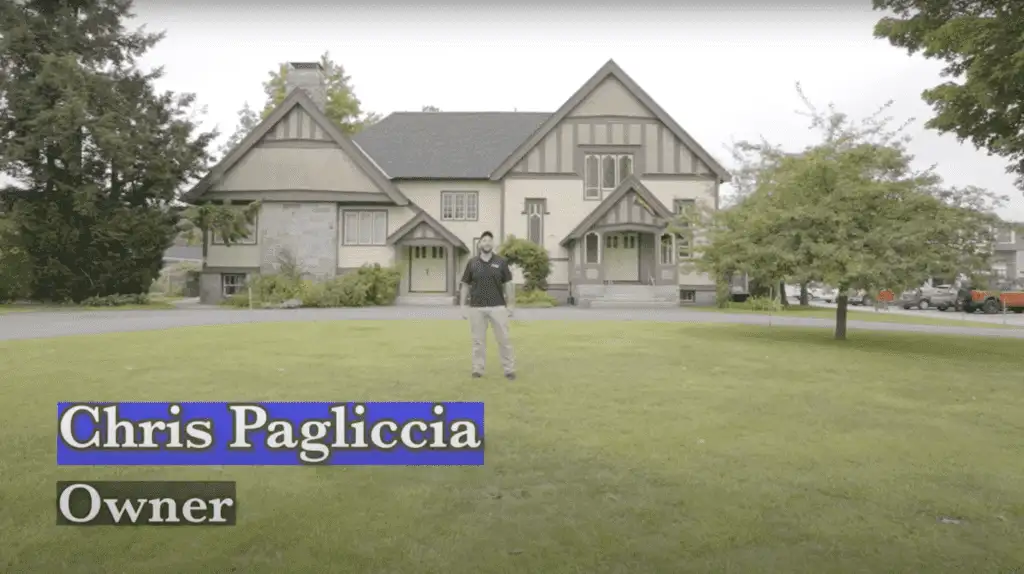

Real 603 crawl space encapsulation
Crawl space smelling musty? In a Raymond home that smell usually comes from the ground, not a leak. Raymond village sits in the Lamprey River valley on sand-and-gravel fill, and the water table climbs every spring. That wet ground pushes moisture up through a dirt or vented crawl space and into the wood and insulation above it. Encapsulation seals it off with a 12-mil wall barrier, a 20-mil floor barrier, a dehumidifier, and a sump. The space stays dry. The air upstairs stops smelling like a damp cellar.
We are 603 Basement Solutions, a local owner-run crew working New Hampshire, Maine, and Massachusetts. We have done thousands of these. The inspection is free, the estimate is free, and you get the quote within 24 hours.
What crawl space encapsulation is
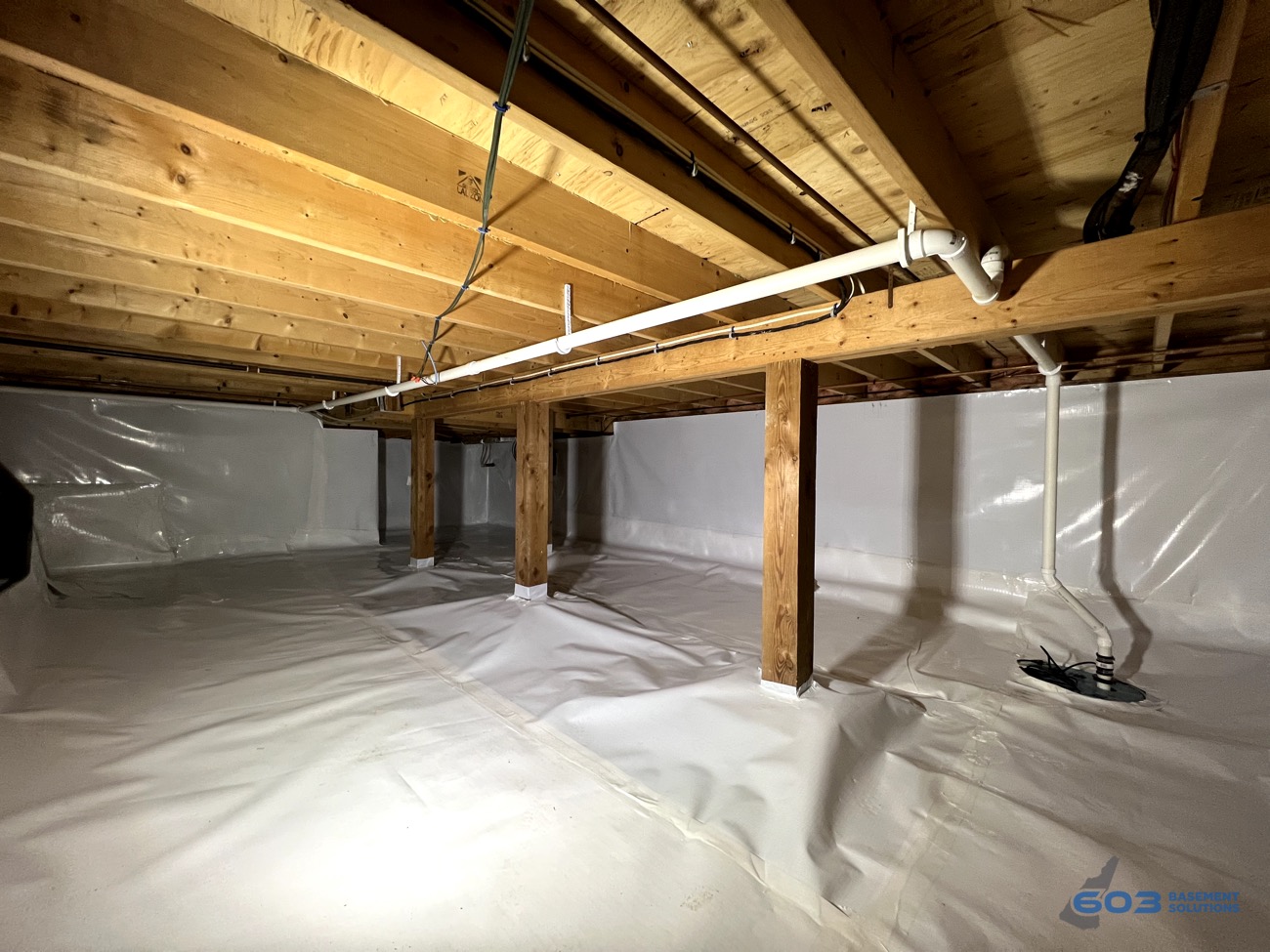
Encapsulation seals your crawl space off from the wet ground and the outside air so it stops feeding moisture into your house. Here is what we put in:
- A 12-mil vapor barrier on the walls and a heavier 20-mil barrier on the floor.
- Dimpled drainage matting under the floor barrier, so any water that does sneak in drains to the sump instead of pooling.
- Every seam sealed, with insulating foam around the perimeter to close the top of the liner.
- A dehumidifier to hold the humidity down and a sump pump to clear water.
That musty smell most folks call “mold” is really moisture sitting in the wood and the insulation. Mold is just what grows in it. Seal the moisture out and the smell leaves with it.
Got a dirt or fieldstone crawl space and worried about radon too? We run a sub-membrane radon system under the liner. One sealed space then handles the water, the air, and the soil gas all at once.
Seal your crawl space and keep it dry
Crawl space musty? Raymond homes sit on damp Lamprey valley fill, and the water pushes up. 603 seals yours with a 12/20-mil barrier, dehumidifier, and sump.
What crawl space encapsulation costs in Raymond
Encapsulation in New Hampshire runs $3,000 to $25,000. Where your home lands depends on the size of the crawl space, how wet it is, whether it needs a sump or a dehumidifier, and whether we have to pull out old debris or a failed barrier first. We give you the real number after a free inspection, not a guess over the phone, and you get the quote within 24 hours.
The work carries a 25-year warranty on the liner, the wall barriers, and the workmanship. It transfers to the next owner too, as long as nobody else has touched the work since.
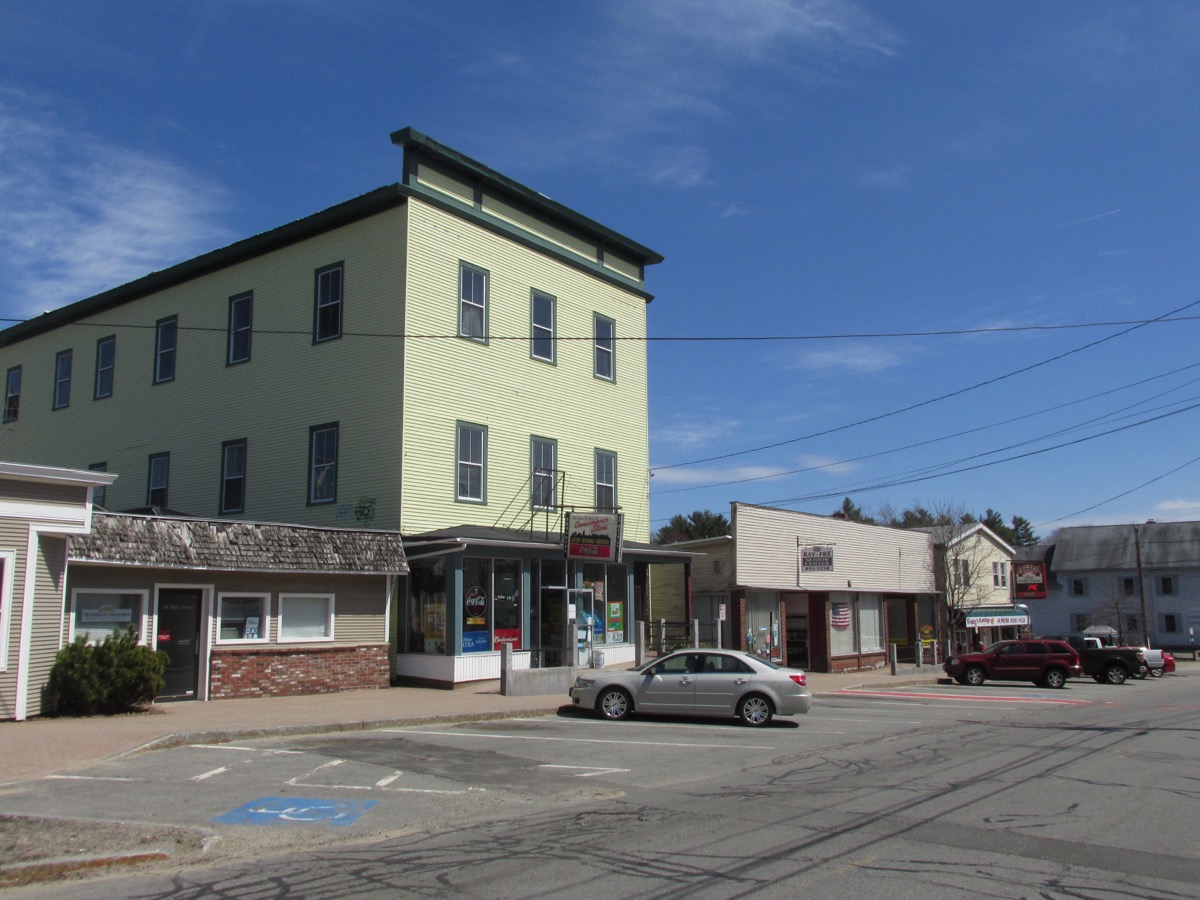
Why Raymond crawl spaces stay damp
It is the ground, and the calendar. Southeastern New Hampshire is a wet, freeze-thaw climate, and Raymond averages about 57 inches of snow a year (NOAA NCEI 1991-2020 normal, Epping station, the closest with a snow normal, about 6 miles east). Every spring all that snow melts over the Lamprey and Exeter river valleys and the water table climbs.
That high water is what gets your crawl space. As the table rises, moisture moves up through the soil and into a dirt floor or a vented crawl space, soaking the framing and the insulation above. Then winter cycles through freeze and thaw from about November to April, working water around the foundation the whole time. Seal the crawl space and your home steps out of that cycle for good.
What’s under a Raymond home
Raymond village sits on both banks of the Lamprey River, right on the valley fill. Glacial meltwater laid down sand and gravel here, mixed in with silt and clay. That fill holds a high water table that swings with the seasons, and it pushes moisture up against and into the foundation. Classic setup for a wet crawl space. (USGS Water-Resources Investigations Report 92-4192, stratified-drift aquifers of the Exeter, Lamprey, and Oyster River basins: https://pubs.usgs.gov/wri/wrir_92-4192/pdf/wrir_92-4192.pdf)
Get up out of the valley and the ground turns to glacial till. That is a packed mix of clay up to boulders that holds water and lets it go slowly, so it leans on the foundation through every wet stretch. (USGS HA 730-L, surficial aquifer system: https://pubs.usgs.gov/ha/ha730/ch_l/L-text2.html)
Most folks in Raymond own their place, and the older homes are the ones that need encapsulation most. The typical Raymond home went up around 1983, but roughly one in ten was built before 1940. (U.S. Census ACS 2024 5-year, tables B25003, B25035, B25034, Raymond town; owner-occupancy and the year-built figures are in the sources below.) A New Hampshire house that old often sits on a fieldstone or rubble foundation with a vented or dirt crawl space, and that is exactly the kind that pulls moisture straight off the high valley water table. We treat the foundation we actually find at the inspection. We never assume one.
Radon comes with this ground too. Raymond is in Rockingham County, an EPA Radon Zone 2 county, and southeastern New Hampshire runs high for radon. Measured results around here commonly come back over the EPA’s 4 pCi/L action level. Radon changes house to house though, so the only way to know yours is to test it. (EPA Map of Radon Zones for New Hampshire: https://www.epa.gov/sites/default/files/2014-08/documents/new_hampshire.pdf) On a dirt or fieldstone crawl space we put a sub-membrane radon system right under the liner.
The Lamprey is watched and protected where it runs through town. A USGS streamgage (“Lamprey River at Langford Road, at Raymond, NH”) tracks the water level, and the Lamprey’s headwaters and tributaries got state Wild and Scenic protection back in 2011. (USGS streamgage 01073319: https://waterdata.usgs.gov/monitoring-location/USGS-01073319/; lampreyriver.org: https://www.lampreyriver.org/aboutus/river-protection-programs-and-lamprey-river/federal-wild-scenic-rivers) If your home sits near the river or on low valley ground, that high-water stretch is exactly when a crawl space takes on water.
We are licensed and insured, BBB A+ accredited, and rated 4.9 on Google across 250 reviews. Branden runs our radon work and Angel heads up waterproofing. You will know the names of the people in your crawl space.
Why seal it instead of leaving it
The air you breathe upstairs starts down low. Warm air rises and pulls air up from the bottom of the house, so a real share of what you breathe in the living room came out of the crawl space first. Builders call it the stack effect. Seal the crawl space and you quit drawing damp, musty air up into the house.
Dry wood and dry insulation do not rot and do not grow mold. That is the framing your whole home sits on, so keeping it dry keeps the house sound.
You save on heat, too. Heat loss through an uninsulated foundation can run up to a third of an average home’s heat loss (ENERGY STAR, citing Building Science Corporation). A sealed crawl space helps you hold onto that heat.
And if your home has radon, the same liner earns its keep twice. The sub-membrane system pulls soil gas out from under the barrier before it ever reaches your living space.
What a recent customer said
Gerald and his crew did an excellent job, first cleaning out all the debris and the dislodged insulation in the crawlspace. they were very communicative and understood my concerns and handled them professionally. When they were finished laying the sublayment and the top vinyl covering, carefully taping all the seams they put insulating foam around the perimeter, sealing the top of the vinyl. Gerald communicated two issues that were not part of the contract that I will subsequently take care of myself. Great job, very satisfied.
Alex C Arcisz, ★★★★★ Google review
Frequently asked questions
How much does crawl space encapsulation cost in Raymond, NH?
Crawl space encapsulation runs $3,000 to $25,000 in New Hampshire. Your number comes down to the size of the crawl space, how wet it is, and whether it needs a sump pump, a dehumidifier, or old debris and a failed barrier pulled out first. We give you the real price after a free inspection, with the quote in 24 hours.
Why does my Raymond crawl space stay damp?
It is usually the ground, not a leak. Raymond village sits in the Lamprey River valley on sand-and-gravel fill, and the water table climbs every spring (USGS Report 92-4192). That moisture pushes up through a dirt or vented crawl space into the wood and the insulation. Seal it with a vapor barrier, a dehumidifier, and a sump and it stops.
Should I worry about radon in a Raymond crawl space?
Test for it, yes. Raymond is in Rockingham County, an EPA Radon Zone 2 county where measured results commonly come back over the EPA’s 4 pCi/L action level (EPA Map of Radon Zones). Radon changes house to house, so the only way to know yours is to test. On a dirt or fieldstone crawl space we run a sub-membrane radon system right under the liner, so one sealed space handles the moisture and the soil gas together. A radon test is $50, credited toward the job if you go ahead.
Ready to get started?
Free inspection, free estimate, and a written quote in your hands within 24 hours.
Common questions about crawl spaces
- How does a vapor barrier function?
- How imperative is it that a house is anchored to a crawl space?
- How much does it cost to encapsulate the crawl space for a 3,000 sq ft house? Is it worth it?
- How much wood moisture in your crawl space can you tolerate
- How to get rid of moisture in a crawl space
- I had my crawl space encapsulated and outside vents sealed. Why have my radon levels gone up?
- I was told of an add-on for my crawl space encapsulation: insulation under the 20 mil white casing. Is that preferred?
- If a house already has a vapor barrier, is there a need for another one?
- If the humidity in your crawl space is 60-70% but in your house it’s lower, do you still need to fix the crawl space?
- Is a little water in a crawl space normal?
- Is a vapor barrier necessary under the subfloor?
- Is there a good ROI on crawlspace encapsulation?