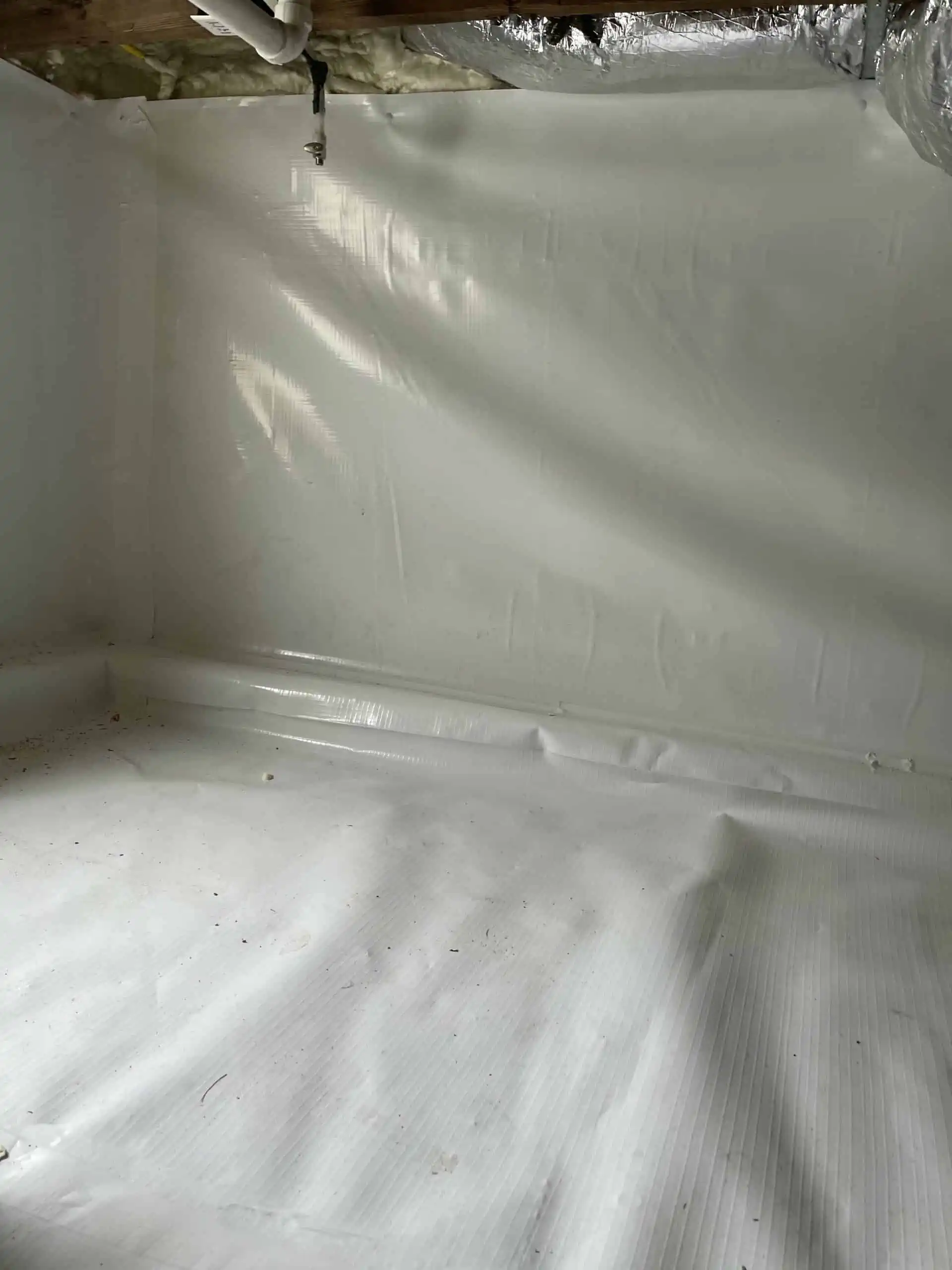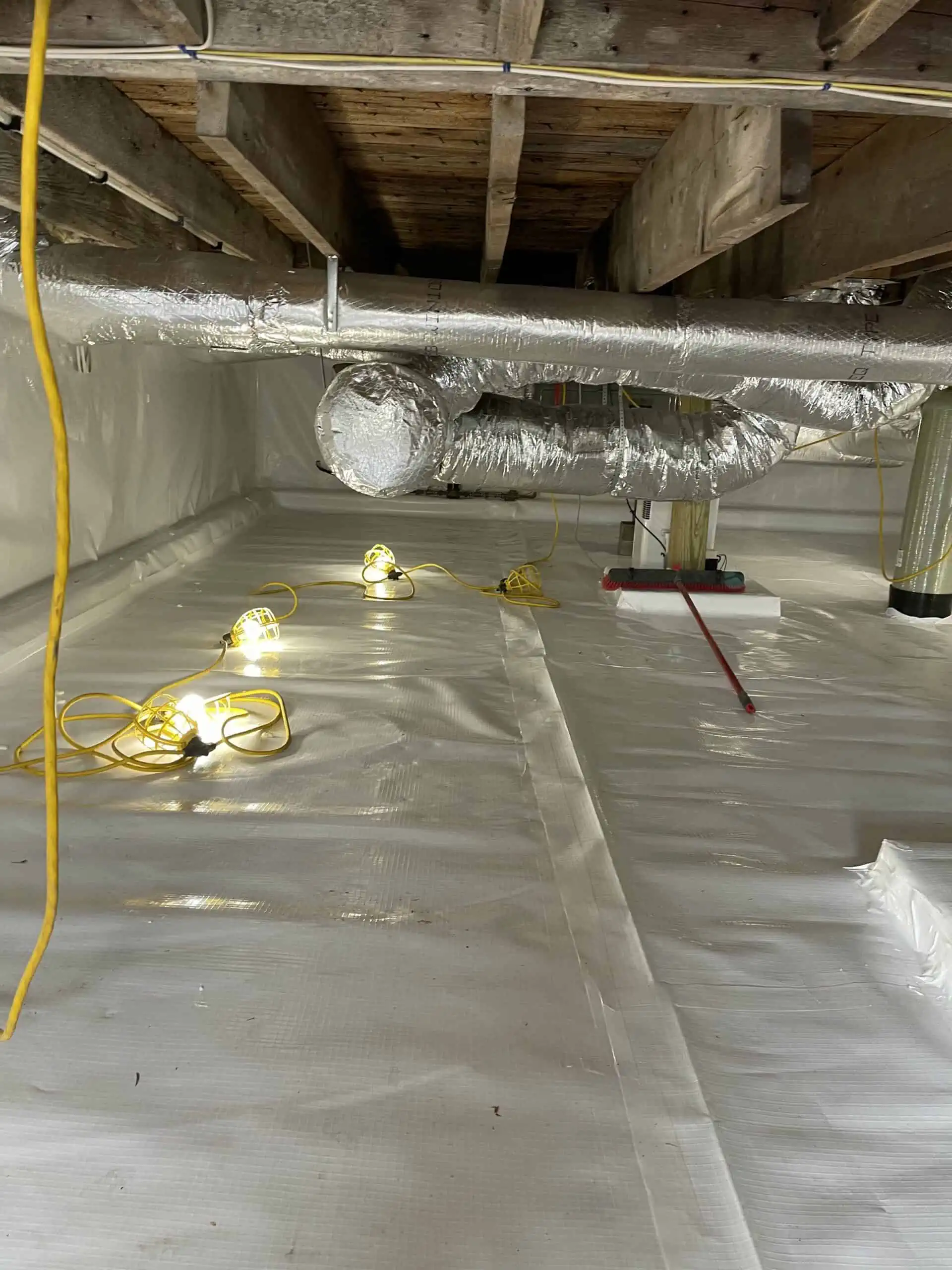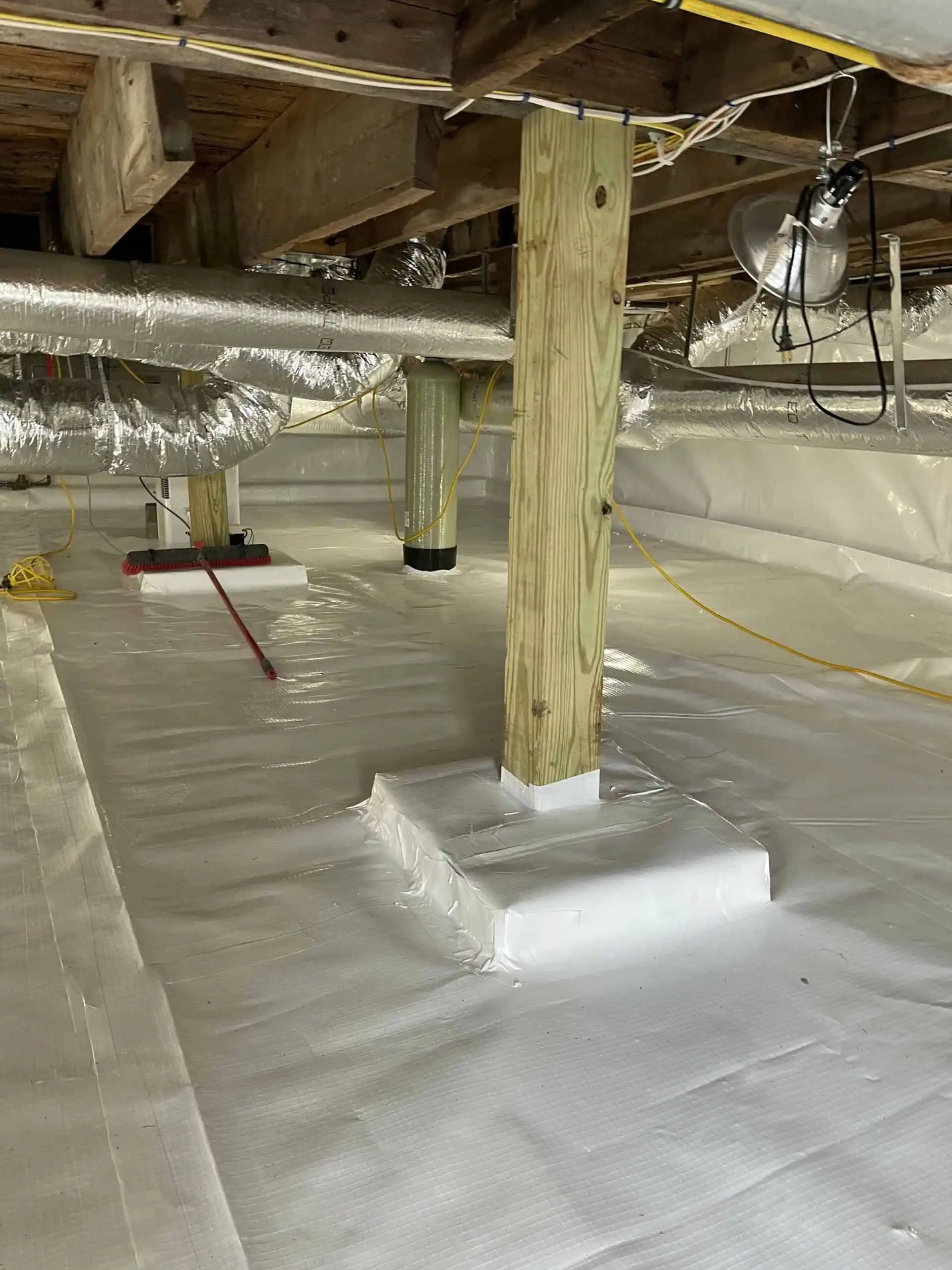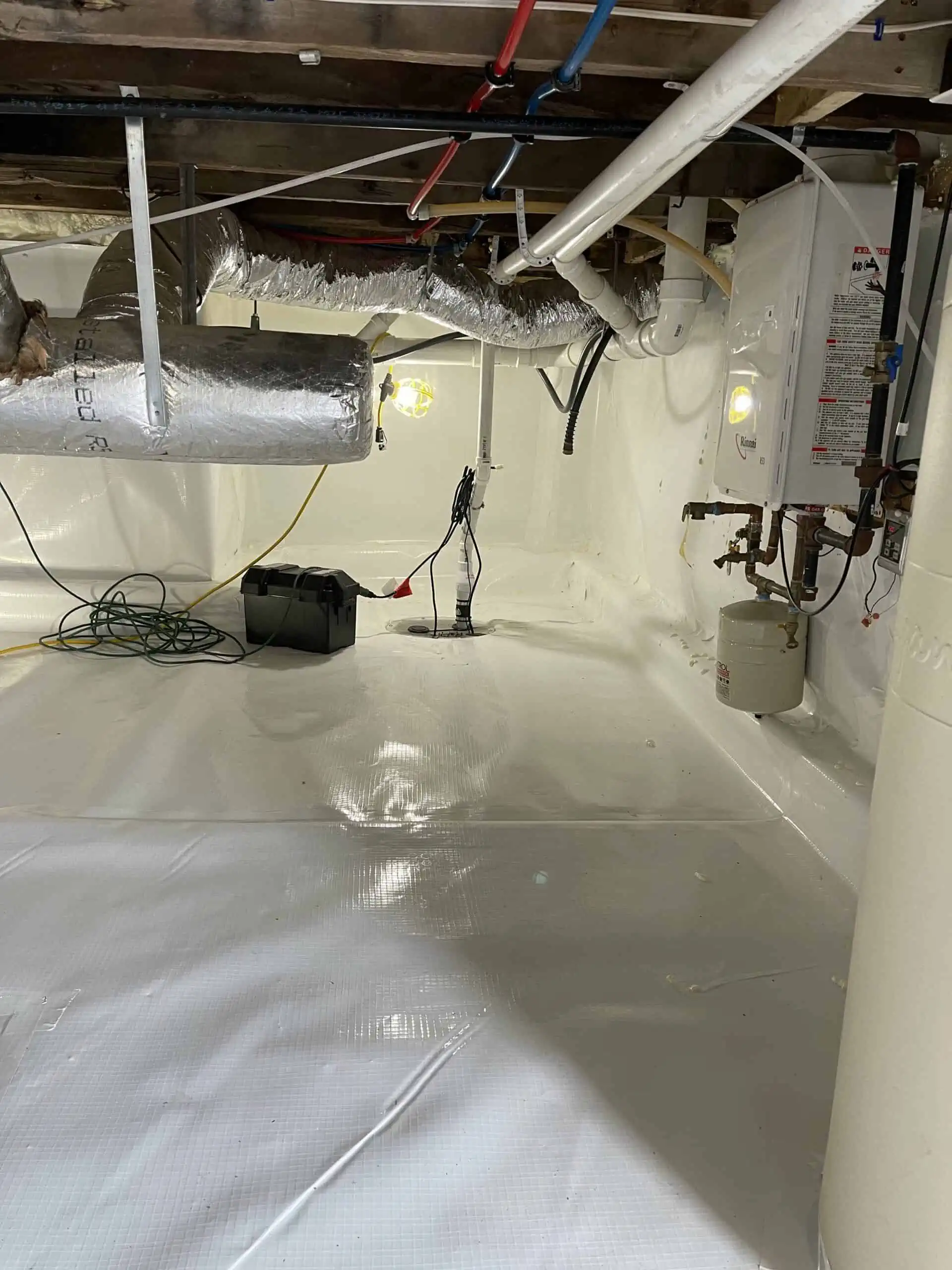



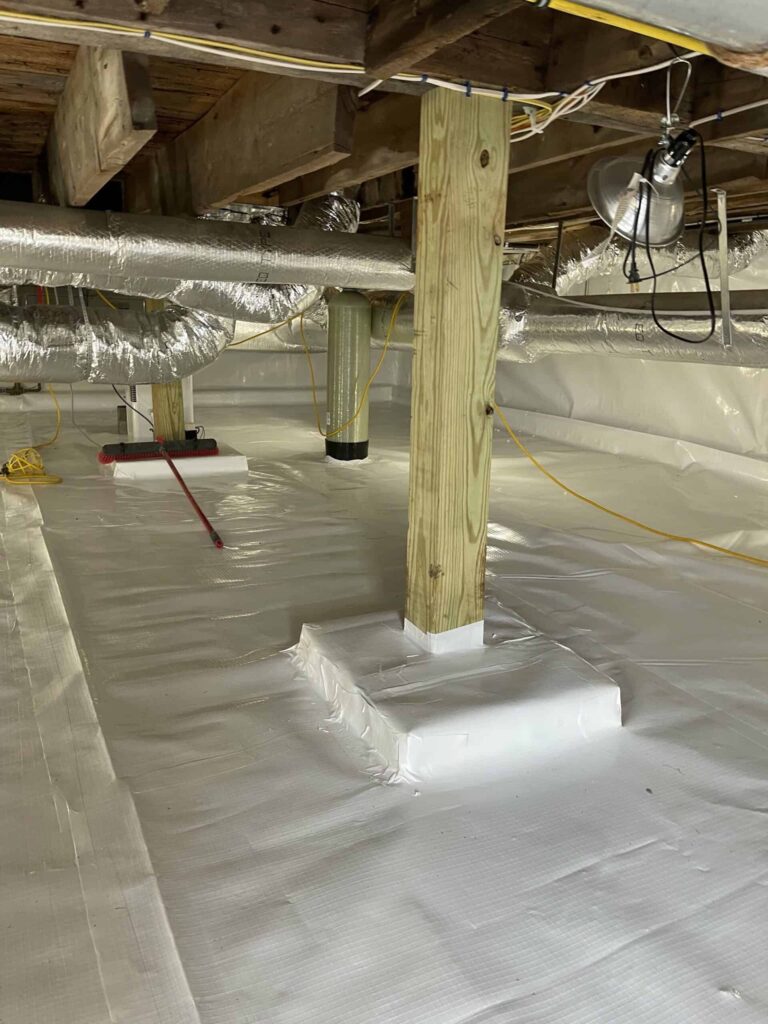
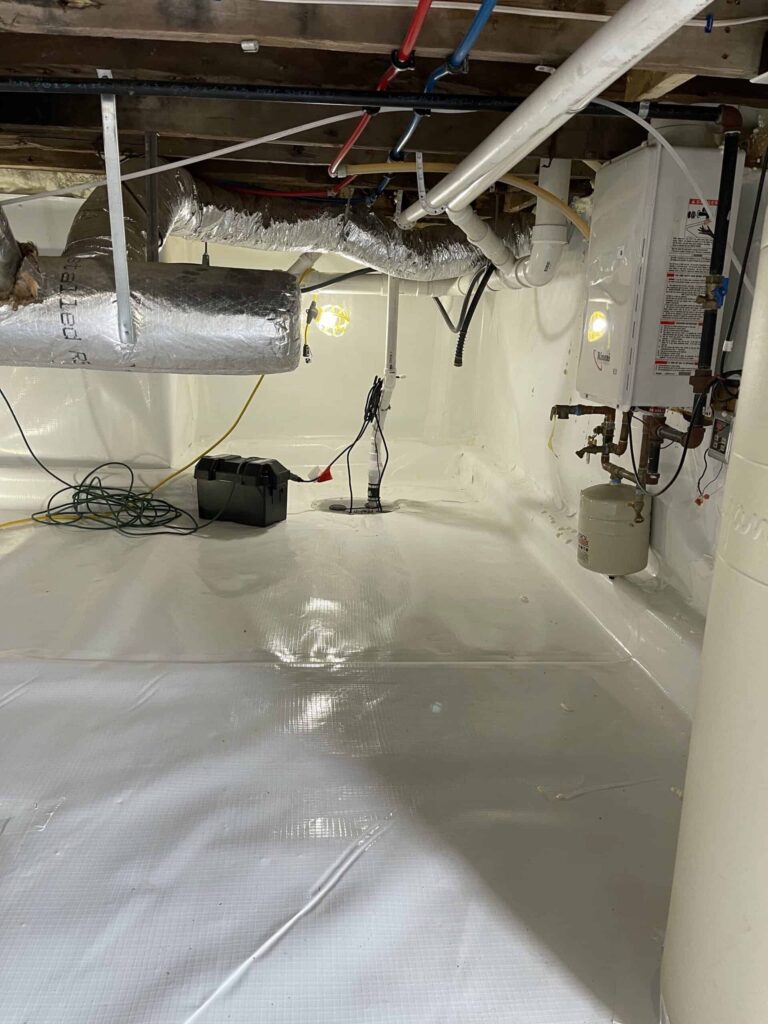
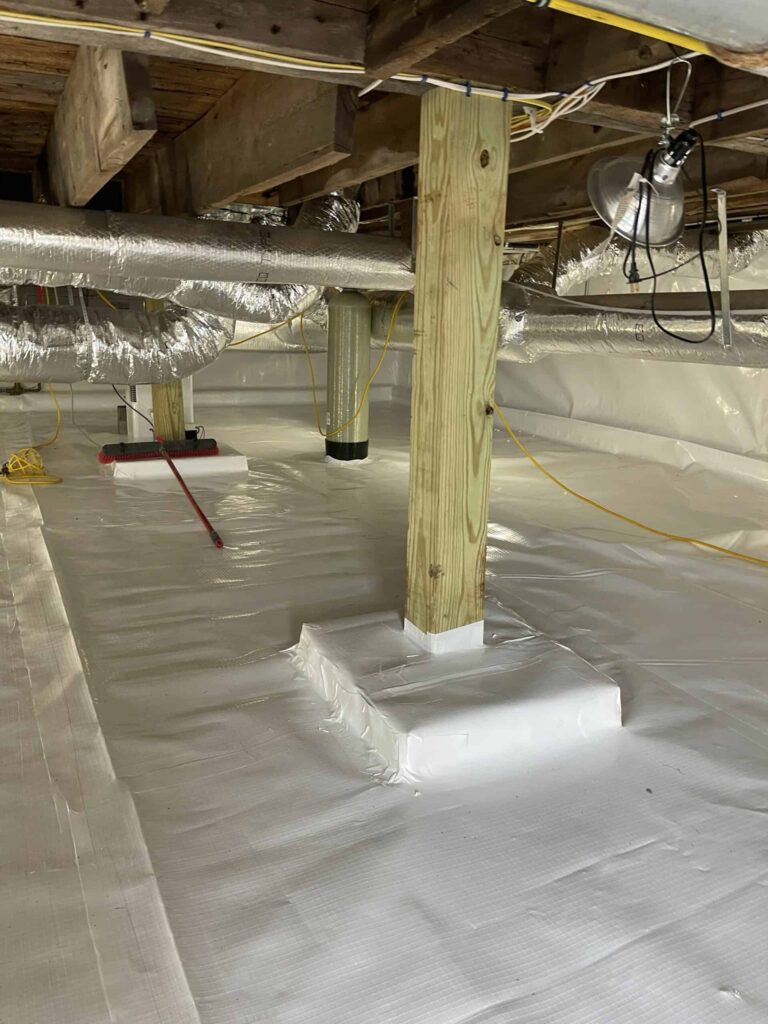
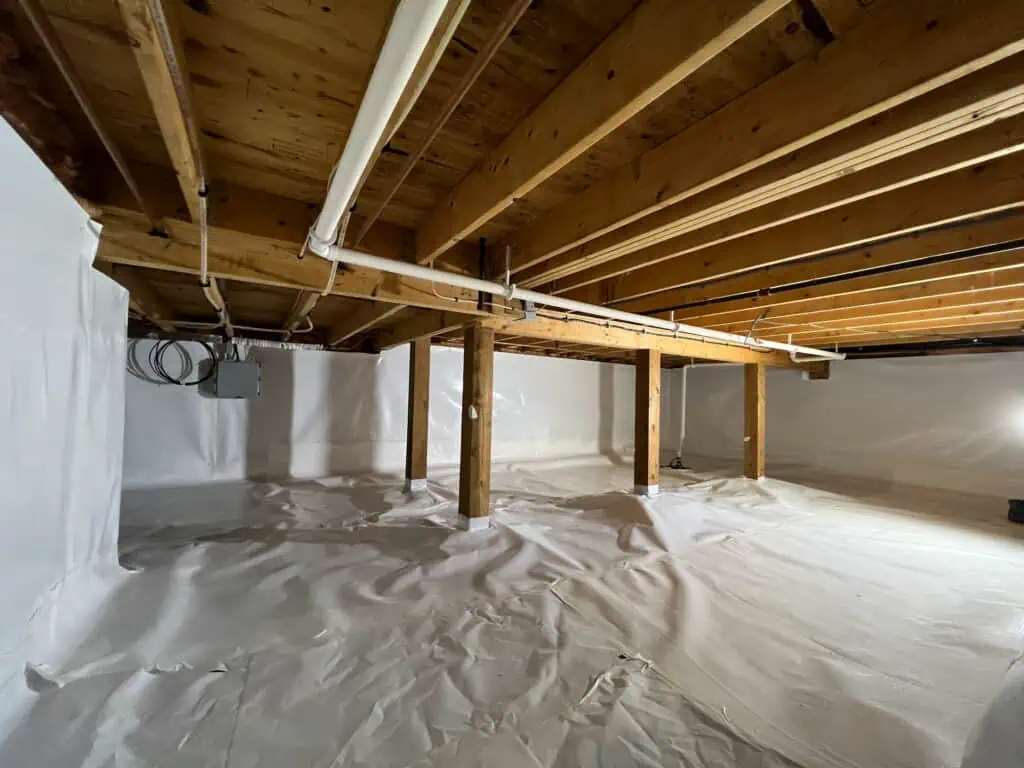
If your South Duxbury crawl space stays damp, the ground itself is usually why. The USGS reports the unconfined aquifer under this region is "composed mostly of glacially deposited sediments... the second largest aquifer system in Massachusetts," with the northern Duxbury area sitting on "valley-fill stratified glacial deposits bordered by upland till areas" — shallow groundwater that pushes moisture up into a crawl space. Add Duxbury Bay, whose bottom Wikipedia describes as "mostly shallow sand and mud flats exposed at low water," and coastal humidity compounds it. We seal the space against both: a 12-mil wall and 20-mil floor vapor barrier over dimpled drainage matting, a dehumidifier, and a sump. Crawl space encapsulation runs $3,000–$25,000. Because EPA places Plymouth County in Radon Zone 2 (moderate, 2–4 pCi/L) and radon enters through crawl spaces, a sub-membrane radon system is a separate add-on, typically $1,950–$2,250. See our crawl space services and radon mitigation.
Gerald and his crew did an excellent job, first cleaning out all the debris and the dislodged insulation in the crawlspace. they were very communicative and understood my concerns and handled them professionally. When they were finished laying the sublayment and the top vinyl covering, carefully taping all the seams they put insulating foam around the perimeter, sealing the top of the vinyl. Gerald communicated two issues that were not part of the contract that I will subsequently take care of myself. Great job, very satisfied.
The USGS reports that the northern Duxbury area sits on "valley-fill stratified glacial deposits bordered by upland till areas" within the Plymouth-Carver-Kingston-Duxbury aquifer — "the second largest aquifer system in Massachusetts." That shallow, sand-and-gravel water table lets ground moisture migrate up into a crawl space. Duxbury Bay adds to it: Wikipedia describes the bay bottom as "mostly shallow sand and mud flats exposed at low water," which keeps coastal humidity high. Encapsulation with a sealed vapor barrier, dehumidifier, and sump is built to handle exactly this combination.
It's worth testing. EPA places Plymouth County in Radon Zone 2, a moderate-potential area with a predicted average indoor screening level of 2 to 4 pCi/L. EPA notes radon "comes from the natural decay of uranium that is found in nearly all soils" and that "nearly 1 out of every 15 homes in the U.S. is estimated to have elevated radon levels" at or above the 4 pCi/L action level. Crawl spaces are an entry path, and EPA confirms "similar systems can also be installed in houses with crawl spaces." If a test comes back high, we install a sub-membrane radon system as a separate add-on, typically $1,950–$2,250.
Yes. Duxbury was settled in 1624 and incorporated in 1637, and standing colonial-era homes here include the John Alden House (built c. 1700) and the Alexander Standish House (1666), per Wikipedia. Old New England homes like these often have original fieldstone or dirt crawl spaces, which are our specialty. We clean out the space, then install a 12-mil wall and 20-mil floor vapor barrier over dimpled drainage matting, seal the seams, and add a dehumidifier and sump. Crawl space encapsulation runs $3,000–$25,000 depending on size and condition.