
603 radon mitigation systems
The Quick Version: Worried about radon in Hudson? Good. You should be. Your house sits on New Hampshire granite, and that bedrock is exactly what pushes radon up into homes here. Tested homes in Hillsborough County, which includes Hudson, average 5.3 pCi/L, over the EPA’s 4 pCi/L action level (American Lung Association, from CDC data on 5,528 county tests). The fix isn’t some gadget. It’s a certified radon system that pulls the gas out from under your slab and vents it up and out above the roof. We’ve been doing this all over southern NH since 2015. Most jobs land between $1,950 and $2,250, and the full range runs $900 to $6,000. Free inspection, quote in 24 hours.
Branden runs our radon work. The crew calls him “B-Radon” because he’s been beating this gas back since 2015. Got a basement or crawl space in Hudson? Give us ten minutes of reading.
What is radon, and why does Hudson care?
Radon is a gas you can’t see and can’t smell. It comes up out of the ground when uranium in the soil and bedrock breaks down. It sneaks into a home through cracks in the slab, gaps around pipes, sump pits, and dirt crawl-space floors. Then it pools in the lowest level you live in.
Now the Hudson part. We’re the Granite State for a reason, and that granite is a classic radon source. The US Geological Survey and NH DHHS both tie New Hampshire’s high radon straight to the state’s granite geology, and the southeastern and eastern chunk of the state shows the most homes with high levels (NH DHHS, Tracking Radon). Hudson sits right in that belt, on the east bank of the Merrimack across from Nashua.
Why radon is worth fixing
Radon is the second leading cause of lung cancer in the US, right behind smoking. That’s the EPA’s finding, not ours, and it’s why NH tells every home to test no matter what zone it’s in. We’re not trying to scare you. We’re telling you because the fix is simple and it lasts. Test first. If your number comes back at 4 pCi/L or higher, mitigate. If it’s low, you’re done.
Radon levels in Hudson, NH: the honest version
A lot of pages get the map wrong, so let’s get it right. Hillsborough County, which includes Hudson, is EPA Radon Zone 2 (moderate), with a predicted average of 2 to 4 pCi/L (EPA Map of Radon Zones, New Hampshire). It’s not Zone 1. In New Hampshire only Carroll County is Zone 1. Anyone telling you Hudson is a “high-risk Zone 1” town is reading the map wrong.
The predicted zone isn’t the whole story, though. Real tested homes in Hillsborough County average 5.3 pCi/L, over the 4 pCi/L action level. That number comes from 5,528 county tests (American Lung Association, Radon Testing Disparity Report for New Hampshire, from CDC data). A second source puts the county average at 5.1 pCi/L (county-radon.info). But that’s the county, not your house. The only way to know your Hudson home’s number is to test it. A $50 test settles it.
Testing for radon
Testing is cheap and fast. We charge $50 for a radon test, and that $50 comes off the mitigation job if you decide to move ahead. A short-term test sits in your lowest lived-in level for a couple of days. A long-term test gives you a fuller picture over time. If the result comes back at 4 pCi/L or higher, mitigation is the next step. Comes back low? Great. You’ve got your answer and you don’t need us yet.
On a private well in Hudson? Radon can show up in your water too. NH DES says to think about cutting radon in well water when the air level in the home is at or above 4 pCi/L and the water tests in the 2,000 to 10,000 pCi/L range or higher (NH DES, Radon in Your Home). We’ll tell you if that’s worth a look.
How radon mitigation works
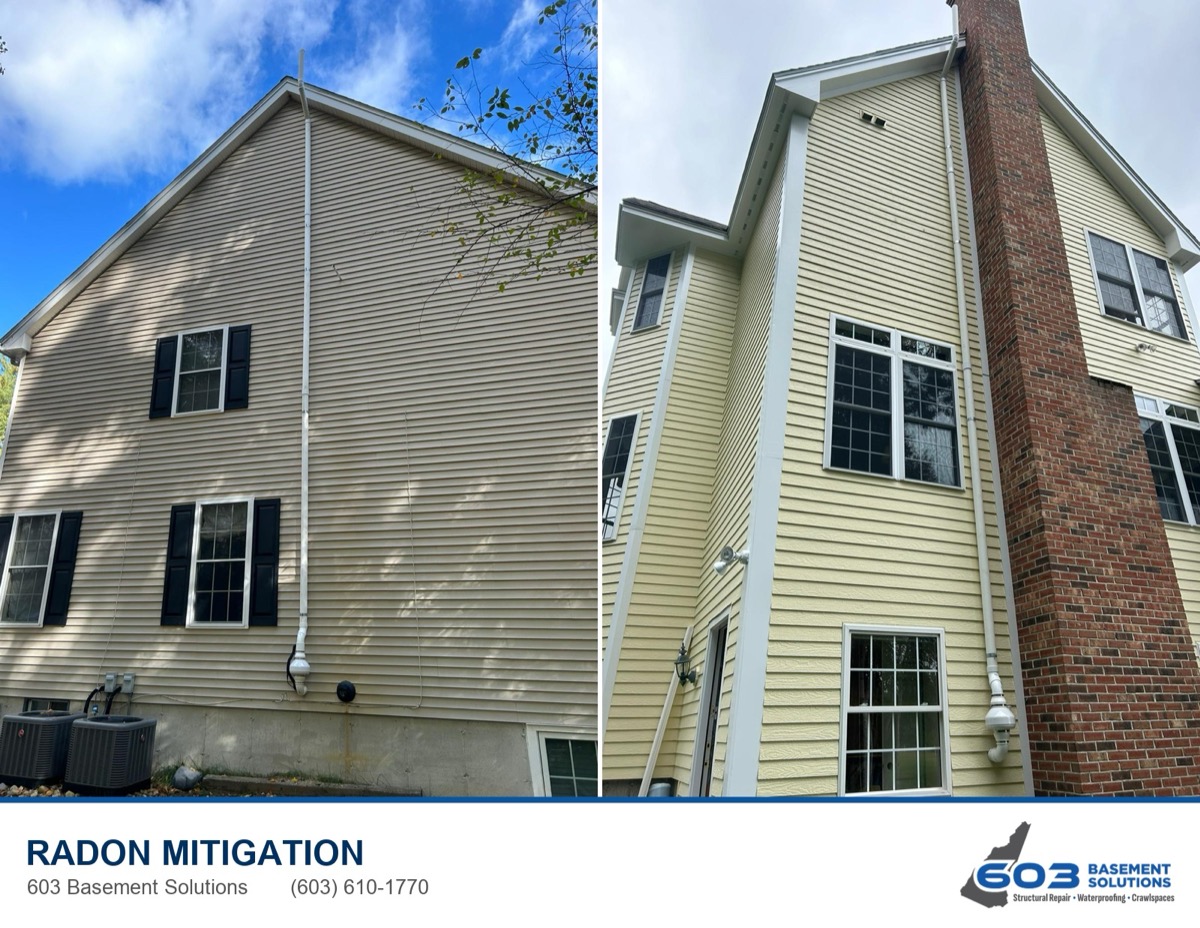
The standard fix is sub-slab depressurization (an active radon system). We seal up the obvious entry points, then run a vent pipe through the slab and add a quiet inline fan. The fan sucks the radon out from under the foundation and pushes it up and out above the roofline, where it just blows away. A small monitor on the pipe shows you the system’s doing its job. Most homes are done in a day.
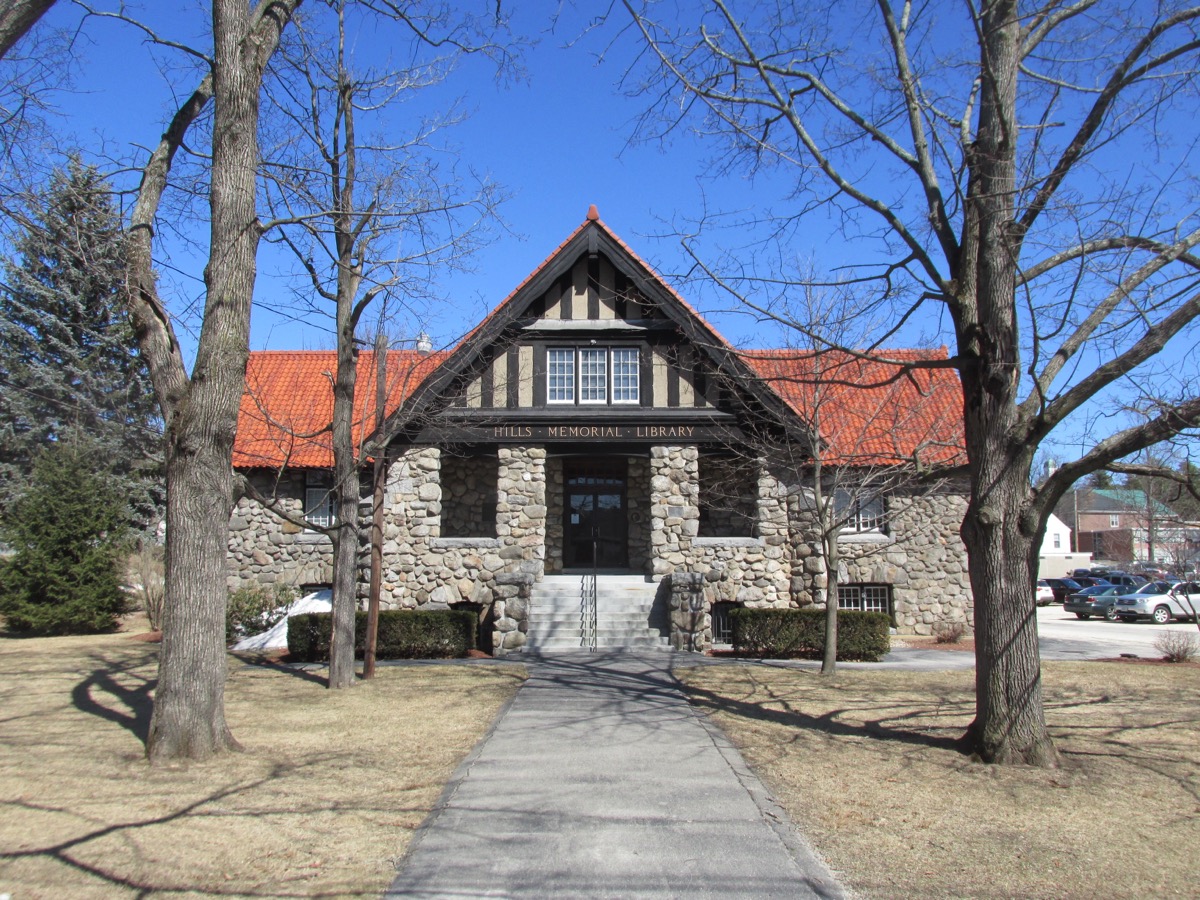
Hudson’s got plenty of dirt-floor and fieldstone crawl spaces in its older Hudson Village and Hudson Center homes. For those, 603 installs sub-membrane depressurization. Same idea: a sealed membrane over the crawl-space floor with the suction system underneath. We do both.
Quick note, because folks mix these up. A radon system is not our Forever Dry System. Forever Dry is the basement waterproofing product. Different problem, different fix. Got water and radon both? We’ll sort out the order at the inspection.
Get your radon levels back down to safe
Tested Hillsborough County homes average 5.3 pCi/L radon, above the 4 pCi/L action level (American Lung Assoc.). 603 installs certified radon systems, $900–$6,000. Free inspection.
Cost of radon mitigation in Hudson
Here’s what we actually charge, the same numbers we quote anyone in NH.
| Service | Price |
|---|---|
| Radon mitigation system | $900 – $6,000 (most homes land $1,950 – $2,250) |
| Radon test | $50 (credited toward the job if you proceed) |
What moves the price is your home, not your town. A walk-out basement with an easy run for the vent pipe sits at the low end. A multi-zone home, a finished basement, or a fieldstone crawl space that needs a sealed membrane runs higher. We give you the number after we see it, and the quote lands within 24 hours. No surprises on install day.
Radon mitigation comes with a 10-year warranty on the system integrity and components. We won’t promise you a specific radon number unless it’s in writing, because the gas belongs to the ground, not to us. But we stand behind the system that controls it.
Hudson: local context
- County and zone: Hudson is in Hillsborough County, predicted EPA Radon Zone 2 (moderate, 2–4 pCi/L), not Zone 1 (EPA Map of Radon Zones, New Hampshire).
- What homes actually test at: Tested homes in Hillsborough County average 5.3 pCi/L across 5,528 county tests, above the 4 pCi/L action level (American Lung Association, Radon Testing Disparity Report for NH).
- The geology: NH’s granite bedrock is the source. Homes on the eastern Merrimack bank draw radon up through slab cracks, sump pits, and dirt crawl-space floors (USGS / NH DHHS).
- Housing stock: The median Hudson home went up in 1983 (US Census ACS 2024 5-year, table B25035), and 82.6% of homes are owner-occupied with a median value of $438,900 (US Census ACS 2024 5-year). About 4.8% of homes go back before 1940 (derived from ACS B25034). Those older ones in Hudson Village and Hudson Center are the ones that usually have fieldstone or dirt-floor crawl spaces, so they need a sub-membrane system, not a simple slab fix.
- Climate note: Hudson gets about 52.9 inches of snow a year (NOAA NCEI 1991–2020 normal, Nashua station, the nearest reporting site across the Merrimack). Snowmelt plus a high spring water table is why we’ll often pair radon work with drainage on the same home.
- Action level: EPA recommends fixing a home at 4 pCi/L or higher (EPA Map of Radon Zones, New Hampshire).
- Permits and code: Radon work that ties into your home goes through the Town of Hudson Inspectional Services office, Town Hall, 12 School Street, (603) 886-6005. The town lists its residential code as the “International Residential Code 2018 (IRC) 2015 with amendments,” so check the exact adopted edition with the office before anyone quotes you a single year (Town of Hudson Inspectional Services).
- Credentials: 603 is a state-certified radon mitigation contractor (cert RMS-113966), licensed and insured, with crews working southern NH since 2015.
What a recent customer said
603 Basement Solutions has a great team to work with. All involved are professional and courteous. The Radon Mitigation quote I received was the final price. I understand unseen problems occur, but I was fortunate. They estimated my radon levels would drop to around 2 but my monitor is reading a 7 day average of .4, WELL below what I was promised and even expected. Highly recommend 603 Basement Solutions
Jeff Eddy, ★★★★★ Google review
Frequently asked questions
Is Hudson, NH in a high radon zone?
Hudson sits in Hillsborough County, which the EPA predicts as Radon Zone 2, meaning moderate, an average of 2 to 4 pCi/L. It’s not Zone 1. But tested homes in the county actually average 5.3 pCi/L, over the 4 pCi/L action level (American Lung Association). The only way to know your home’s level is to test it.
How much does radon mitigation cost in Hudson?
Our radon systems run $900 to $6,000, with most homes landing between $1,950 and $2,250. A radon test is $50, and that $50 comes off the job if you move ahead. The price is about your home’s layout, not your town, and you get a firm quote within 24 hours.
What kind of radon system do older Hudson homes with dirt crawl spaces need?
Older homes in Hudson Village and Hudson Center often have fieldstone or dirt-floor crawl spaces. Those need sub-membrane depressurization: a sealed membrane over the crawl-space floor with a vent and fan pulling radon out from underneath. We install these along with standard sub-slab systems for poured and block foundations.
Ready to get started?
Free inspection, free estimate, and a written quote in your hands within 24 hours.
Common questions about radon
- Does it matter if I test for radon in the summer or the winter
- How can airflow and HVAC systems affect radon levels throughout a house?
- How can I mitigate radon in an older house with no access to the crawl space?
- How do I test for radon in my basement to make sure the levels are safe?
- How do you get rid of radon gas in a basement?
- How much does a typical radon mitigation system cost?
- How much radon is dangerous if I’m going to live in the basement of a house?
- How quickly do radon levels change?
- I have a radon mitigation system that blows air out of my house. Is that normal?
- I sleep in the basement. Should I be scared of radon?
- If a basement’s concrete cracks, will radon get into the air inside the house?
- If our radon test came back above 12, will a mitigation system really get our home to a safe level?