Walkways and steps
A dropped panel can leave an awkward edge near an entry or path. The panel and adjacent landing both need to be assessed.




603 Basement Solutions · Poly Level
A settled slab may be worth saving. Poly leveling can raise suitable concrete by placing expanding material beneath it. First we check why the slab moved and whether the concrete is sound enough to lift.
Poly leveling is a form of slabjacking. Material is introduced through small access holes beneath a settled slab; controlled expansion can fill space and lift the panel. It is a repair option for suitable concrete, not a cure for every cause of settlement.
The American Concrete Institute defines slabjacking as raising a slab or filling voids beneath it by pressure injection. It also warns that lifting does not fix poor underlying soil. We check the slab, surrounding grade, drainage, and the surface it needs to meet before recommending the work.
This page is about exterior and other eligible nonstructural concrete. If movement involves a load-bearing slab, footing, or foundation wall, start with slab foundation repair or foundation repair.
A dropped panel can leave an awkward edge near an entry or path. The panel and adjacent landing both need to be assessed.
Uneven sections can meet at a harsh transition. We look for cracking, drainage, and whether the concrete can tolerate a lift.
A low section may collect water or separate from the neighboring surface. Access, joints, and slab condition determine whether lifting is sensible.
Some local settlement can be evaluated for leveling. Movement connected to the building or its foundation needs a different diagnosis.
For the broader lift-or-replace decision, see concrete leveling. For other concrete problems, start with our concrete repair hub.
We look at how much of the slab moved, the condition of its edges and cracks, where rainwater flows, nearby structures and utilities, and the height we can reasonably restore. Then we explain whether poly leveling, another repair, or replacement is the better call.
A lift does not erase cracks, restore worn surface concrete, or guarantee that unstable ground will stay put. If a slab is badly broken or its support problem cannot be addressed, we would rather say so than sell you a short-lived fix.
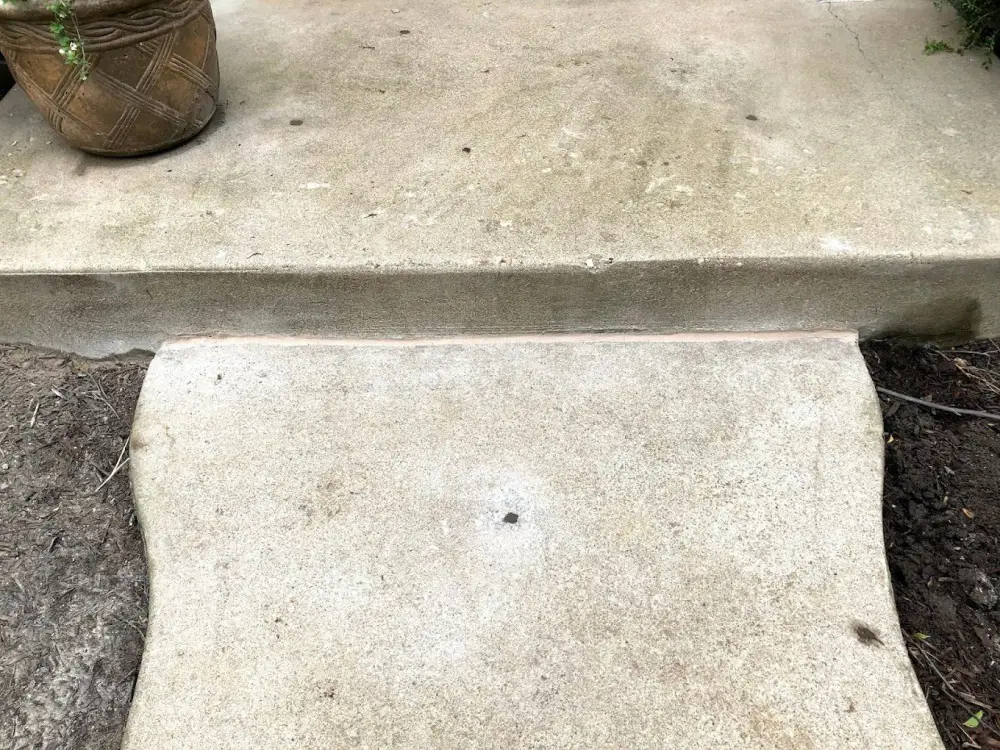
A slab with enough integrity and a practical lift path may be a candidate for leveling. The plan should account for the likely cause of settlement.
Extensive fracture, missing material, or a base that needs rebuilding can make new concrete the more honest recommendation.
FHWA’s pavement-treatment definitions separate slab stabilization, slabjacking, and full-depth replacement. Those terms help clarify the work, though a residential project still needs its own design and scope.
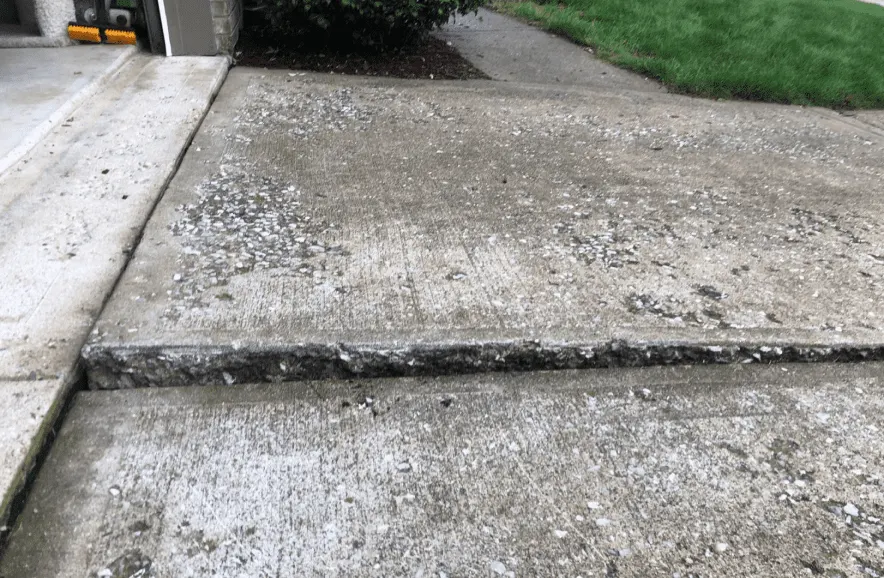
Both are slabjacking approaches, but the injected materials differ. We are describing the poly option here, not claiming that every slabjacking method is one of our installed products.
No. Lifting changes elevation. Existing cracks, stains, scaling, or worn texture can remain. Surface repair or replacement is a separate decision.
Not as a blanket answer. A building foundation transfers structural loads and needs its own assessment. See push piers, helical piers, and slab foundation repair for the structural paths.
We quote from the actual site: slab area, access, condition, movement, drainage, and the scope of preparation all matter. We will explain what the quote includes.
We will show you what moved, what we can lift, and when replacement is the better choice.