



A new slab can solve a failed surface. It cannot make a hidden support or drainage problem disappear.
A sound low panel may be worth leveling instead of demolishing.
Broken concrete or failed support may call for removal, base work, and a new slab.
A slab that carries the house needs a structural assessment before a pour is scoped.
Before pricing a new Nashua slab, we identify what the existing concrete supports. A basement floor inside foundation walls may only carry contents, while a slab that carries building loads is a different problem. At a driveway, we check the garage edge, street connection, and water route. At a patio, we check door thresholds, steps, and downspouts. ACI RAP-1 discusses structural concrete cracks, and that reference helps separate a surface defect from movement that affects support. If the concrete has failed through the work area, replacement may be justified. If a crack is stable and the slab remains serviceable, opening the whole area may be wasteful. We show you which part drives the recommendation.
Removal is not automatic. A sound basement slab with a local spall or stable crack may be a candidate for repair instead of replacement. An intact low exterior panel may be a candidate for leveling rather than demolition. ACI RAP-7 discusses horizontal concrete repair preparation, and ACI RAP-11 discusses slabjacking assessment. Those references describe assessment and preparation, not a promise that leveling is always cheaper. If the base has failed, the panel is fractured, or water has undermined the slab, removal and base work may be the honest recommendation. We mark the limits of removal so a small repair does not quietly become a full replacement. The written scope should say what stays and why.
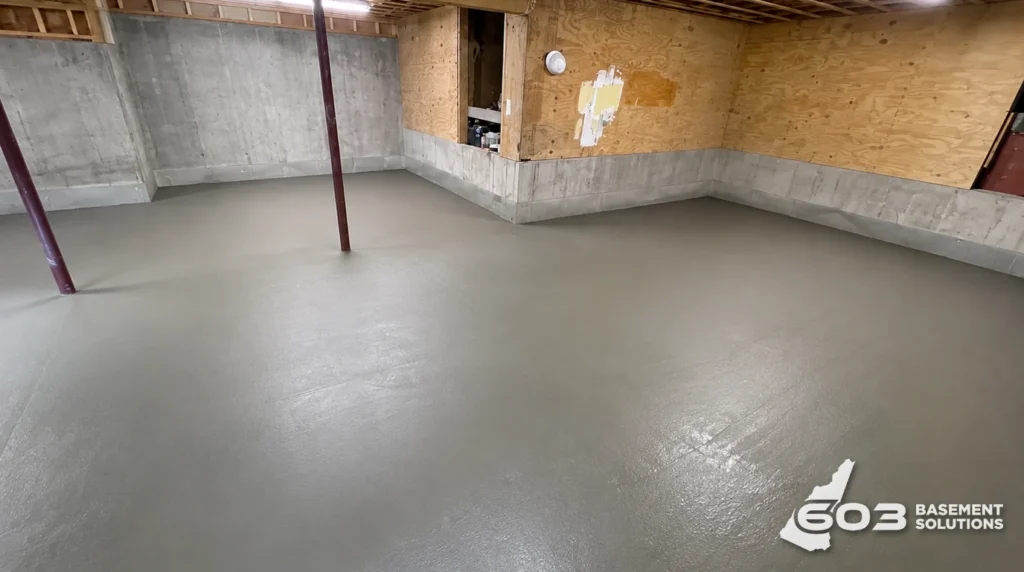
The method follows the diagnosis. If the slab is sound and only low, leveling may be worth comparing. If the surface is failed but the base is intact, a partial repair may work. If the base, drainage, or support is the problem, a new pour may be the only durable option. NRMCA CIP6 discusses planned slab joints, and joint layout depends on the actual slab, restraints, and use. We do not publish one universal thickness, mix, reinforcement, or joint spacing for every Nashua yard. A slab carrying building loads needs a structural plan before we price concrete. The proposal should explain why the chosen method fits this slab rather than listing a default construction sequence.
NRMCA's slab-joint guidance is general technical guidance, not a specification for this house.
Nashua Building Safety reviews building construction documents and inspects permitted work. That general function does not answer the permit status of an individual basement, driveway, or patio pour. For driveway work reaching the street, Nashua Engineering has separate driveway and right-of-way permit routes. These are questions to confirm for the specific project, not blanket approvals or denials.
Read the Nashua source. We check the approval path against the proposed scope.
A new slab can cover a problem instead of solving it. If water has been moving under the old concrete, placing a new surface without addressing drainage may repeat the failure. If a basement slab meets perimeter waterproofing, the new concrete must be coordinated with it rather than buried over it. Utility relocations and structural changes may sit outside a concrete quote. We identify those items before assuming the scope is complete. The written scope separates the pour from demolition, drainage, and restoration that another trade may handle.
Every slab has fixed edges. A basement floor meets walls, posts, stairs, drains, and perhaps a sump. A driveway meets the garage, walks, and the street end. A patio meets doors, steps, landscaping, and downspouts. We record those junctions before removing anything. We map the path for debris and fresh concrete through the actual house, including finishes that need protection. We ask where rain will go after the surface is placed. A new pour that creates a lip at the garage or sends runoff toward the house is not an improvement. Those answers shape the pour before we begin.
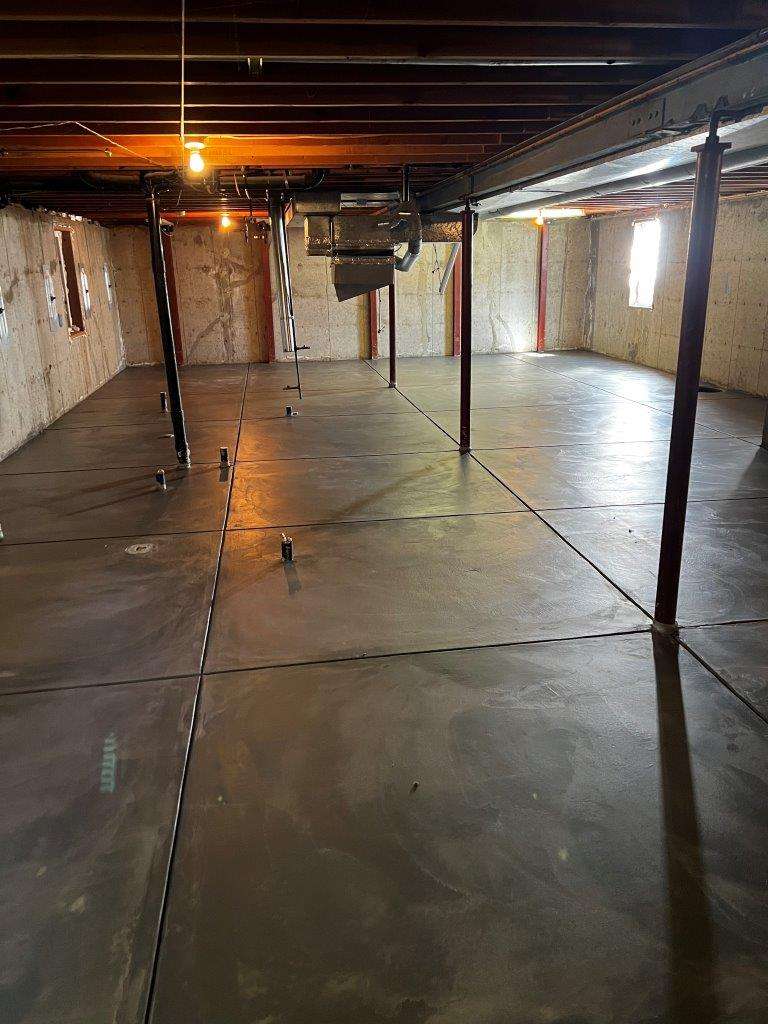
A useful proposal names the particular basement, drive, or patio sections. It lists demolition limits, base and moisture or drainage preparation, placement, finish, and access while concrete cures. It should explain why a new slab is favored over keeping, repairing, or leveling the old one. If only one section needs a new pour, the quote should not quietly include the whole outdoor area. If movement under the building is unexplained, we stop and inspect that before placing a new surface. The estimate should separate the concrete work from drainage, demolition, and other trades. That separation lets you compare scopes honestly instead of comparing one number against another.
We may tell you to keep a sound slab. That is still a useful outcome from a free inspection, and it costs less than covering a problem we have not identified. If a basement floor is stable and serviceable, opening the whole basement may be wasteful. If a driveway panel is sound and only low, leveling may be worth comparing before replacement. If a patio has one broken corner, a partial repair may be enough. The decision should follow the diagnosis, not a sales target. A smaller scope can still include base repair, joint work, or drainage improvements. The written scope should say what we recommend, what we do not recommend, and what you can monitor before deciding on a larger pour.
Not always. We check whether the concrete is sound enough to level and whether its base and drainage need work before recommending a new pour. If the slab is fractured or the base has failed, replacement may be the honest option. The free inspection produces a written scope that separates leveling, repair, and replacement so you can compare the actual work.
Show us the concrete and we will tell you what is worth fixing, what can stay, and what still needs checking.

