



A low slab at the road, garage, or patio may need different work than one that simply settled in the middle.
A sound low panel may be worth leveling instead of demolishing.
Broken concrete or failed support may call for removal, base work, and a new slab.
A slab that carries the house needs a structural assessment before a pour is scoped.
Start by marking both ends of the drive and the section that actually moved. A garage approach and a road connection impose different limits, so the low spot alone does not tell us the fix. We look for cracking, settlement, ponding, and whether the slab is sound enough to remain. If the slab is sound and simply low, leveling may be worth discussing. If it is broken, replacement may be the honest path.
Not every slab needs full removal. A driveway may have one settled panel while the rest stays serviceable. A patio may have a low corner near a step while the main field is intact. A basement slab may be sound except at a drain or crack. We separate what can stay from what must come out. Removal limits depend on access, edges, and how the new slab will meet existing concrete. If the existing slab is sound and low, leveling may be a smaller scope. If it is fractured or undercut, partial removal may not solve the problem.
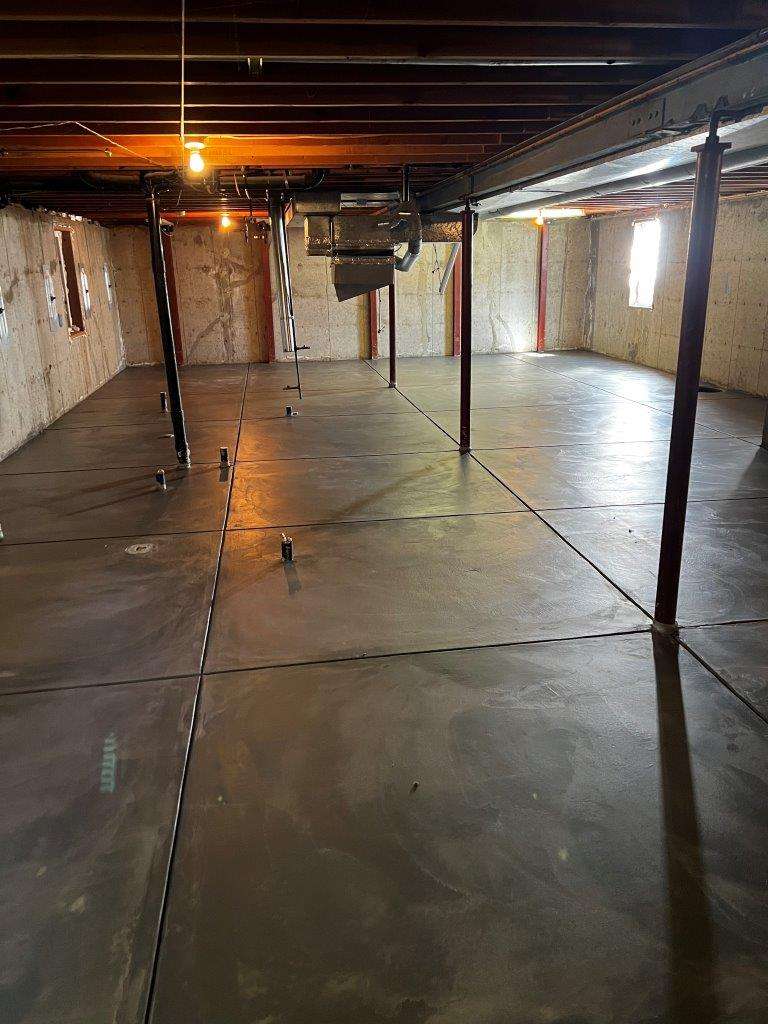
Method selection starts with what the slab does. A new basement slab, driveway slab, and patio slab each carry different expectations for base, water, edges, and joints. ACI RAP-7 discusses horizontal concrete repair preparation, and NRMCA CIP6 discusses planned slab joints. If the concrete is sound and low, slabjacking assessment may be relevant. If the slab is broken, replacement may be the better route. We do not prescribe thickness, mix, or reinforcement on this page because those are job-specific questions.
NRMCA's slab-joint guidance is general technical guidance, not a specification for this house.
Londonderry says Public Works reviews the portion of a residential driveway inside the town right-of-way and has a separate right-of-way permit route. That matters when the low slab is at the road entrance, because town-side grade and private concrete are not the same scope. If the low spot is by the garage or patio, the town right-of-way question may not apply.
Read the Londonderry source. We check the approval path against the proposed scope.

Water is the quiet problem. If the base was not draining, a new slab can repeat the old failure. Access can also change the scope. A backyard patio with no equipment path is a different job than a driveway near the street. Edges and joints matter because a slab that meets a garage threshold or road connection has different limits than one in the open. Curing and use timing are job-specific questions, not a promise. If the low spot is at the road entrance, that condition may add a separate review route. That is a reason to keep exterior flatwork out of a structural quote.
Site constraints decide how much concrete can move in one day. A narrow drive, a steep grade, or a patio behind a fence can limit equipment and removal. The road connection is its own constraint because the town side and private side may not match. If your low slab is at the road entrance, we must distinguish town-side grade from private concrete. If it is by the garage or patio, that can be a different, narrower quote. Mark both ends of the drive and the section that actually moved. The garage threshold and road connection impose different limits, so the estimate should show which one is in scope.
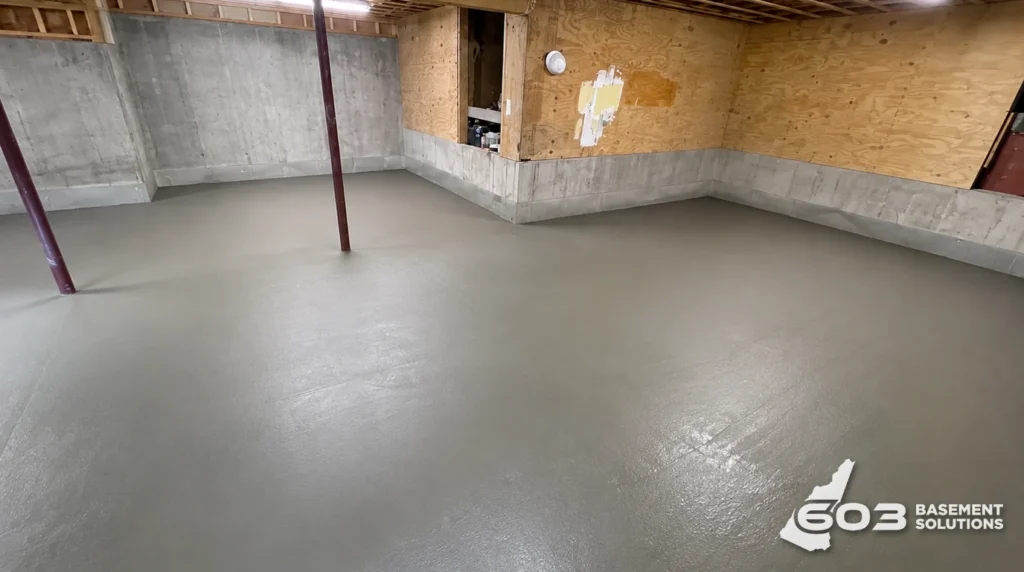
A written estimate should show what is removed, what stays, and how the new slab meets existing concrete. It should list access limits, water control, edge conditions, and joint layout as job-specific questions. For a driveway, the estimate should separate the private slab from any portion outside your property line. For a patio, it should show how the slab meets steps or walls. For a basement, it should show how the slab meets drains, columns, or walls. If the low slab is sound, ask whether leveling is a smaller scope before you approve replacement.
Sometimes the honest answer is no work. A low slab that drains away from the house and is not broken may not need replacement. A patio with one low corner may be leveled instead of torn out. A driveway with a settled panel may be a smaller repair than a full pour. If the slab is sound and low, ask whether leveling is worth discussing. If it is broken, undercut, or holding water against the house, replacement may be the smaller long-term decision.
It can. The town-side grade and the private concrete may be different scopes. If the low spot is by the garage or patio, that can be a narrower quote. We mark both ends of the drive and the section that moved before we price the work. That way you see which part of the slab is settling and which part is holding. You can then decide whether to pour the full drive or only the section that moved. We keep the two scopes separate so the quote matches the work you actually need.
Show us the concrete and we will tell you what is worth fixing, what can stay, and what still needs checking.

