



A low floor below a post needs a support check before anyone quotes a lift.
A basement floor within another foundation may not carry the building.
Connected wall, door, and floor changes deserve measurement of the load path.
A dropped patio or drive belongs in concrete repair unless the house also moved.
We record floor elevations from fixed reference points and mark the width and offset of each crack. Then we compare those readings with any wall-base gap, post connection or door that has changed. The slab’s appearance cannot show whether a footing lies below a wall or column. If the support detail is concealed, we say so and identify the next inspection step. A stable nonstructural basement floor crack can have a smaller repair path; connected movement at a bearing point needs structural review before a method is priced.
Not every uneven slab needs support work. If the slab is a basement floor that is not carrying structure, a low spot may be a drainage or finish issue. If the slab is load bearing, the question is whether it is still transferring load without distress. Look at the walls above it, the columns, and the connections. A slab that has moved slightly but shows no wall separation, no widening cracks, and no door or window binding may be a monitoring candidate. Cosmetic leveling changes how the surface feels. Support work changes how the slab carries load. Those are different scopes, different risks, and often different quotes. Do not let a flatness complaint drive a structural repair.
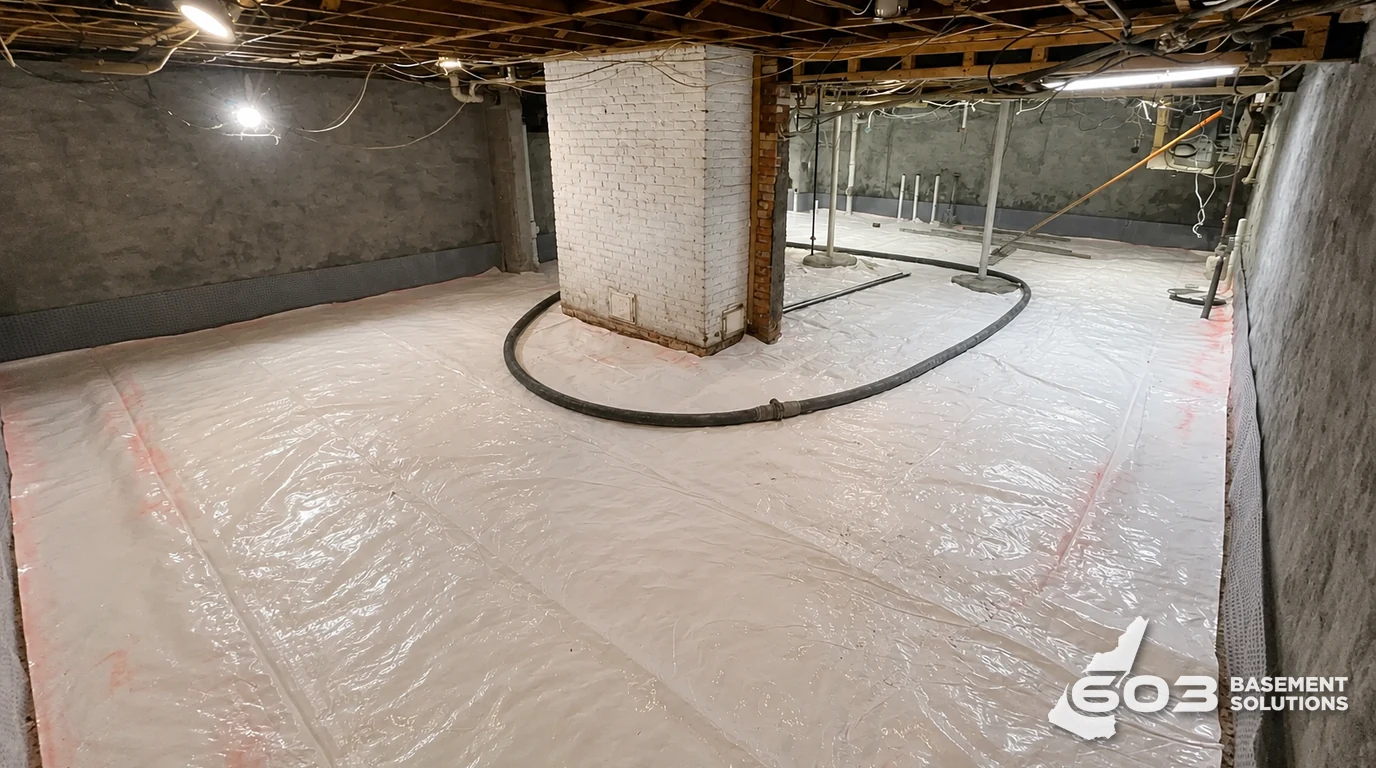
Method selection starts with what the slab is doing, not with a product. ACI RAP-11 discusses slabjacking assessment, and ACI RAP-7 discusses horizontal concrete repair preparation. For a load-bearing slab, the evaluation looks at movement pattern, crack activity, wall and column connections, and whether the slab is still supported. For a nonstructural floor, the evaluation may be about drainage, finish, or a localized patch. If the slab is stable and the movement is old, monitoring may be reasonable. If the movement is active or connected to wall distress, a design professional may need to review before repair. No method is promised until the slab is measured.
ACI’s structural-slab distinction is general technical guidance, not a specification for this house.
Londonderry’s residential building-permit page includes remodels and renovations in its residential-construction route. That is a better starting point for a foundation-slab proposal than the town’s driveway right-of-way rules. We first identify whether a wall or post transfers load through the area that moved. Then we can describe the proposed support work accurately and confirm the review route with the town.
Read the Londonderry source. We check the approval path against the proposed scope.

If a wall, footing or column support is moving, coating the floor will hide the symptom without restoring support. Water at the perimeter can also require a separate fix. We measure the crack, the wall connection and any post base before choosing work. A low driveway panel is a different service and does not belong in the load-bearing diagnosis. Ask the contractor to name the cause they found and the support the proposed work will change.
A finished wall can hide separation at the slab perimeter. A post base may be covered by flooring or storage. We need access to those points and repeatable elevation references before deciding whether concrete or the support below it has moved. If the evidence is hidden, the estimate should say so and explain what inspection is needed. There is no honest way to select a lifting or replacement method from a low spot at the road entrance.

A useful estimate starts with measurements, not a lump sum. Record the elevation difference across the slab, the crack locations and widths, and any wall or column separation. Note what is load bearing and what is not. Note what is included and what is excluded, especially exterior flatwork. If the plan is monitoring, write down what will be checked and when. If the plan is repair, write down the sequence and the limits. Ask for the measurement method in plain language. A written estimate should let you compare two bids without guessing which slab was measured or which scope was left out.
Sometimes the right answer is no work. If the slab is not load bearing, the movement is old, and there is no wall separation or active cracking, monitoring may be reasonable. If the slab is load bearing but the movement is small and stable, a design professional may recommend watching it rather than opening it up. If the low spot is only a drainage or finish complaint, a smaller repair may be enough. The decision should follow the measurements, not the fear. Ask what would change the recommendation: new cracks, wider gaps, sticking doors, or water where it should not be. If nothing changes, a smaller scope or no scope can be the honest call.
A wall or post near the crack is a clue, not proof that the floor slab was designed to carry it. We inspect the support detail and look for a footing or thickened area where the load transfers. We also measure whether the crack and nearby wall have moved together. If those parts are hidden, the written scope should say what still needs investigation. Do not lift a slab under a bearing point based on the floor’s appearance alone.
Show us the concrete and we will tell you what is worth fixing, what can stay, and what still needs checking.

