
That crack in your garage slab might be a floor problem, or it might be a foundation problem. Here is how to tell.
A basement floor within another foundation may not carry the building.
Connected wall, door, and floor changes deserve measurement of the load path.
A dropped patio or drive belongs in concrete repair unless the house also moved.
Start where the building bears on the concrete. Measure floor elevations from fixed reference points, record cracks and gaps where walls or posts meet the slab, and note whether doors or finishes have shifted. Compare the same points later to learn whether movement is continuing. A garage floor can be nonbearing even when the nearby house foundation is structural; drawings or a careful site inspection establish the difference. A cracked driveway apron is another job entirely.
Not every slab symptom needs a repair. A hairline crack in a nonstructural basement floor can stay on a monitoring list if it is not widening and the walls above are stable. A garage-side driveway panel that has lifted a little may be a flatwork issue, not a foundation issue. If the slab is load-bearing but the movement is small and stable, monitoring with dated photos and a level line can be reasonable. The key is to separate the structural slab from the cosmetic floor and the exterior flatwork. If the slab is sound and the problem is appearance, support work is not the answer.
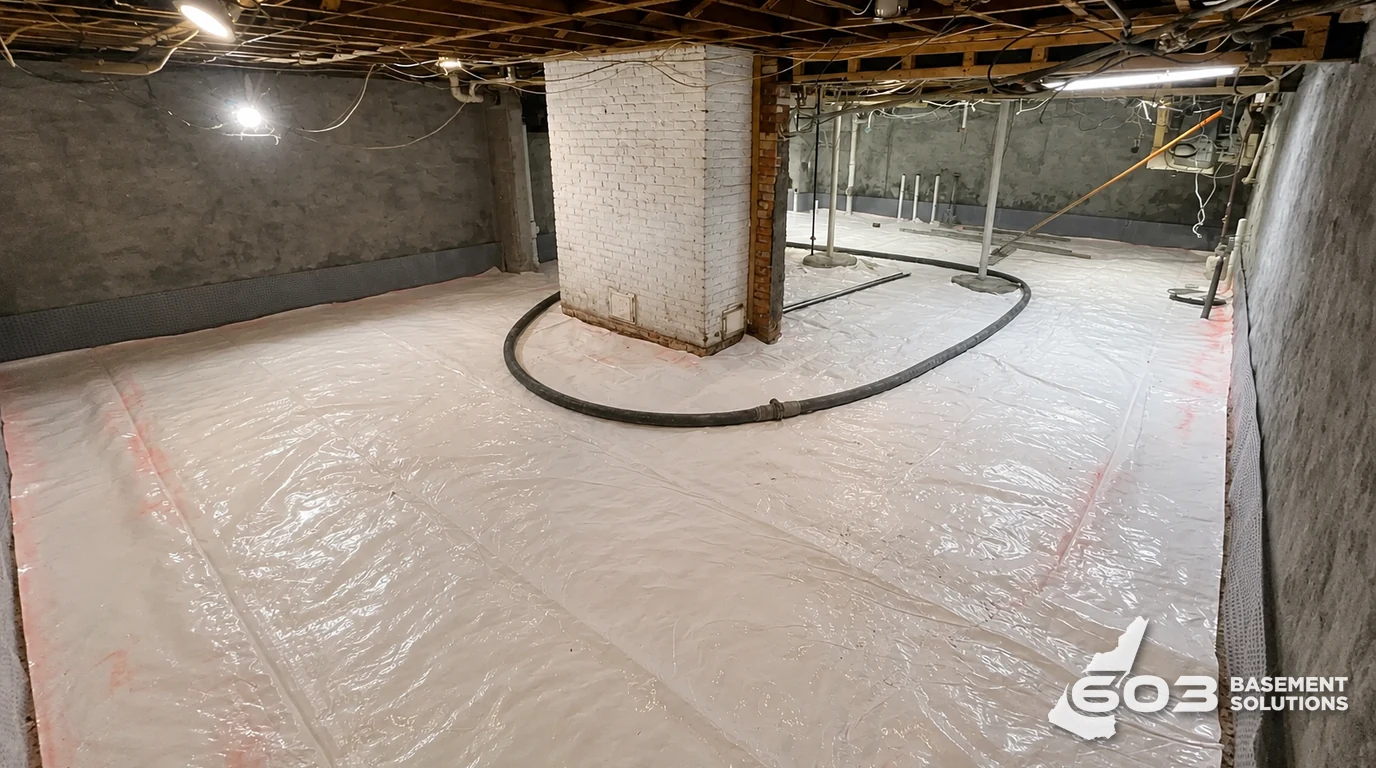
Support and cosmetic leveling are different proposals. Cosmetic leveling tries to make a surface look flat. Support work asks whether the slab is still carrying the load it was built to carry. ACI RAP-11 discusses slabjacking assessment, and ACI RAP-7 discusses horizontal concrete repair preparation. For a load-bearing slab, the first question is whether the movement is done or ongoing. If it is ongoing, adding a patch or a lift may not address the cause. If it is stable and the slab is sound, a smaller repair or no repair may be reasonable. We do not promise piers, epoxy, lifting, or a repair outcome. We write the scope after the measurements.
ACI’s structural-slab distinction is general technical guidance, not a specification for this house.
Rochester’s Building, Licensing and Services permit guidance includes residential alterations in its building-permit process. For an existing foundation, the important question is what is being altered: a bearing slab, footing, wall, or only an interior wearing surface. We describe the affected load path and proposed repair before checking the applicable town process. The permit page does not diagnose movement or mean every floor crack needs structural work.
Read the Rochester source. We check the approval path against the proposed scope.

Some slab problems are not slab problems. A wet basement floor may be drainage. A cracked driveway apron may be flatwork. A sticking door may be a frame issue. If the load-bearing slab has moved because of a failed footing or a soil condition, that is a design question, not a concrete patch. We cannot diagnose soil, water table, or footing design from a crack alone. If the measurements show movement that affects the structure, a design professional may need to review it. We will tell you when the scope stops being concrete.
A structural slab may sit below finished rooms, mechanical equipment, or a bearing partition. Before proposing access, identify utilities, floor heating, and any column or wall load that cannot be interrupted. The measurement record should distinguish the house foundation from a separate garage or driveway surface. If the work cannot be safely defined from visible conditions, the estimate should include investigation rather than promise a lift amount.

A useful Rochester estimate records floor elevations, crack widths, dates, and connected wall or door symptoms. It identifies which concrete carries a building load and states the assumed cause and limits of investigation. The proposed support method, excluded drainage or cosmetic work, and any need for a design professional should be explicit. Comparing two scopes is difficult when one quietly includes an exterior panel and the other is limited to the foundation.
Sometimes the right answer is no work today. If the slab is load-bearing but the measurements are stable, if the cracks are not widening, and if the walls and doors above are fine, monitoring is a real option. Take dated photos and re-measure the same joint every few months. If nothing changes, you may not need a repair. If the complaint is only a lifted garage-side driveway panel or a street entrance, that is not a load-bearing slab scope. Keep it separate. If the movement is small and cosmetic, a smaller repair may be enough. We would rather tell you to wait than sell a support job that the measurements do not support. When in doubt, get the measurements first.
Look at what the slab carries. Whether it carries building loads depends on how the walls and posts transfer weight. A basement floor inside a separate foundation may not be structural; a drawing or careful inspection can establish that. Then measure the joint by the garage door, check for wall cracks, sticking doors, or sloping floors. Those connected symptoms tell you whether the slab is moving as a support system. If you are unsure, 603 Basement Solutions can inspect and measure it, then tell you whether the scope is structural, cosmetic, or no work at all.
Show us the concrete and we will tell you what is worth fixing, what can stay, and what still needs checking.