



A floor crack pointing toward masonry does not prove the chimney footing has moved.
A Stoneham cellar-floor crack that runs toward a masonry chimney does not tell us that the chimney footing is failing. The chimney may have its own foundation and the walking slab may simply meet it at a joint. 603 Basement Solutions looks for masonry movement, floor offset, wall change and construction details before recommending a structural repair. If the chimney is stable and only the floor is damaged, a limited concrete treatment may be appropriate. If the masonry mass or its support is moving, the repair needs a specialist-defined load path, not a patch drawn from the floor crack.
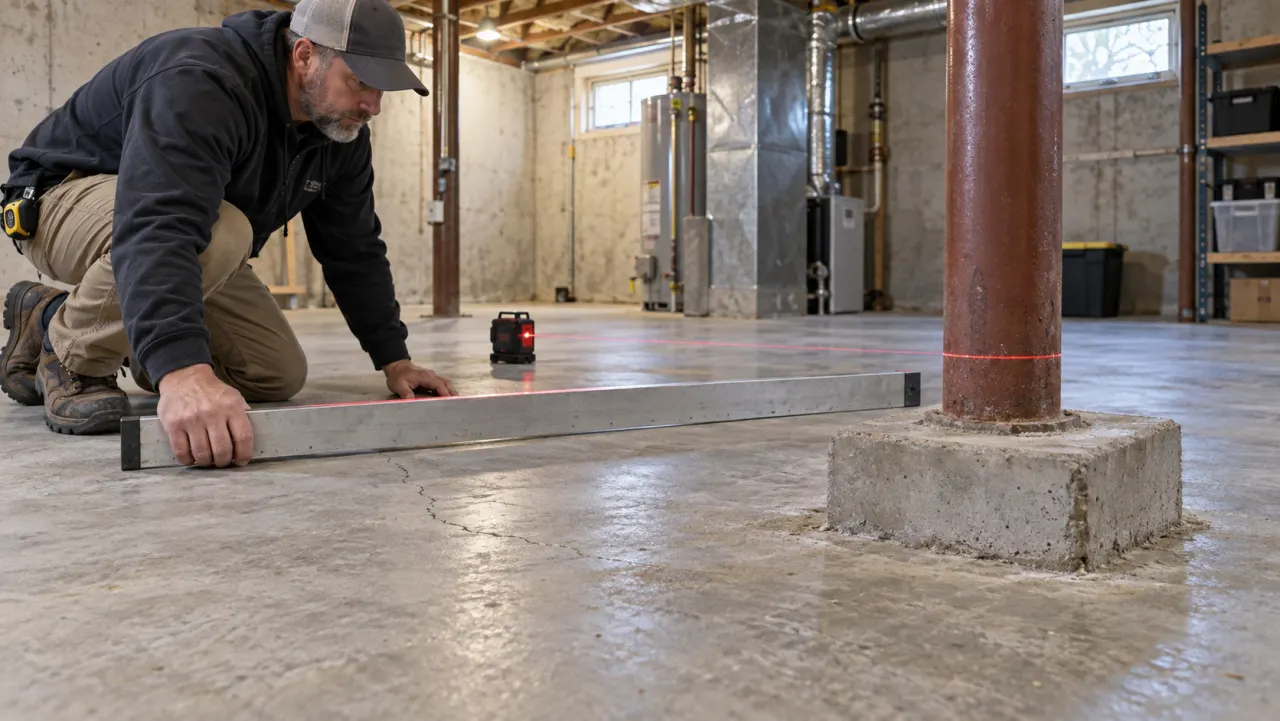
We ask whether the chimney has new cracks, separation from adjacent framing, a changing lean or displaced masonry at the base. We photograph the same points and measure floor elevations around the mass, not just along the longest crack. A floor slope nearby may predate the visible line or reflect a separate base condition. We review records of fireplace, flue, chimney or basement work. The presence of a chimney does not establish that the walking floor carries it.
The gap or joint where floor and masonry meet can be purposeful. A patch applied across moving or dissimilar elements may simply split again. We note whether the crack crosses the floor independently, whether there is vertical offset, and whether moisture or past work follows the line. If the masonry shows movement, a qualified structural and chimney professional should assess it before the floor is opened. We do not claim 603 performs every flue or chimney repair; those are separate specialist responsibilities.
We also compare the chimney with nearby foundation walls and the framing it passes through. A gap at an upper floor, a cracked firebox or a shifting flashing detail may suggest that the masonry needs its own review. None of those signs can be safely repaired by injecting the basement walking slab. A stable chimney with an unrelated floor patch calls for a much narrower conversation.
Plans or visible details might show a separate chimney footing. If not, a targeted opening can be considered only after utilities, access and safe support are planned. The proposal should state whether the question is floor thickness, base support, footing location or masonry bearing. Opening a wide area without a question risks damaging a stable structure and can make an eventual repair harder. Monitoring with repeatable measurements may be appropriate when nothing indicates progression.
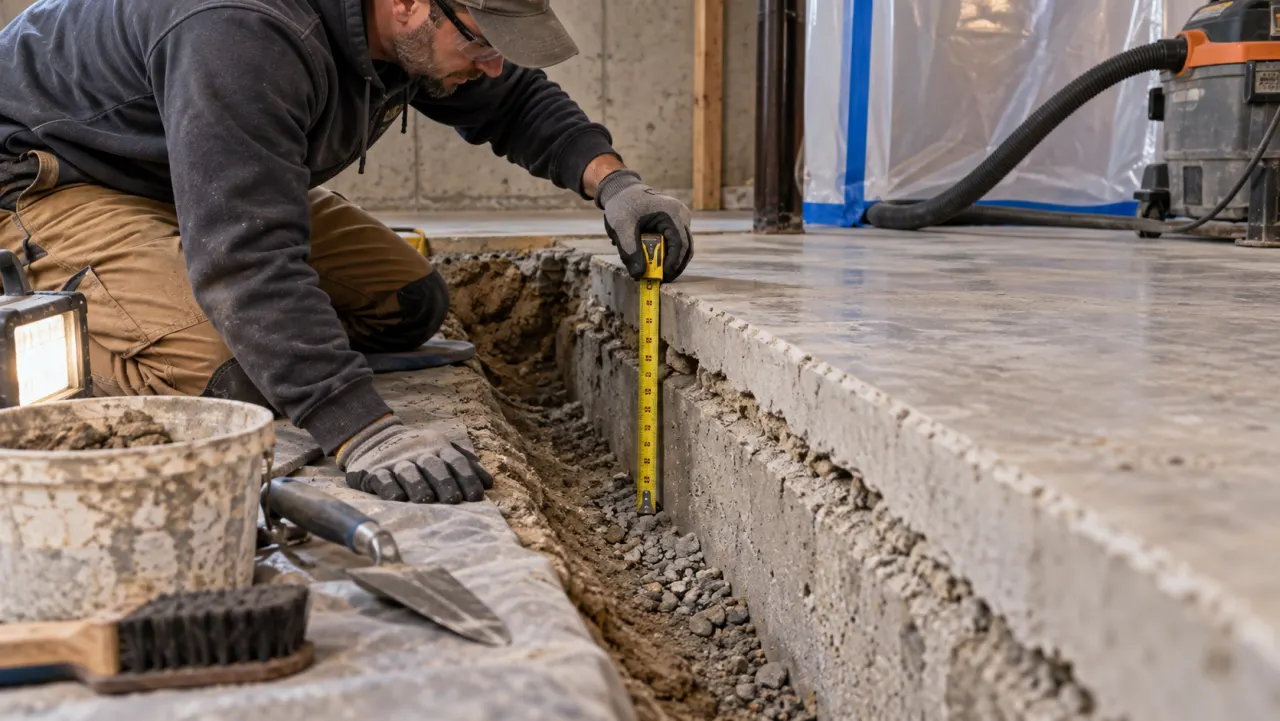
ACI’s slab-on-ground FAQ distinguishes soil-supported walking slabs from slabs that carry structural loads. ACI 332.1-18 provides residential slab and footing context. Neither source establishes the support detail below a Stoneham chimney. The diagnosis must trace the chimney’s actual bearing and the surrounding floor as separate elements. A large floor crack does not automatically make this slab a foundation; a small crack does not rule out masonry movement elsewhere.
If the chimney and footing are sound, concrete repair may address a bounded stable crack after its cause is understood. Concrete leveling might fit a separate intact sunken floor panel, but lifting adjacent concrete should not load or distort the masonry. A new floor slab may fit widespread floor failure with a sound chimney support and a protected interface. None of those services substitutes for correcting a deficient footing or unstable masonry.
If structural bearing is compromised, structural and foundation repair is the appropriate evaluation path with any needed engineering or chimney specialist. A city page cannot prescribe piers, jacking, reinforcement or a universal foundation detail. The estimate needs to identify who designs and verifies the structural work and how the masonry is supported during it. Concrete that looks neat after finishing is not proof the chimney is stable.
Water at a floor/chimney joint might have a different route from masonry movement. We ask when dampness appears, whether a wall-floor seam is wet and whether plumbing runs nearby. Basement waterproofing can address a verified water path but cannot restore a moving footing. Likewise, staining or an old mortar repair is historical context, not a current structural measurement. We keep these observations separate in the inspection notes.
Access can be constrained around a fireplace, finished wall or utility. We discuss what can be observed without disturbance, what requires a specialist, and what a controlled opening would add. The homeowner should know in advance which evidence would move the decision from floor treatment to structural support. That prevents a routine-looking concrete quote from obscuring a risk to a heavy masonry element.

Google review · Customer experience
Adam Smith ★★★★★
“I called 603 Basement Solutions to repair my radon mitigation system. The response was quick and Justin was able to quickly repair my existing system. I had a great experience with the company and would highly recommend.”
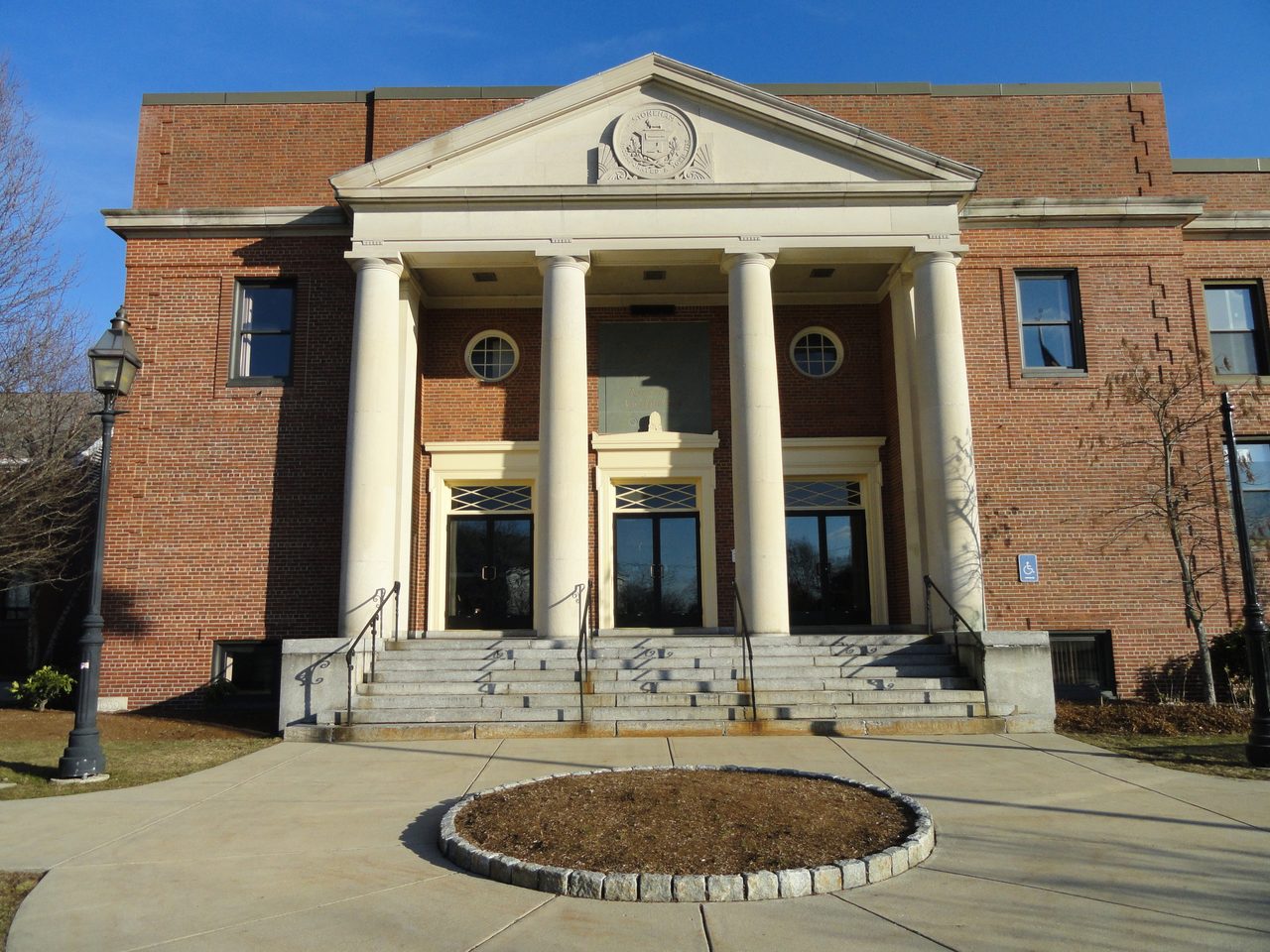
The Stoneham Building Department FAQ provides a town route for building-work questions. Once the work is defined as floor repair, targeted investigation, footing support or masonry work, we confirm the relevant local review. We do not say that every cellar crack requires a permit, nor infer that Stoneham houses share one footing type, soil profile or chimney era. This town source is a process anchor only.
Ask for a written distinction between floor damage, chimney-support evidence and any separate specialist work. A useful proposal records measurements, states what remains hidden, names the responsible professional for structural decisions and specifies how the floor will be restored. If a contractor proposes to patch the crack, ask whether the masonry joint and footing were evaluated. If they propose piers, ask what measured movement justifies them.
Do not buy foundation piers for a stable floor line merely because it points toward a chimney. Do not patch across an actively separating masonry interface and assume the mass is safe. Monitoring or limited floor repair may fit a sound chimney; moving masonry calls for specialist assessment. Send 603 wide photos of the chimney base, surrounding walls, entire floor and any dated comparison. We will explain which condition we can address and when another professional needs to lead.
Show us the affected concrete. We will explain what we measured, what can stay, and which scope fits the house.

