



A new entry walk has to meet the first step safely and stay within its private work area.
A replacement Groveland entry walk should meet the front step safely and carry water away instead of creating another low spot. We do not assume a cracked walk needs a full pour. 603 Basement Solutions checks which concrete is unsound, how the entry and driveway connect, and whether the work stays on private ground. If the walk is intact but low, concrete leveling may keep it. If damage is small and stable, concrete repair may be enough.
The front step is the fixed end of the job. We measure its height, the walkway grade and the adjacent driveway edge. A new slab that looks clean in the middle can still create a tripping transition where it meets an old step. We also ask where water collects and whether a downspout crosses the route. The replacement has to work as a walking surface and a drainage surface, not just a fresh gray strip.
We mark sections that are broken through, rocking or badly unsupported. A hairline surface mark alone is not enough evidence for demolition. The scope should say which pieces leave, which remain and how the new work joins them. If the step itself moves, it deserves its own support question. A thin new walk cannot hold up a failed step or a shifting foundation.
Sometimes the entry walk and step are separate pieces. Sometimes they appear connected. A photo is not a reliable way to know what bears on what. We inspect the joint and accessible edges, and we identify whether a support or footing needs separate attention. If structural movement is present, we route it to structural and foundation repair before hiding it with flatwork.
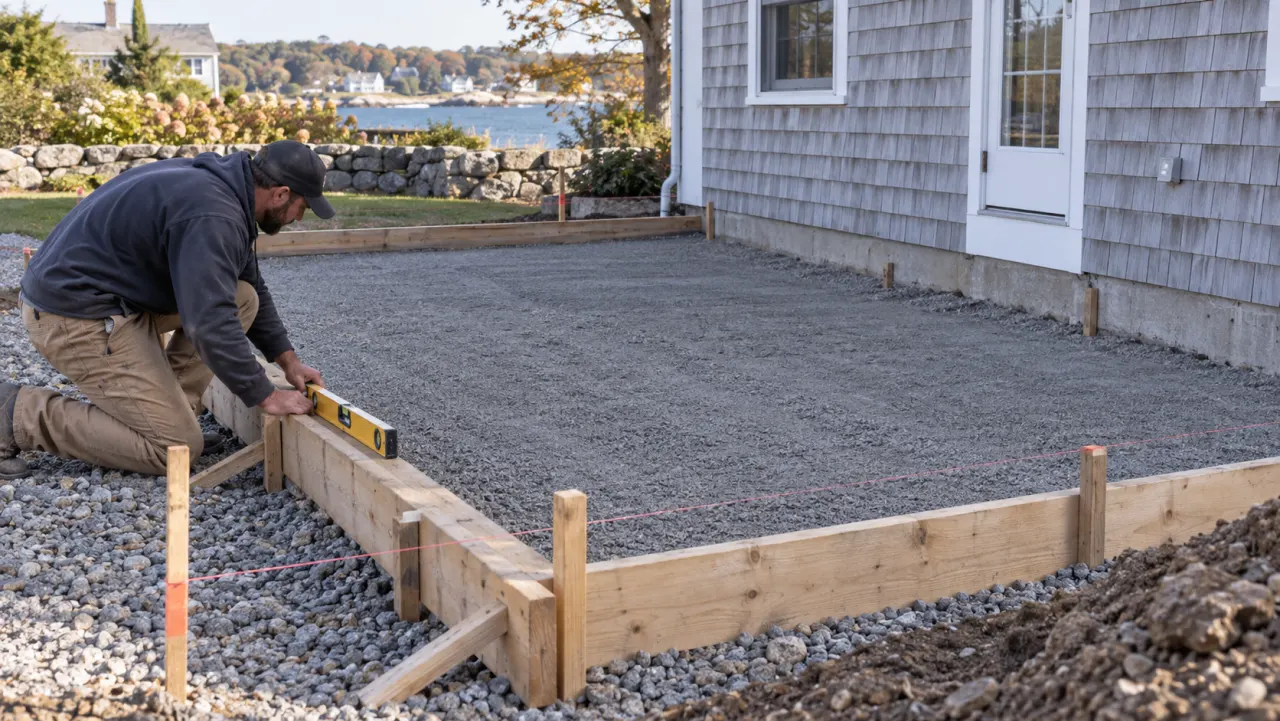
Removal gives us a clearer view of the material beneath the old walkway. If that material is soft, washed out or uneven, pouring on the same support repeats the problem. We set the base scope according to what is actually exposed. ACI’s residential concrete guide covers residential slab support, placement, joints and curing; it is technical context, not a specification for this unseen entrance.
The walk also needs to meet fixed objects without being trapped by them. NRMCA CIP 6 explains the roles of contraction joints and isolation joints where concrete meets stairs, walls and other restraints. The joint arrangement depends on the actual shape and boundaries. We will not promise crack-free concrete or copy one joint pattern into every yard.
Surface texture is another practical decision. The entry walk is used on wet days, and a smooth-looking finish is not automatically the best walking finish. We describe the proposed texture and how it meets the existing step. If one old panel stays, its surface and color may look different from the new one. We want that expectation clear before a fresh pour makes the contrast obvious.
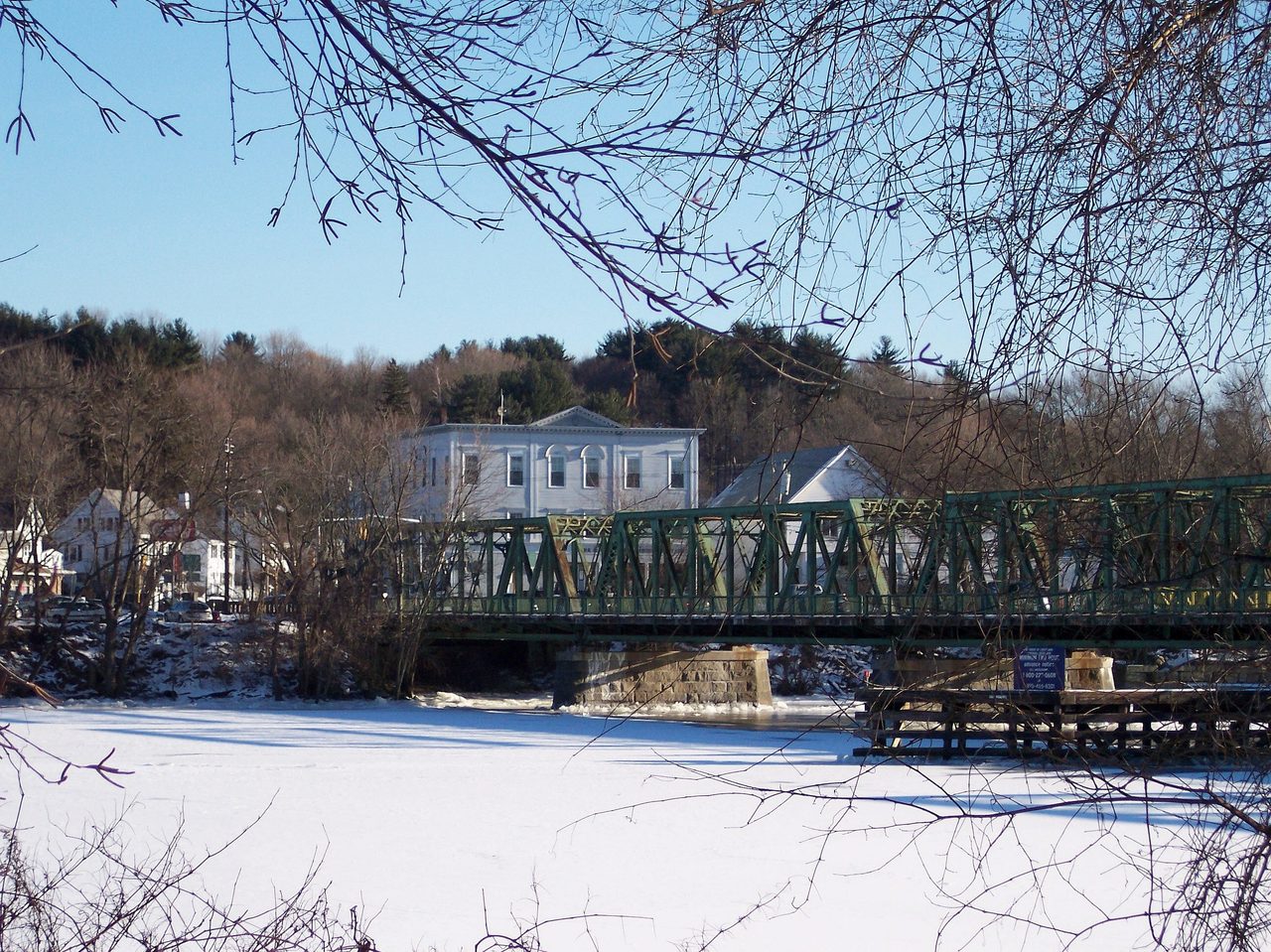
The private path may lead toward a public sidewalk or driveway apron. Groveland’s Highway Department street and sidewalk opening policy says excavation within the public right-of-way, including the sidewalk, curb or driveway apron, needs a street-opening permit. It does not say a private entry-walk pour needs one. We mark where the proposed removal ends. If it reaches the public area, we check that process instead of slipping it into a private quote.
For an ordinary private walk, the technical questions remain local to the property: step profile, base, finished grade and runoff. We do not invent a Groveland-specific soil or freeze pattern to make those questions sound local. The property itself supplies the evidence.
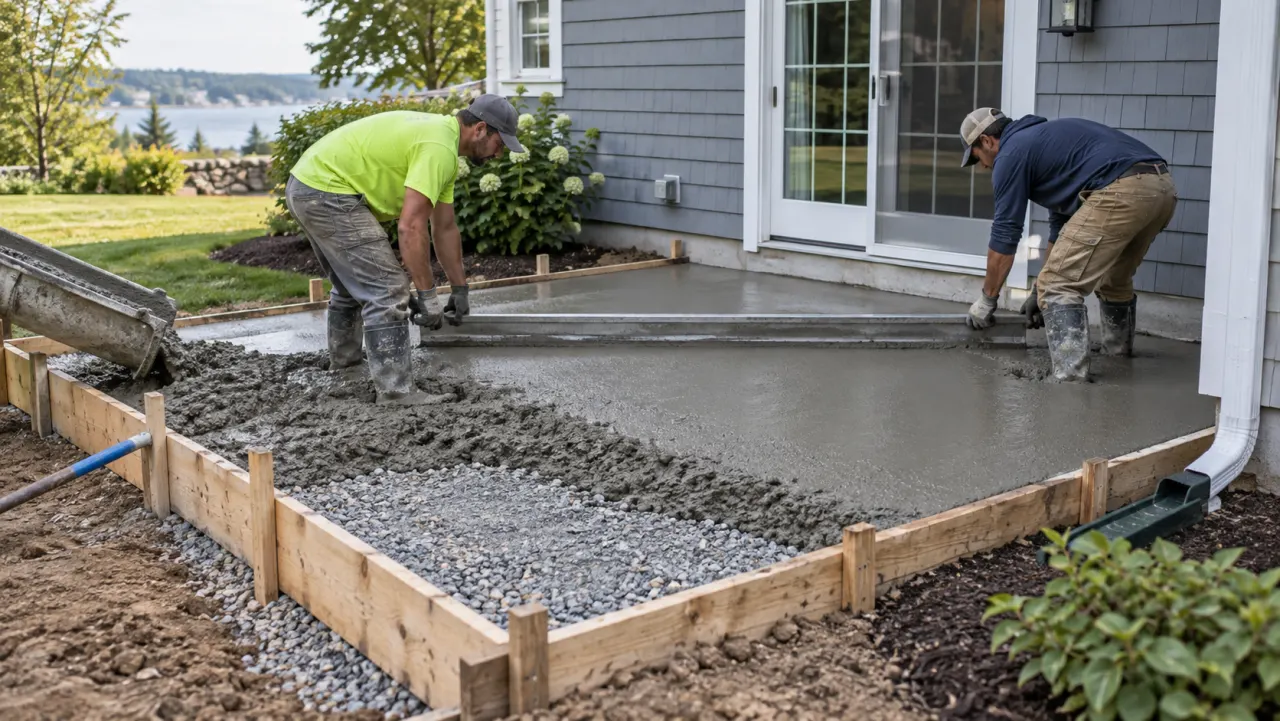
Ask where the new concrete starts and ends. Ask for the measured height at the first step and at the driveway connection. Ask how downspout water will cross or avoid the walk. The quote should state the base decision, finished slope, joints and any old concrete retained. It should also tell you how the area is protected while the new work cures. A return-to-use time is chosen for the actual mix, weather and use, not lifted from a city page.
Demolition can reveal a buried utility, old fill or another condition that was not visible. We would rather describe how a scope change will be handled than pretend everything under the walk is known. A clear quote lets you judge the job before the concrete arrives.
The approach path during the work matters too. If this is the only front entrance, we plan how the household will get in while concrete is removed and protected. That is a site-specific access question. The same applies to the delivery route and any planting beside the walk. Protecting them is part of a useful work plan, even though a photograph of the finished slab would never show that effort.

Google review · Customer experience
Scott Larsen ★★★★★
“They were excellent, reviewed all the steps of the install, provided a map of the layout. Good communication. They took their time and delivered a good product.”
Do not buy a new pour because the walk looks tired in one photo. If it is sound and the elevation can be safely corrected, evaluate lifting. If the damage is one stable corner, assess repair. If the entry step or house support has moved, solve that first. Replacement is for concrete that has lost enough integrity or needs a new layout, not for every minor defect.
Send 603 a wide photo from the door to the drive, a close view of the worst break and a view after rain if a puddle forms. We will check the walk in person. A photograph cannot show the material beneath it or establish where a public boundary lies.
We measure that transition, mark the replacement limit and explain the runoff route. If a smaller repair meets those goals, we will say so.
Show us the affected concrete. We will explain what we measured, what can stay, and which scope fits the house.

