



An entrance-edge patch is different from constructing a new driveway onto a public way.
A broken patch at an existing Hopkinton driveway entrance is not automatically a new-driveway project. We would first identify whether the damaged concrete is on the private panel, the public-way connection or both, then check if the surrounding material and base will support a limited repair. A small sound-edged spall may be patchable. A panel that moves under tires, drains badly or has broken through may need replacement or a different design. We would keep an entrance-construction question separate from a private surface repair and ask the town about the real footprint before promising an approval outcome.
Driveway photos often cut off the street, gutter and first private joint. Those missing landmarks can change the scope. We would draw the road edge, apron, driveway panels, curb or shoulder, and the exact broken area. Records or a survey may be needed if ownership is unclear. We would not assume the visible edge is public or private solely because it is near the road. The estimate should show where 603 proposes to stop and who is responsible for any separate public-way work.
The repair itself requires a sound boundary. We would inspect the depth of the break, map earlier patches, compare the grade to the next panel and see whether a tire turns over the damaged edge. A patch that leaves a new lip can become another impact point. A patch that redirects runoff into the road or onto neighboring ground can be worse than the original chip. We would verify grades rather than claim that a photographed crack was caused by winter salt, heavy trucks or settlement.
One photograph from the street toward the garage and another from the garage toward the street would locate the defect. Add a close-up with scale, note whether the fragment moves, and show any ponding after rain. Tell us whether the entrance width or alignment is changing or whether the goal is only to preserve the existing approach. These answers help separate a modest surface proposal from a redesigned driveway entrance; they do not substitute for an on-site support check.

ACI RAP-7 describes investigating a horizontal spall, removing unsound concrete, preparing a suitable repair surface, choosing and placing a system, and curing it. That is the order we would explain to the homeowner. Simply brushing a topping over fragments may hide weak concrete for a short time without giving the new material a sound boundary. Existing joints should not be bridged casually; they can be the place where adjacent panels move independently.
We would specify the treatment area and the return-to-traffic conditions for the chosen system. Temperature and moisture can matter, so a universal reopening hour is not credible. New repair material may not match the original driveway color. If preparation exposes a wider unsound zone or poor support, we would document the finding and compare revised options before proceeding. The written scope should identify what remains intact and what is deliberately excluded, not just list a patch product.
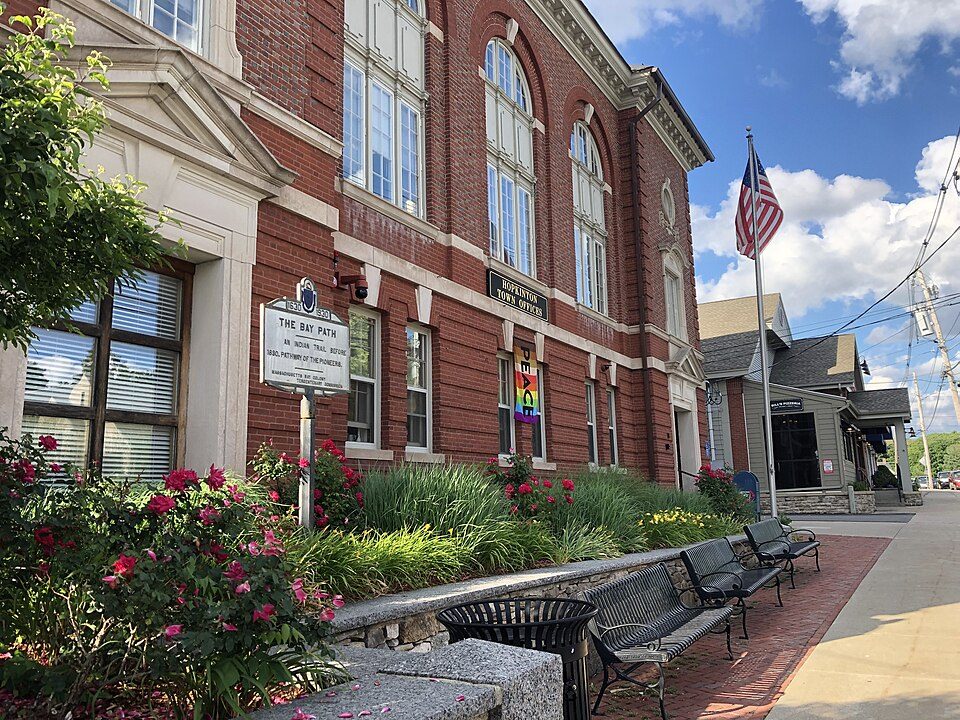
Hopkinton DPW’s driveway permit application is expressly for constructing a driveway that enters a public way. It requests a plot plan with the proposed width and location of access, and calls for final inspection and approval after construction. That is relevant when an owner wants a new or changed entrance. It does not prove that a small existing private-panel patch is permit-exempt, nor does it turn every chip into new entrance construction.
We would tell the owner when a town confirmation is needed for the actual location and method. If the project changes access, the plan should show dimensions and permit responsibilities. If it is wholly an existing private surface repair, the quote should say so without borrowing the language of a new-driveway application. This distinction makes the proposal easier to compare and reduces the chance that an apparently low patch price omitted a substantial entrance job.
For an entrance-edge defect, staging deserves its own line in the work plan. The crew may need to keep a vehicle off a prepared edge while the selected repair cures, or maintain a safe route in and out of the property. We would discuss that with the owner before the workday, especially if the household has one usable access point. Access planning is not evidence that the repair needs a road closure; it is simply part of delivering a practical private-driveway repair without surprise inconvenience.


Google review · Customer experience
Margot Erdmann ★★★★★
“Had 603 Basement come in to help with radon mitigation. Excellent experience from start to finish. Liam explained our different options and was very knowledgeable about radon issues. Communication from everyone was prompt and clear. Installation went exactly as planned and we are very happy with the results. Highly recommend.”
If the panel is sound but low, concrete leveling can be considered after checking voids, joints and the finished drainage plane. A patch will not raise it. If the concrete has fractured through or the support is failing over a wide area, concrete slab pouring and a base correction may be the better comparison. A stable cosmetic mark with no loose material, step or water consequence may not justify buying a repair today. We would say that plainly.
A driveway surface is not automatically the house’s bearing foundation. We would refer a homeowner to structural and foundation repair assessment only when independent evidence points to the building load path. Conversely, a visible driveway chip should not be used to sell a structural system without such evidence. We would measure the condition, explain the options and put the chosen boundary in writing.
For a Hopkinton visit, show us the full entrance and the private panels, not only the broken spot. We can determine whether limited repair preserves the existing approach and whether a separate town discussion is necessary before work near the public way.
Show us the affected concrete. We will explain what we measured, what can stay, and which scope fits the house.

