



Repairing a private driveway edge is different from resurfacing the right-of-way entrance.
A worn edge on a Stow home’s private driveway slab may be a bounded repair if the panel is sound, the edge can be prepared to a durable shape, and vehicles can cross the joint safely afterward. Reconstructing or resurfacing a driveway in a right-of-way is a different decision. Stow’s public-works application explicitly distinguishes a new driveway or street opening from driveway resurfacing or reconstruction within the right-of-way. We would establish where the proposed work lies and which physical defect it treats before making any permit claim or recommending a patch.
At the driveway edge, inspect the break from above and from the side. We would measure the length and depth of damage, probe for sound concrete, note any unsupported lip and see whether the whole panel has settled relative to the next one. A tire crossing a joint can break a weak patch that looks acceptable under foot traffic. We would account for vehicle loading and the direction of travel, not just photograph the chipped corner. Water routing also matters: a repair must not make a low place that holds water or sends it toward the house.
Repeated edge loss can mean the old patch was not bonded, but it can also mean the adjacent slab moves or the base has eroded. We would document any earlier repairs and test whether the concrete rocks. If it does, fixing the surface without dealing with support is unlikely to be good value. If the slab is stable and the defect is local, a new driveway is a very large answer to a small problem.
Show the damaged edge with a ruler, the whole panel and the connection to the road if nearby. Record which wheel crosses the defect and whether there is a step at the joint. If a puddle appears after rain, photograph its extent from a safe position. These details support a useful inspection but do not prove the property’s right-of-way line or dictate a permit category. If the boundary is uncertain, the owner may need town records or a survey before public-way work is included.

ACI RAP-7 describes the essentials of a horizontal spall repair: remove unsound concrete, prepare the substrate, choose material for the condition, place it, and allow protected curing. For a driveway edge, we would form a shape that avoids a paper-thin feather and explain how the joint will behave. If removal exposes a larger weak zone, the homeowner should review a revised scope before work expands. A skim coat over loose aggregate is not a substitute for a sound-edge decision.
We would discuss material color and texture honestly. New material against weathered driveway concrete can be conspicuous. Product requirements, thickness, traffic and weather govern cure time; an exact promise to drive over it tomorrow would be irresponsible before selecting the method. A written plan should address where vehicles will park during the closure and when the chosen product permits use again.
The repair also needs a functional finish. A patch that removes the chip but leaves a harsh tire impact at the next joint has not solved the driveway problem. We would measure the grade and keep water moving in an acceptable direction. If that requires changing the entire panel elevation, the category is leveling or reconstruction, not merely repair material.
An edge next to gravel or lawn needs support along its side as well as below. We would inspect whether runoff or repeated wheel loading has carried material away, and state whether restoring that support is included. Without it, even a well-bonded new patch can be exposed to the same leverage that damaged the old edge. The homeowner should see the cause-and-scope question before approving a finish that looks good only on day one.
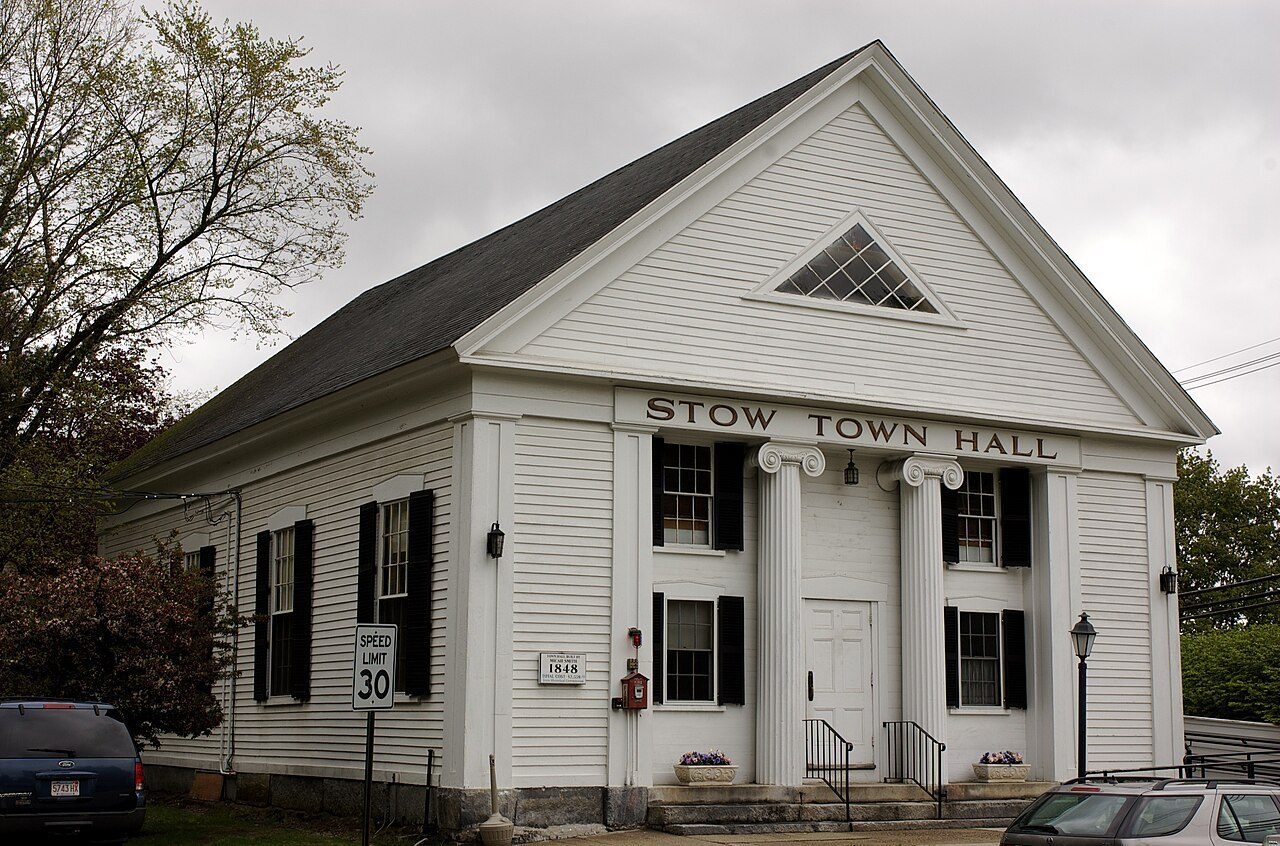
The Stow Street Opening/Driveway page links an application to perform work within a right-of-way. That form separately lists new driveway or street opening and driveway resurface or reconstruction. The form does not classify an isolated private driveway-edge patch. We would mark the intended limits and ask DPW about a scope that actually enters the right-of-way, rather than asserting a permit is or is not required for every homeowner.
That distinction is useful when comparing quotes. A contractor proposing to replace an entrance may be pricing a different job from one proposing to repair a private panel. The estimate should state which surface remains, whether the road connection changes, and who resolves any town-way approval. Low bids can be misleading when those boundaries are not described.
If resurfacing or reconstruction in the right-of-way is in the owner’s future plan, the small private patch should be considered in that sequence. We would avoid selling permanent work that a near-term entrance project will remove. If the damage is an active tire or pedestrian hazard, a temporary remedy may still be warranted while the larger project is planned. Temporary stabilization and long-term reconstruction should be plainly distinguished in writing.


Google review · Customer experience
Zack Lefebvre ★★★★★
“I was very impressed with Chris's energy and professionalism. I felt very comfortable with the whole process, very good vibes, trustworthy and reliable 👍”
If the whole sound panel sits low, assess concrete leveling and the cause of support loss; a patch cannot raise it. If cracks run through the slab, pieces move or the driveway layout must change, compare a properly designed new concrete slab. Movement involving a garage footing or house support path should prompt structural and foundation repair investigation before surface work. A small stable edge blemish outside the wheel and walking path may be monitored rather than repaired now.
For a Stow homeowner, the answer should be a written choice with measurements: what is sound, what is broken, which side of the private/public boundary is included, how cars and water will cross the finished joint, and what discovery would change the recommended scope. That is a decision a homeowner can compare, not just a patch price.
Show us the affected concrete. We will explain what we measured, what can stay, and which scope fits the house.

