



A low floor and a missing online permit record do not diagnose a post footing.
A low basement floor beside a post does not prove the post footing has settled. Nor does a missing online permit record prove an older support was built without approval. For a Shrewsbury homeowner considering a basement remodel, 603 Basement Solutions would measure the floor, post and beam separately, look for physical evidence at their connections, and inspect the concealed bearing only if that result would change the repair. The right scope might be limited floor work, documented monitoring, or a designed structural support. It should not be chosen from a permit search or a single slope reading.
Start with what can actually be dated. When were the post, floor, utilities and finished walls installed? Look for old real-estate photos, renovation drawings, invoices and inspection cards. Mark the present beam line and post location on a sketch, then compare the record to the room. A drawing is useful if the as-built configuration matches it; a clean drawing cannot show whether fill beneath a footing later washed away. Similarly, an undocumented patch near the post can be a plumbing cut rather than a failed pad.
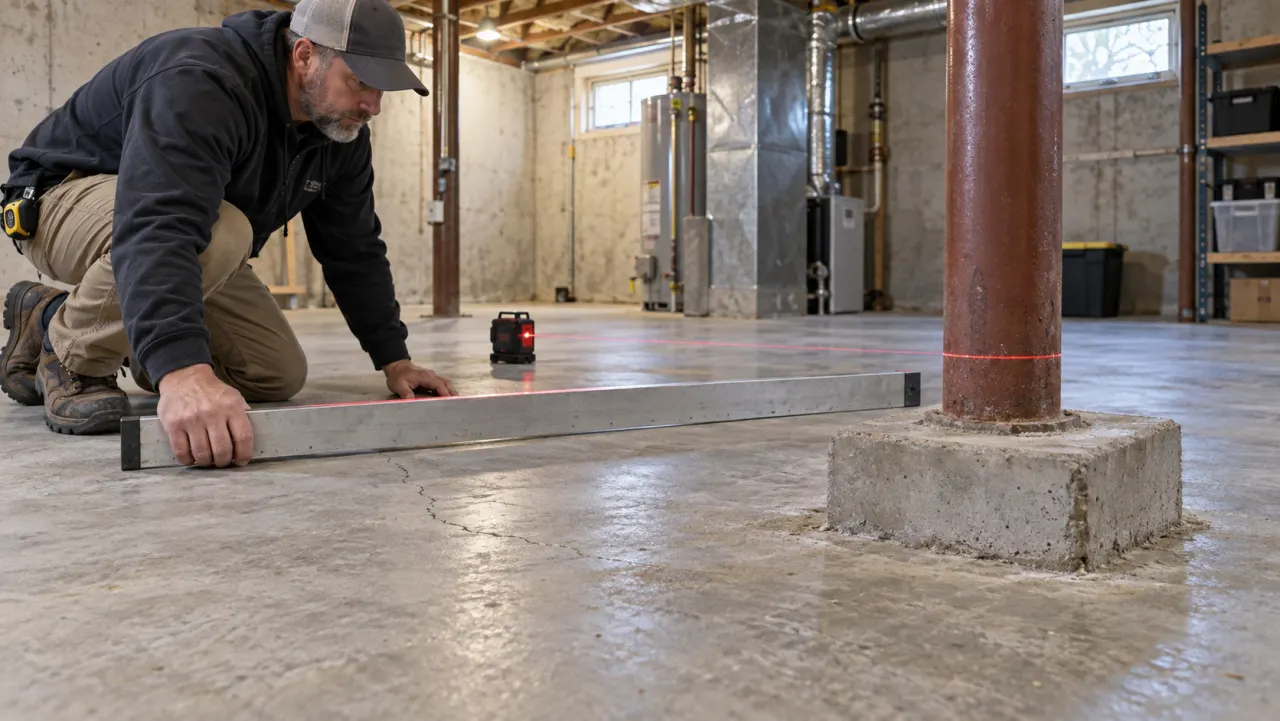
Take floor elevation readings on a repeatable grid, including points away from the post. Then measure the beam and wall plane on independent references. A dipped walking slab with stable framing suggests a different problem from a dropping beam with a relatively even floor. Check contact at the post top and base, verticality, cracks at the pad edge, gaps, corrosion and any wedging. Record the date and measurement positions. A photograph of a bubble level alone has no historic baseline and cannot identify whether the floor or support moved.
Ask whether the floor and footing are one concrete element. A basement walking slab is often supported by soil while an isolated column pad carries a beam reaction. They can touch at the surface and still have different jobs. The support path runs from joists and beam to post, pad and soil. The walking floor may be a finish surface. If a contractor proposes a broad pour to make the room flat, ask where the loaded post will bear before, during and after demolition. Never cut concrete beside a loaded support simply to reveal a pretty edge.
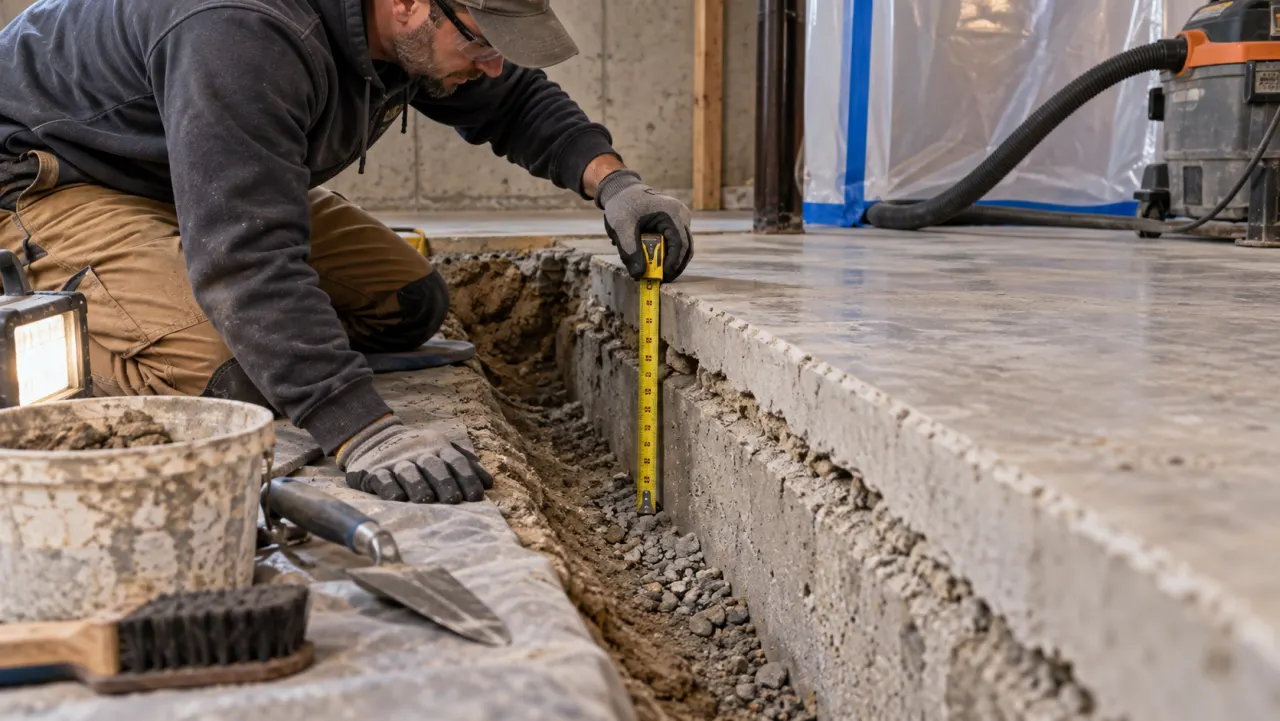
If measurements point toward support movement but the pad remains hidden, agree on a small investigation with a specific question: Is the post bearing on an independent footing, and is that footing supported? Locate embedded utilities and decide whether temporary support is required. Photograph each exposed layer with a ruler. Record slab thickness, base material, pad edge, water or voids. An opening that stops at the surface cannot establish footing depth or soil condition. If the actual support differs from the drawing, stop and revise the design rather than pouring around the uncertainty.
Define a stop point before work starts. If the opening shows sound bearing and repeatable framing measurements are steady, the structural branch of the bid should be able to shrink. If the post is losing contact, the pad is undermined or the beam line is changing, pause floor finishes and obtain the needed structural design. The inspection should produce a written observation and the next decision, not an unlimited allowance called “slab repair.”
ACI’s slab-on-ground FAQ distinguishes a soil-supported floor from concrete intended to transfer building load. A localized crack or chipped edge in a stable walking floor may call for concrete repair after its water or base cause is addressed. If much of the floor is unsound, a planned concrete slab pour may provide a new subbase, vapor detail, joints, placement and cure. A separate intact panel that dropped may be a concrete leveling candidate. Each has a different acceptance test from a loaded post.
If the footing or framing is actually changing, move to structural and foundation repair. The repair may require shoring, engineering, revised bearing, a post connection, drainage or soil work and an inspection before concealment. Do not buy piers simply because a floor crack runs near the post. A pier proposal needs a supported load path and a reason the selected bearing method addresses the measured failure. Conversely, do not buy a decorative overlay while a post is losing contact. A smooth surface can conceal a support defect without correcting it.
Water deserves a separate investigation. A patch around a drain, a wet floor-wall joint and an old plumbing trench can look similar in a quick photo. Ask when the moisture appears, where it starts, and whether the base is affected. A dry day does not rule out intermittent seepage. A wet stain does not establish settlement. If water is eroding base material, the scope must address that route; if it is condensation on a cool slab, an underpinning system will not solve it. Record what each proposed measure changes and what remains.
Require bidders to separate investigation from final repair. One bid may price a new floor and another a loaded-post intervention; a lower number is not better if the two address different elements. Ask what was measured, what remains concealed, and what result would cancel the structural work. Include utility locating, dust control, temporary support if required, engineer or inspector hold points, pad or base restoration, vapor detail and as-built photographs. Ask who pays if the investigative opening reveals no failure and how the floor will be made safe afterward.
Do not accept a guarantee that an old basement will become perfectly level, or that new concrete cannot crack. A properly stabilized post may leave a historic floor slope. A replaced walking floor may still reflect controlled joint movement. State the actual objective: restore safe bearing, reduce further movement, restore a usable floor, control water, or some combination. Require a way to measure that outcome. A clear limitation is more useful than a broad promise that hides uncertainty.
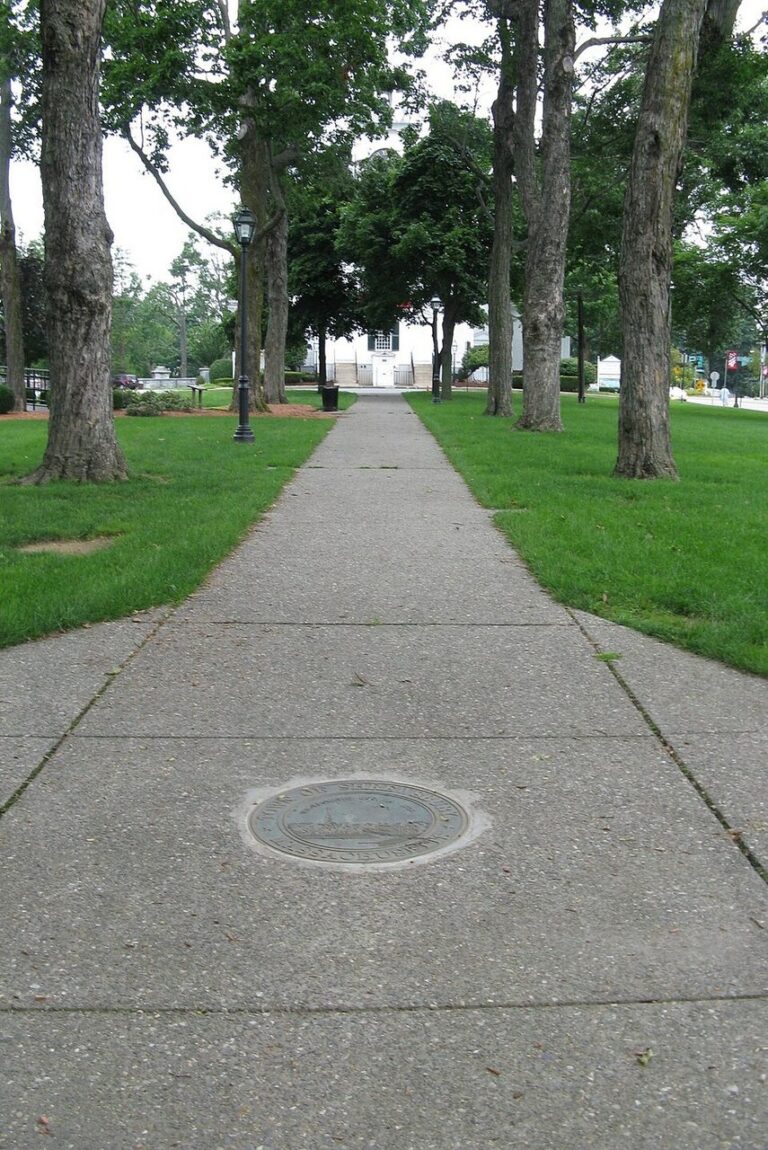
Shrewsbury’s Building Permit Instructions say the department moved from paper to online permitting in September 2011. For older basement work, an online search alone therefore cannot establish whether an application or inspection existed. Nor does finding an old permit prove a concealed pad has remained sound today. Ask the department which records exist for the relevant period and what current filings and inspections the defined repair requires.
The current physical evidence still leads the diagnosis. Keep copies of any permit record with photographs of the present post and exposed concrete, dated measurements and any engineered detail. If the planned scope changes after opening the floor, update the people approving or inspecting the work before closure. A future homeowner should be able to tell whether the walking slab was replaced, whether the post bearing changed, and what was actually inspected. “The basement was repaired” is not a sufficient as-built record.
Do not buy underpinning just because an older online permit search is blank or because a floor slopes toward a post. If independent beam and post measurements are stable, the pad is sound and the defect is confined to a soil-supported floor, a bounded floor repair or monitoring may be proportionate. Do not buy only crack filler if a post has a new contact gap, the beam line is changing or exposure shows lost bearing. Ask 603 what finding would make it withdraw its structural recommendation. If no finding could, the proposal has not separated diagnosis from sales.

Google review · Customer experience
Benjamin Mazza ★★★★★
“603 basement solutions came highly recommended by a general contractor we know and man did they deliver. We hired them to do a large and complex project with structural components and waterproofing.
They finished the project on time and for the same price the quoted us.
They were all professional and communicated great, I highly recommend them!”
Show us the affected concrete. We will explain what we measured, what can stay, and which scope fits the house.

