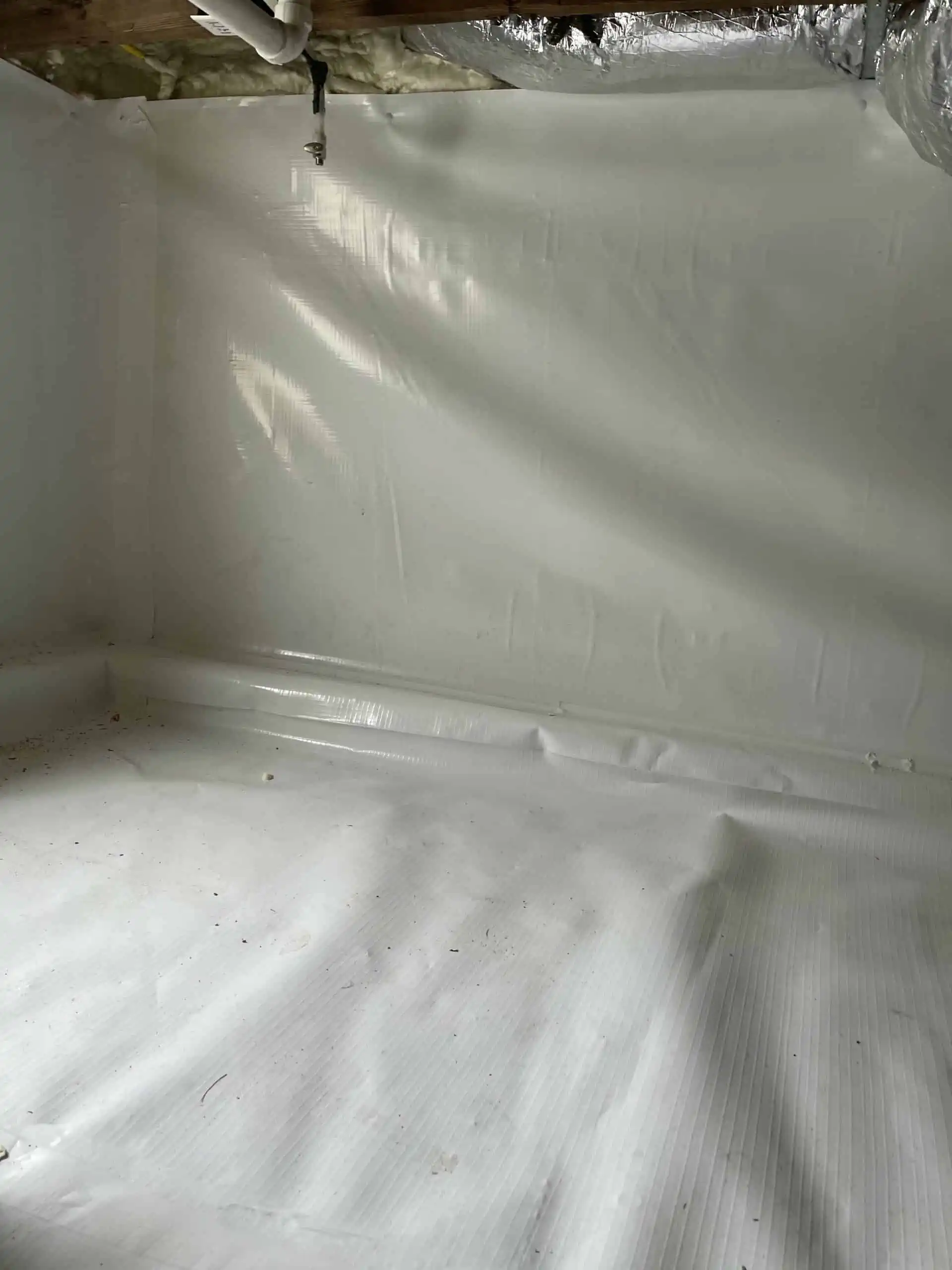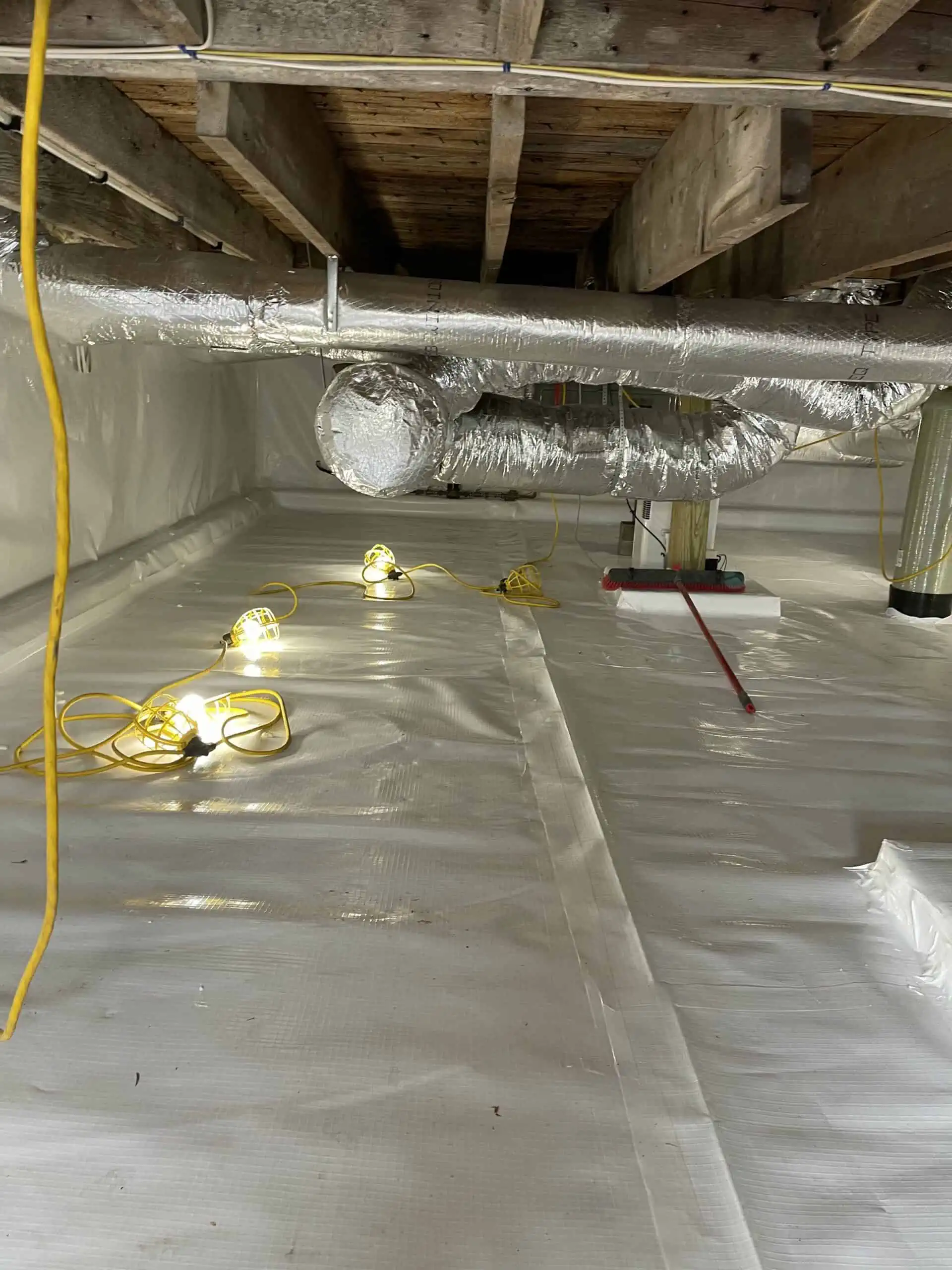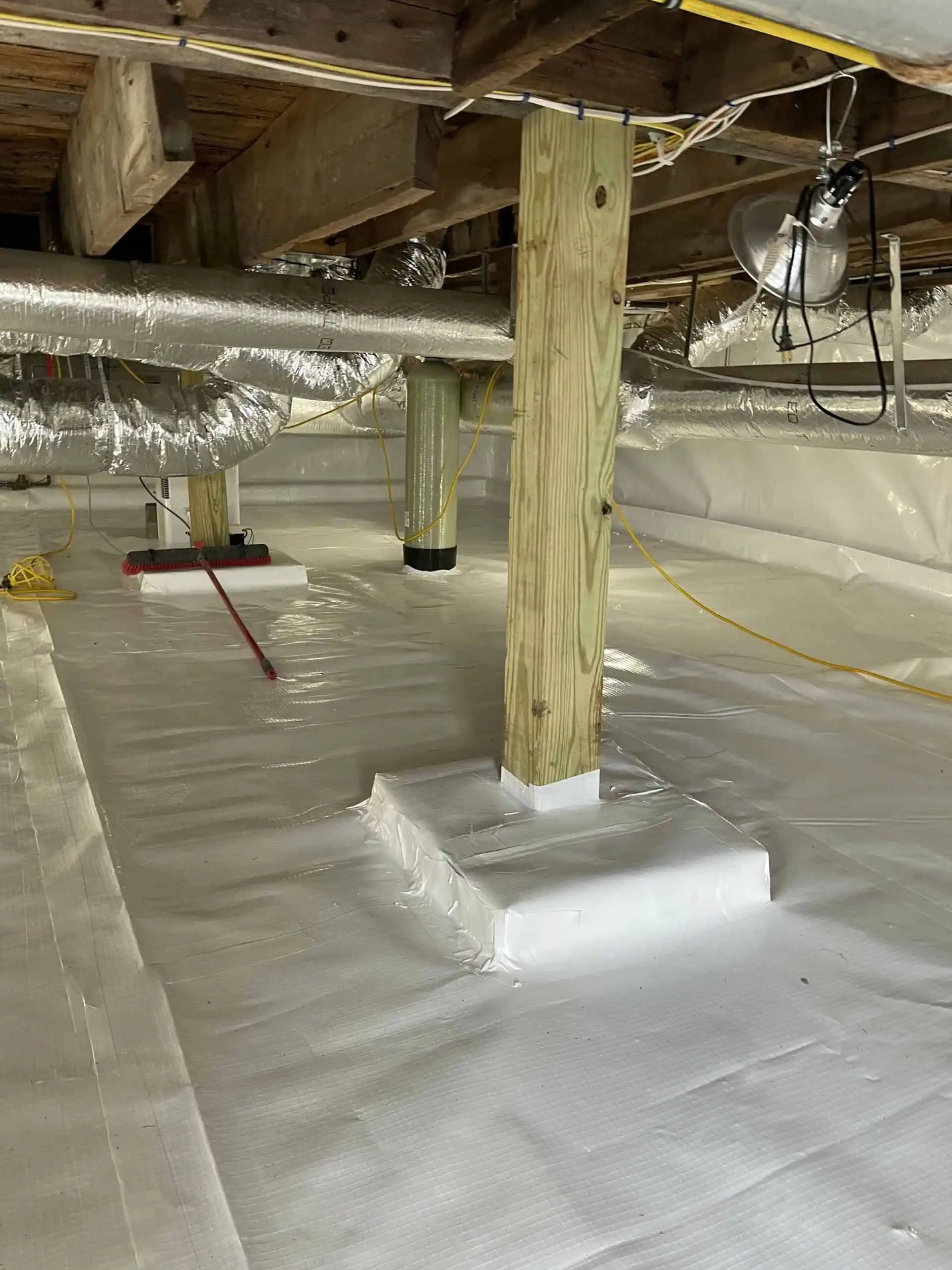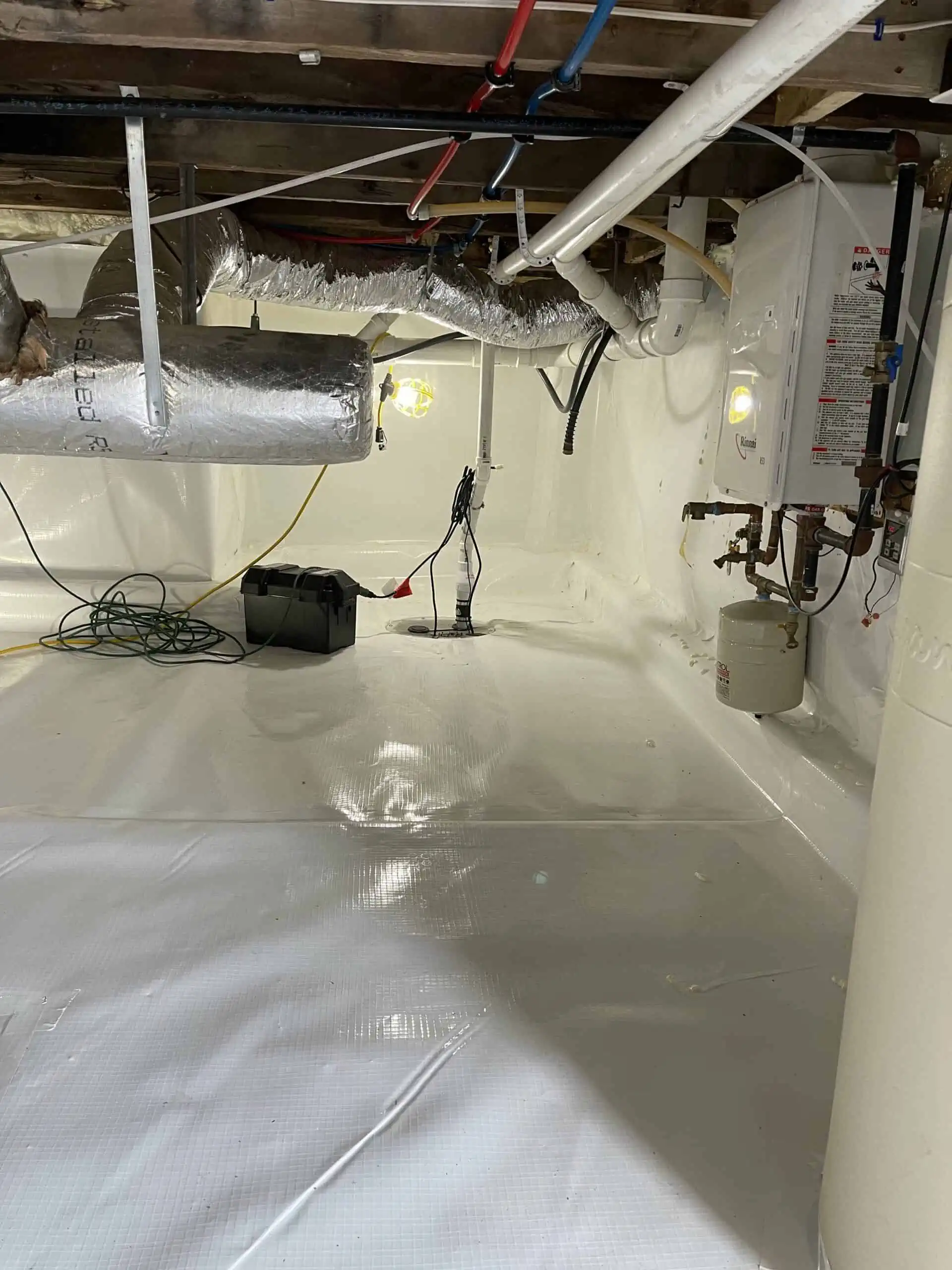



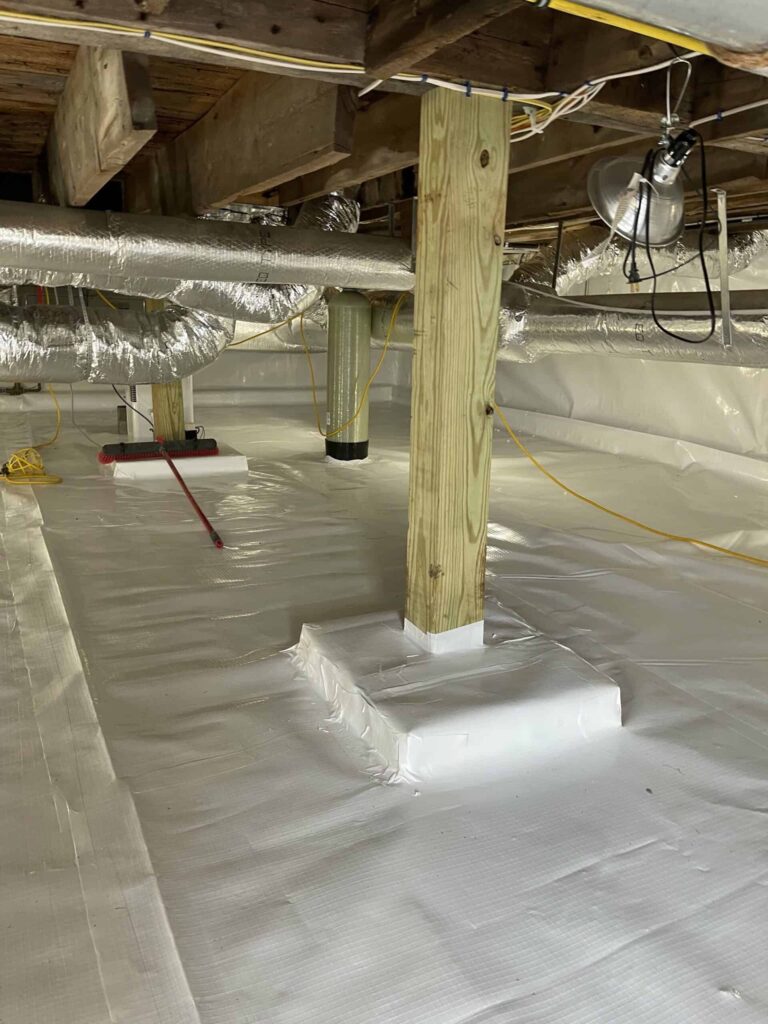
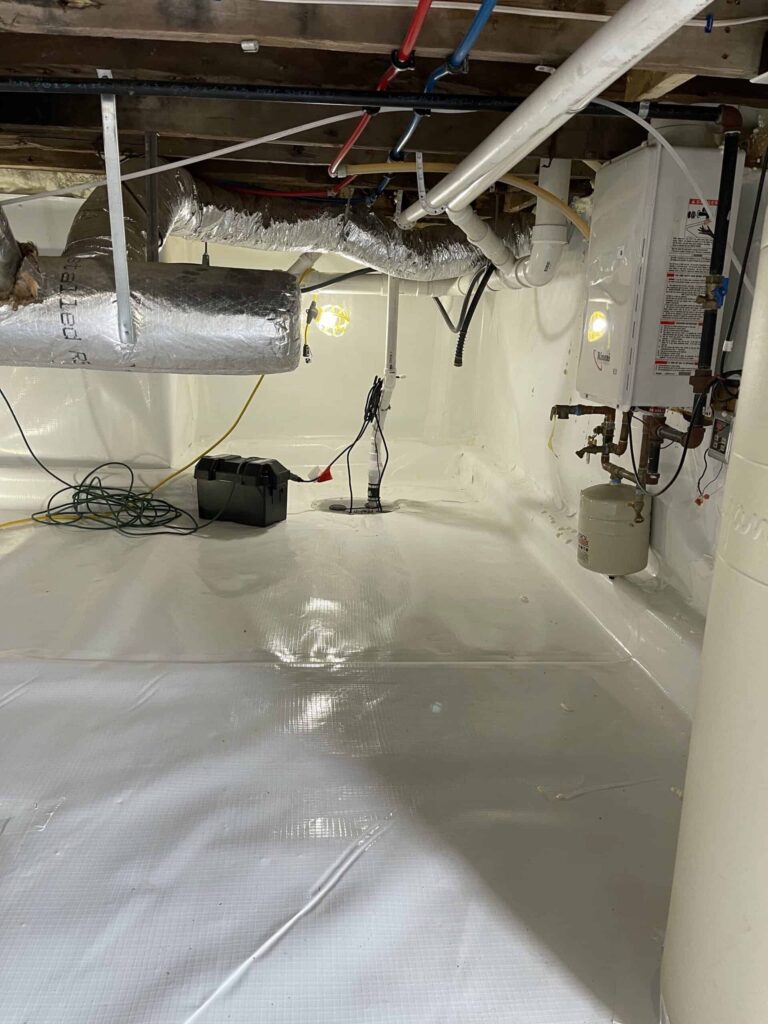
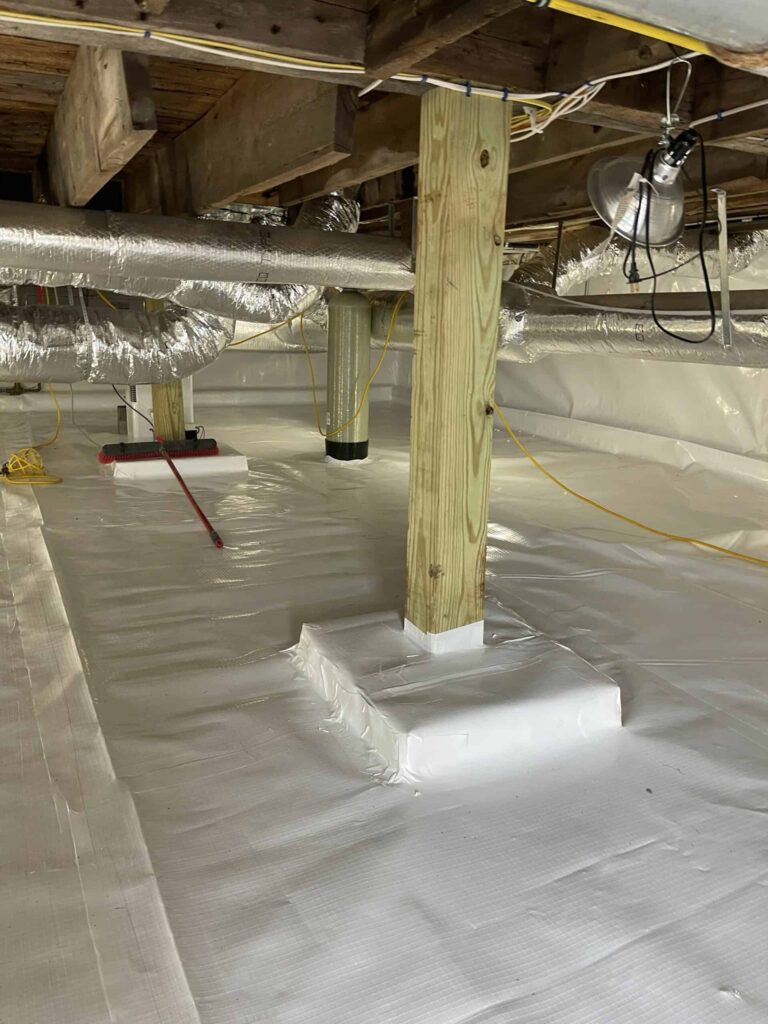
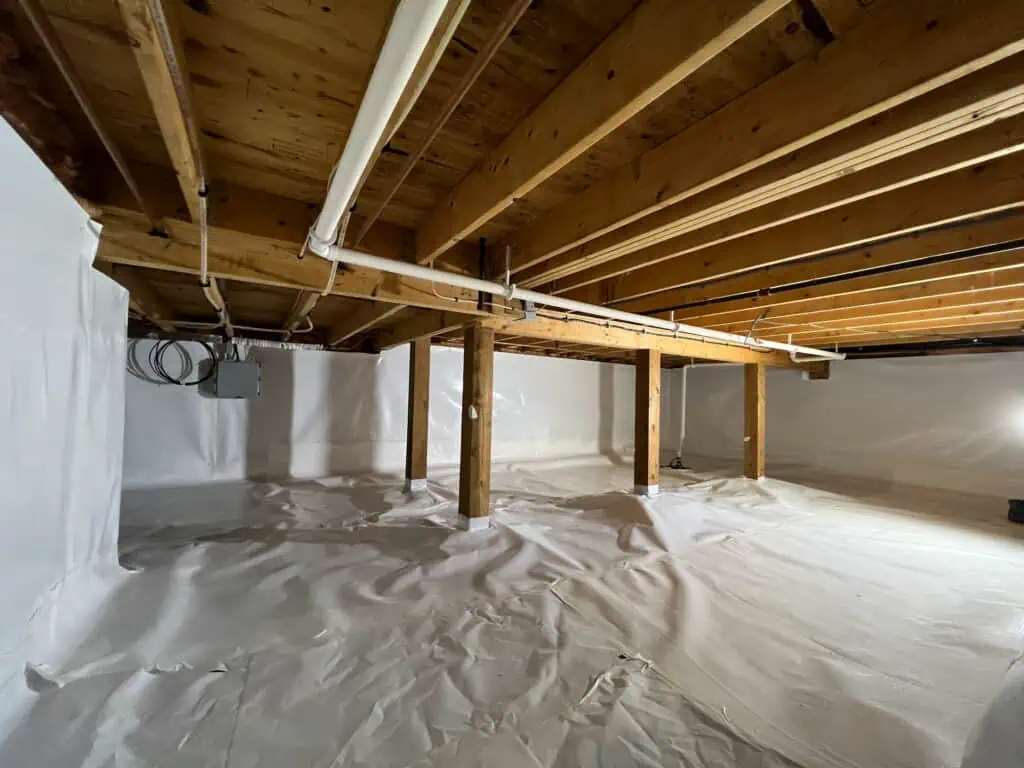
Lynnfield crawl spaces stay damp for a specific reason: this is one of Essex County's wettest towns. The Ipswich River forms Lynnfield's northern border, and 5.58% of the town's 10.5 square miles is open water — Suntaug Lake, Pillings Pond, and the Reedy Meadow marsh among them (Wikipedia, Geography). A high water table from that hydrology pushes moisture up into dirt and fieldstone crawl spaces, soaking the insulation and wood — which is what actually causes the musty smell. Lynnfield also sits in EPA Radon Zone 1, the highest tier; Massachusetts code (780 CMR, Table AF101(1)) names Essex, Middlesex, and Worcester as the three high-radon counties (via UpCodes). We seal the space with a 12-mil wall / 20-mil floor vapor barrier over dimpled drainage matting, taped seams, a dehumidifier, and a sump — typically $3,000–$25,000. Radon mitigation, if needed, is a separate add-on, usually $1,950–$2,250.
"Gerald and his crew did an excellent job, first cleaning out all the debris and the dislodged insulation in the crawlspace. they were very communicative and understood my concerns and handled them professionally. When they were finished laying the sublayment and the top vinyl covering, carefully taping all the seams they put insulating foam around the perimeter, sealing the top of the vinyl. Gerald communicated two issues that were not part of the contract that I will subsequently take care of myself. Great job, very satisfied."
Lynnfield is unusually wet for its size — the Ipswich River forms the town's northern border and 5.58% of its 10.5 square miles is open water, including Suntaug Lake, Pillings Pond, and the Reedy Meadow marsh (Wikipedia, Geography). That surface water drives a high water table, and groundwater pushes moisture up into dirt and fieldstone crawl spaces, where it soaks the insulation and wood. That moisture in the insulation and wood — not mold itself — is what causes the musty smell. A sealed 12-mil wall / 20-mil floor vapor barrier with dimpled drainage matting, a dehumidifier, and a sump keeps the space dry.
Yes — Lynnfield is in Essex County, which the EPA designates Radon Zone 1, the highest radon-potential tier. Massachusetts building code (780 CMR, Table AF101(1)) names Essex, Middlesex, and Worcester as the state's three high-radon counties and requires passive radon control in new homes there (via UpCodes). A crawl space with a dirt or fieldstone floor is a direct soil-gas entry path. Encapsulation reduces moisture but is not a radon system on its own; radon mitigation (sub-membrane depressurization for dirt and fieldstone crawl spaces) is a separate add-on, typically $1,950–$2,250.
Crawl space encapsulation runs $3,000–$25,000 depending on the size and condition of the space. That covers a sealed 12-mil wall / 20-mil floor vapor barrier installed over dimpled drainage matting, all seams sealed, plus a dehumidifier and sump pump for moisture control. Radon mitigation, if your space needs it, is priced separately at roughly $1,950–$2,250. Lynnfield's older housing stock — the town was settled in 1638 and keeps documented First-Period and Colonial homes — tends to have the uninsulated fieldstone-era crawl spaces these systems are built for.