

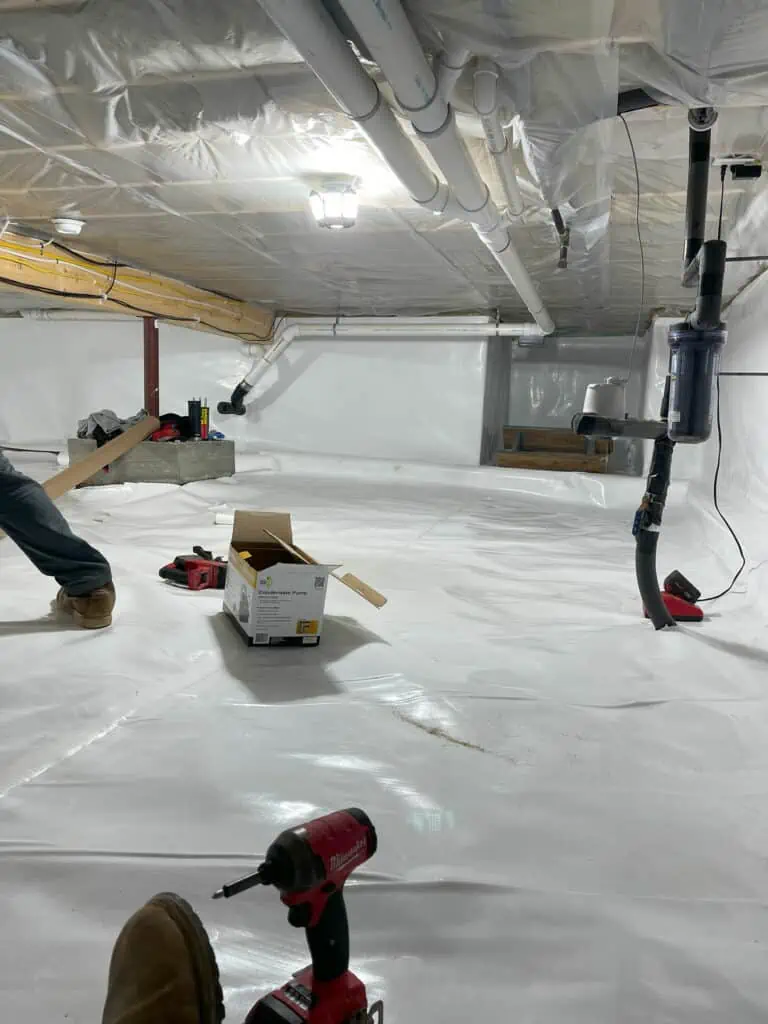
Keep a crawl space healthy by keeping it dry. Twice a year, walk it and check for water and where it is coming from, look for pests and rot, make sure the vapor barrier has no rips, and confirm the dehumidifier is running. That is the whole job. Here is the full checklist.
The twice-a-year crawl space checklist
- Check for standing water or damp spots on the vapor barrier.
- Clear the gutters and downspouts, and confirm water drains away from the foundation, not toward it.
- Look for rips or gaps in the vapor barrier on the walls and floor.
- Confirm the dehumidifier is running and actually draining.
- Check the sump pump: the float moves free and the discharge line is clear.
- Look for pests, droppings, or nests.
- Look for rot or mold on the wood posts, beams, and the subfloor above.
- Use your nose. A musty smell means moisture is getting in somewhere.
Do that in spring and again in fall and you will catch almost every crawl space problem while it is small and cheap to fix. Below is what each part means and what to do when something looks off.
Keep it dry (this is 90 percent of it)
A crawl space problem is almost always a water problem. Keep water out and the rest mostly takes care of itself.
- Water sources outside. Overflowing gutters, downspouts pointed at the house, and ground that slopes toward the foundation all push water into the crawl. Clear the gutters, add extensions so the downspouts dump water 4 to 6 feet out, and fix any low spots where water pools against the house.
- The vapor barrier. The barrier on the floor and walls is what keeps ground moisture out. Check it for rips, tears, and gaps, especially at the seams and where it meets the wall. A torn barrier lets moisture right back in.
- The dehumidifier. A sealed crawl runs a dehumidifier to hold the humidity down. Make sure it is powered on, the drain line is clear, and it is actually pulling water. A dehumidifier that quietly quit is a crawl slowly getting damp again.
- The sump pump. If your crawl has a sump, check that the float moves freely and the discharge line is not clogged or, in winter, frozen. A stuck float or a blocked line means water with nowhere to go.
Keep it clean
A clean crawl is easier to inspect and a lot less inviting to pests.
- Clear the debris. Remove leaves, old insulation, construction scraps, and anything organic sitting on the floor. Wet debris feeds mold and holds moisture against the wood.
- Check for pests. Rodents and insects love a damp, dark crawl. Look for droppings, nests, and chew marks, and deal with an infestation before it spreads into the house.
- Look at the insulation. Insulation that is sagging, wet, or falling down is usually a sign of a moisture problem above it. Wet insulation does not insulate, and it holds water against the framing.
Warning signs, and when to call somebody
Some things you can handle on your own. Some are telling you the crawl needs real work. Call a pro when you see:
- Standing water that keeps coming back after every storm.
- Mold or rot on the posts, beams, or subfloor, or a musty smell you cannot get rid of.
- Soft, bouncy, or sagging floors in the rooms above the crawl.
- A vapor barrier that is torn up or was never really sealed.
The musty smell is worth explaining, because homeowners often read it as just “old house smell.” It is moisture in the insulation and the wood, and mold is what grows in that moisture. The smell does not stay in the crawl either. A lot of the air you breathe upstairs starts down there, so a damp crawl becomes a whole-house air problem. For the full rundown, see the signs of an unhealthy crawl space.
When maintenance isn’t enough
Here is the honest line. If your crawl is already sealed and encapsulated, maintenance is mostly a yearly look and you are done. But if it is a dirt-floor or vented crawl that stays wet no matter how often you tidy it, no amount of cleaning fixes that. The water is coming in faster than a broom can keep up. That is an encapsulation job, not a maintenance one: a sealed 12-mil wall and 20-mil floor vapor barrier, drainage matting, a dehumidifier, and a sump, so the space stops feeding moisture into your house for good. See crawl space repair and encapsulation for what that involves.
We are not going to tell you to encapsulate a crawl that is already dry and sealed. But we will tell you straight if the one you are mopping out twice a year needs it.
Frequently asked questions
How often should I inspect my crawl space?
Twice a year is a good rhythm, once in spring after the snow melts and once in fall before the cold. Check it sooner if you have had heavy rain, notice a musty smell, or see soft floors upstairs.
What is the most important part of crawl space maintenance?
Keeping it dry. Almost every crawl space problem, mold, rot, pests, sagging floors, starts with moisture. Clear the gutters, keep water draining away from the foundation, and make sure the vapor barrier, dehumidifier, and sump are all doing their job.
Why does my crawl space smell musty?
That smell is moisture in the insulation and the wood, and mold is what grows in that moisture. It means water or humid air is getting in somewhere. Since a lot of your home’s air starts in the crawl, that smell travels upstairs, so it is worth tracking down the moisture rather than covering the smell.
Can I maintain a dirt crawl space, or does it need to be encapsulated?
You can keep a dirt crawl as tidy as possible, but a bare dirt or vented crawl keeps letting ground moisture and humid air in no matter how often you clean it. If it stays damp, sealing it with an encapsulation system is the durable fix. If it is already dry and sealed, a yearly look is enough.
Should I remove old insulation in my crawl space?
If the insulation is wet, sagging, or moldy, yes, it should come out, because wet insulation holds water against the framing and does not insulate anymore. Figure out why it got wet before you put new insulation back, or you will be doing it again.
Get a free crawl space inspection
If your crawl space keeps getting wet, smells musty, or your floors above feel soft, let us take a look. We will tell you whether it is a quick fix or a real moisture problem, and give you a written estimate with no pressure. Call 603-610-1770 or schedule your free inspection. We cover New Hampshire, southern Maine, and northeastern Massachusetts.
Related: crawl space repair & encapsulation · signs of an unhealthy crawl space