
Dover waterproofing starts at the highest stain or first wet joint, not the biggest puddle. 603 traces collection and discharge, then puts the recommended components in writing. Scope drives the usual $3,000 to $30,000 range.
Find the first place the basement gets wet
Water spreads after it enters, so the largest puddle is not always the source. We look for the highest stain, the first damp joint, a clean mineral trail, or debris carried from one corner. That inspection helps separate a wall leak from perimeter seepage or a surface-water problem at an entry.
We do not infer the foundation material from a Dover address. Stone, block, and poured concrete manage water differently, and later finish work can hide the original path. We identify the assembly before recommending a drain or barrier.
Match each symptom to a component
A perimeter drain handles water arriving along the footing and wall-floor joint. A wall barrier guides wall seepage down into that collection system. A sump basin gives the water a controlled place to gather, and the pump sends it away. Dehumidification handles water vapor after bulk water is controlled.
Those components work in sequence. A dehumidifier cannot keep up with liquid entry. Waterproof paint cannot relieve pressure behind a wall. A powerful pump cannot collect water from a section the drain never reaches.
The discharge is part of the job
We trace where pumped water will go, how the line leaves the basement, and whether it can drain without returning to the foundation. A neat interior install with a poor exterior endpoint can create the same problem again during the next storm.
Cold-weather operation matters too. The route, slope, and outlet need to be maintainable. Homeowners should know where the line is and keep that endpoint clear.
Compare bids by the water path
Ask each contractor to identify the source they are treating, the linear footage included, the basin and pump arrangement, wall treatment, discharge, demolition, cleanup, and warranty. If two prices look far apart, the scopes often are not describing the same physical system.
603 waterproofing runs from $3,000 to $30,000 depending on that scope. The inspection is free, and the estimate is written so you can see what is included.
A five-minute rain log helps
- Write down when rain started and when water first appeared.
- Photograph the wall before water reaches the middle of the floor.
- Record pump cycles and any alarm or unusual sound.
- Check the bulkhead, window wells, downspouts, and discharge endpoint outside.
What a customer said about this kind of work
Do the easy exterior checks too
Interior waterproofing should not excuse avoidable surface water. Gutters, downspout extensions, window wells, bulkhead seals, and settled grade can send roof and yard runoff straight toward the wall. We point those observations out even when they are not part of 603’s contract.
Exterior corrections do not replace an interior system when groundwater is already reaching the footing, but they can reduce the load. The useful plan says which conditions the contractor will change and which maintenance remains with the homeowner. That is clearer than promising that one product makes every source disappear.
How a 603 project moves from question to closeout
1. Establish the history
Your history comes first: timing, frequency, previous work, and the part of the house affected. We want the pattern, not a perfect technical description.
2. Inspect the connected area
Then we inspect enough of the connected building to avoid treating the first visible mark as the whole problem. Access and safety limitations are recorded.
3. Put the scope in writing
The proposal describes a sequence, not a bag of products. It assigns responsibilities and gives a price for the work 603 is actually promising.
4. Confirm before work starts
The crew stages material and protects finished areas before starting. If a concealed condition requires a different decision, you see the evidence before approving it.
5. Walk through the result
At handoff, you receive a tour of the work and the few checks worth remembering. The closeout should reduce uncertainty, not create a new list of unexplained parts.
Know what success looks like before work
Success should be tied to the agreed water path: the treated joint stays controlled, the pump receives and discharges water, and the accessible system remains serviceable. It should not be an unlimited promise that no moisture can ever appear anywhere in the building.
Ask how the system will be checked at completion and what homeowner maintenance remains. Keep the proposal, warranty, pump information, and photographs together. If a different area later gets wet, those records help distinguish a new source from a failure in treated work.
Maintain the parts that move water
The drain itself has no switch, but the pump, alarm, battery, and exterior line require attention. Follow the component instructions, keep the basin lid accessible, and look at the discharge after freeze-thaw or yard work. Do not bury the endpoint under mulch or storage.
If the pump runs much more often than normal, note the weather and call. That can reflect a large event, a change outside, a stuck check valve, or equipment wear. The pattern is more useful than waiting for water to reach finished belongings.
A sump pump cannot collect what never reaches it
Homeowners sometimes replace a pump repeatedly while water continues to appear at a distant wall. Pump capacity matters only after the drainage path delivers water to the basin. We inspect collection and discharge as one chain. If the drain is absent, blocked, or ends short of the active area, a stronger pump at the other end does not solve that gap.
What Dover waterproofing does not cover automatically
Finish reconstruction, plumbing repair, mold treatment, grading, gutters, and buried exterior work are included only when the written scope says so. Waterproofing is not a label that transfers every basement problem to one contractor. Clear exclusions protect the homeowner from assuming a wall will be repainted or flooring replaced when the bid only provides access and water control.
Keep stored belongings away from the wall before the visit. The inspector needs to see the base of the foundation and the floor joint, not only the clear aisle through the middle of the room.
Dover is context, not a diagnosis
Dover's median housing unit dates to 1975, according to the 2023 American Community Survey. That single number covers very different buildings and cannot identify one home's foundation, additions, drainage work, or repair history.
What 603 work looks like
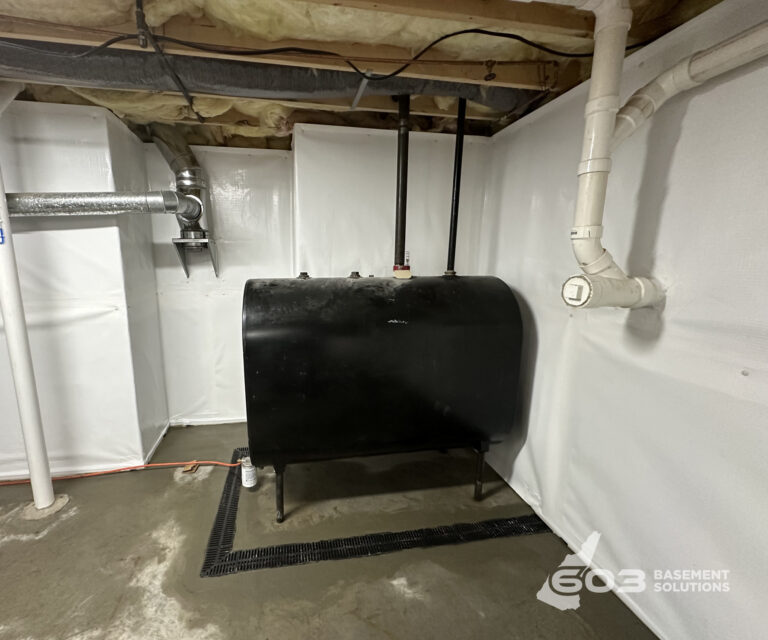
Dover waterproofing warranties depend on the drain, barrier, pump, and other items actually installed. Read the signed scope for exact coverage and maintenance conditions.
Questions Dover homeowners ask
Why is water showing up far from the leak in my Dover basement?
Water travels along walls, joints, framing, and low areas of the slab. The largest puddle may be downstream from the first entry point.
Will a larger sump pump fix every Dover water problem?
No. The drain must collect and deliver water to the basin first, and the discharge must carry it away. Capacity is only one link in the chain.
Should downspouts be fixed before interior waterproofing?
Avoidable roof runoff should be moved away regardless. Exterior maintenance can reduce load, but it may not replace interior collection where water reaches the footing.
Related help
See the full basement waterproofing service, find every town on the service-area map, or read straight answers to basement questions.
Get a free inspection in Dover
We will look at the actual house, explain what needs attention and what does not, and give you a written estimate.
Housing-year reference: U.S. Census Bureau, 2023 ACS 5-year table B25035.
Common questions about basement waterproofing
- If our basement walls leak only when it rains hard, can we fix it from the inside instead of digging up the yard?
- If there is rainwater seepage getting into my basement, is it covered by homeowners insurance?
- If your basement is prone to flooding, should you install French drains, a sump pump, an ejector pump, or all three?
- If your home has no footing, how dangerous is it for the foundation?
- Is basement waterproofing really necessary, or is it just an extra service?
- Is it better to install a French drain or to just dig a small ditch
- Is it worth it to do exterior waterproofing of a home, and will it stop cracks and leaking in a basement?
- Is moisture seeping through a basement’s walls a sign that
- My dehumidifier is collecting 6 gallons of water per day from my basement. Is that normal, and what does it mean?
- Should I install a French drain to deal with water in my basement?
- Should I waterproof my basement after finishing?
- What are effective ways to dry the basement after flooding?