
Haverhill basement waterproofing is a chain: find the source, collect the water, pump when needed, and discharge it away. 603 prices that actual chain in writing. Projects generally run between $3,000 and $30,000.
Protect the basement before protecting the finish
In Haverhill, water can announce itself as a puddle, peeling paint, a tide mark behind storage, a damp wall-floor joint, or a pump that never seems to stop during storms. The repair begins with the path. Covering the evidence with a new finish or coating makes the next diagnosis harder.
We inspect during dry weather too. Mineral deposits, rust lines, efflorescence, damaged bottom plates, and the direction of debris often preserve the story after the floor looks dry.
Collection, pumping, and discharge are separate decisions
An interior drain collects perimeter water. A sump basin receives it. The pump lifts it out. The discharge route carries it away from the foundation. A wall barrier guides seepage into the drain, and dehumidification manages vapor after liquid water is under control.
A system fails when one handoff is missing. Water can bypass a short drain, a weak pump can fall behind, or a discharge can return the same water to the wall. The scope needs to connect all four stages.
Work around existing rooms carefully
A finished Haverhill basement adds demolition and restoration choices. We identify how much wall or floor must open, what can be protected, and which damaged material should not go back. Selective removal is useful only if it leaves enough access to build a continuous water-control system.
Electrical equipment, furnaces, oil tanks, stairs, laundry, and storage platforms also shape the route. We document those constraints before pricing so they do not become surprise change orders.
Ask what the estimate excludes
Two waterproofing quotes may use the same headline and include different work. Compare drainage length, wall coverage, basin, pump, battery backup, discharge, concrete replacement, demolition, finish restoration, permits, cleanup, and warranty. Ask where the collected water ultimately goes.
603 basement waterproofing ranges from $3,000 to $30,000. The free inspection produces a written scope tied to the conditions found, not a price based only on square footage.
Build a useful moisture record
- Photograph the first wet area and the full wall around it.
- Write down rainfall timing and how quickly the water appeared.
- Record pump behavior, power loss, alarms, and discharge flow.
- Move storage away from the wall but leave stains visible.
- Note any recent grading, gutter, utility, or renovation work.
What a customer said about this kind of work
Plan for the next outage and storm
A sump system depends on power, pump condition, a clear discharge, and a basin that can accept the arriving water. If the basement has flooded during an outage, discuss backup power and alarm options as their own decisions. They should not be buried inside a package name.
Maintenance is straightforward: keep the basin accessible, test equipment under the manufacturer’s instructions, inspect the exterior outlet, and avoid stacking storage against the system. A waterproofing project works better when the homeowner can see and service the parts expected to move water for years.
How a 603 project moves from question to closeout
1. Establish the history
We begin with the weather, outage, and water history because the room after cleanup may not show how quickly the event developed.
2. Inspect the connected area
Inspection covers the entry points, collection route, pump equipment, discharge, and any finished material that blocks access. The outside endpoint receives the same attention as the basement.
3. Put the scope in writing
The estimate identifies system length, components, demolition, restoration limits, cleanup, and warranty. Backup and alarm options are priced as choices.
4. Confirm before work starts
The crew confirms protection and staging, then keeps drainage connections visible until they are tested. Material removed for access is handled according to the written scope.
5. Walk through the result
The final walkthrough includes pump and alarm checks, discharge location, maintenance access, and what to inspect after the next substantial rain.
Compare waterproofing bids on paper
Draw a simple basement outline and mark the walls included in each quote. Add the basin, pump, wall barrier, discharge endpoint, demolition, and areas that will remain untreated. Differences that sounded small in conversation become obvious on one page.
Ask for model information and warranty terms for mechanical components, plus the treatment warranty in plain language. If a finished room must open, establish who restores it and to what level. That prevents the cheapest line item from becoming the most expensive surprise.
Check the system before storing the basement again
Leave wall edges, the basin, and service route accessible long enough to see the system through real weather. Then keep valuable storage raised and away from mechanical components. Boxes should not hide the pump lid, alarm, wall barrier, or the place you would need to inspect during a storm.
Review the exterior line when seasons change and after landscaping. A crushed, disconnected, or blocked discharge undermines the interior work. If something looks different, photographs and the original scope give 603 a faster starting point for service.
Sealing the inside surface is not a drainage plan
Waterproof coatings may resist dampness at the face of masonry, but they do not collect bulk water or provide a route out of the building. Where water is reaching the footing or wall-floor joint, the plan needs collection, pumping when gravity is unavailable, and a discharge endpoint. We explain which stage each proposed component handles.
What Haverhill waterproofing is not promising
The written treatment covers identified water paths and installed components. It does not guarantee against a future plumbing break, sewer backup, surface opening, or untreated section. We describe the physical limits so the homeowner understands where the system collects water, where it discharges, and which risks need a separate decision.
If the basement is already finished, photograph walls and floors before selective demolition. Those images help document prior condition and make it easier to separate waterproofing access from later finish restoration. Label boxes and move them to a dry area instead of stacking them in the only route to the wall, basin, or electrical panel.
Haverhill is context, not a diagnosis
Haverhill's median housing unit was built in 1964, based on the 2023 American Community Survey. A citywide midpoint cannot identify the wall, floor, additions, drainage, or previous work at one property, so 603 checks those conditions on site.
What 603 work looks like
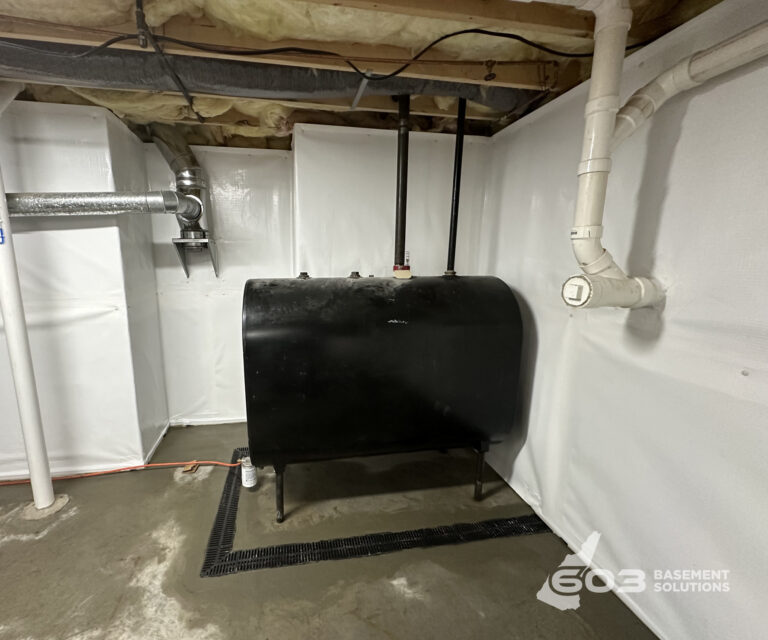
Haverhill coverage is tied to the installed waterproofing components and written treatment area. Pump or equipment terms may differ from the fixed construction work.
Questions Haverhill homeowners ask
Can Haverhill basement waterproofing protect a finished room?
A system can control an identified water path, but access may require selective demolition. The quote should state what is removed, protected, and restored.
Do I need battery backup for my sump?
It depends on outage history, water arrival, risk to the space, and the existing pump arrangement. Backup should be priced and explained as a distinct option.
How can I compare two waterproofing warranties?
Match each warranty to the exact drain, wall area, pump, or component installed, then review maintenance duties and exclusions. Headline years alone do not define coverage.
Related help
See the full basement waterproofing service, find every town on the service-area map, or read straight answers to basement questions.
Get a free inspection in Haverhill
We will look at the actual house, explain what needs attention and what does not, and give you a written estimate.
Housing-year reference: U.S. Census Bureau, 2023 ACS 5-year table B25035.
Common questions about basement waterproofing
- How to get rid of dampness in my basement wall
- How to make sure your basement stays dry
- How to pump water out of the basement
- How to remove a submersible water pump
- How to safely dispose of or repurpose water collected from a sump pump?
- How to save money with waterproofing estimating services
- How to seal or stop water coming from earth in my home
- How to stop a water leak in the basement wall where the main water line comes in
- How to waterproof my home’s exterior walls when the soil stays wet around the foundation
- I am purchasing a house built into a hill with a walkout basement. I am concerned about drainage. What should I use to keep water from my basement?
- I want to waterproof my basement, but first I have to stop water coming from the floors and walls. How do I stop the water from floors and walls?
- If our basement walls leak only when it rains hard, can we fix it from the inside instead of digging up the yard?