



A low entry landing is a different job from a town-side sidewalk panel.
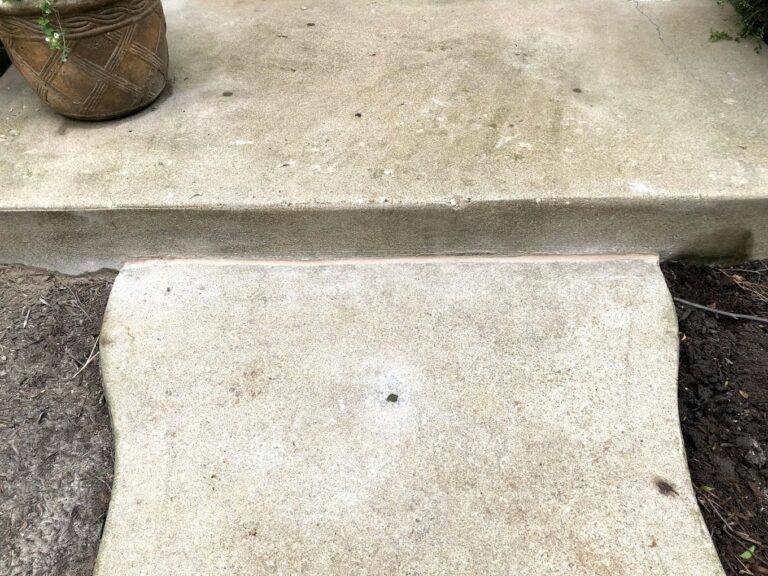
If the concrete at your Billerica entry has dropped, we first separate the landing, steps, and walk into their actual pieces. A sound, separate panel may be a leveling candidate. A broken step or loose corner may need repair or replacement instead. We check door clearance, riser height, cracks, and where rainwater goes. We also ask whether the troublesome panel is on private property or part of a town-side sidewalk issue. One low surface can lead to several different repairs. You deserve to know which one we are pricing.
A small drop beside a fixed step feels bigger than the same drop in an open patio. If we move a walk panel up, it changes the height of the first riser. If we move a landing, it can change the gap beneath the door. That is why we measure the whole entry, not only the low corner.
Show us where the edge catches a shoe, where water sits after rain, and whether the crack has grown. We check for loose concrete and movement beside the house. A sound panel may be worth keeping. A crumbling edge is a different conversation. We will say so plainly before recommending a method.
At an entry, a few surfaces may be fixed while only one can move. We identify whether the step is attached to the house, whether the landing is a separate piece, and whether a walk panel is simply meeting them. That geometry affects the useful lift. Treating the whole entrance as one slab from a photo risks solving the wrong edge. We would measure the transition as a route a person actually walks, including the first riser and the threshold.

Billerica’s 311 service directory has a sidewalk-repair reporting option. That is useful when the affected surface may be town-side. It does not establish who owns your particular panel or whether a private entry repair requires a permit. We identify the location first and direct any town-side scope question to the town.
That keeps the estimate honest. A contractor should not price an entire route as private work merely because the front steps and sidewalk happen to connect.
If the defect is on the town-side sidewalk, use the directory to identify the appropriate town process rather than assuming 603 may alter it. If the problem is a private landing, the municipal report option does not diagnose or pay for that repair. We can distinguish the two surfaces at the visit and keep the proposed work within the right boundary.
We look for a sound body of concrete, intact edges, room to move at fixed surfaces, and a drainage path that will still work afterward. If a panel is shattered or its surface is failing, lifting it will not put the pieces back together. If the wall or a load-bearing slab is moving too, an exterior walk quote is not enough.
The choice is between concrete leveling for a sound settled panel, concrete repair for suitable localized damage, slab pouring when replacement makes more sense, and slab foundation repair when building support is implicated. We do not treat those pages as four names for the same job.
The American Concrete Institute’s slabjacking guide calls for evaluating the slab and its support before selecting a lift. For a damaged concrete surface, the ACI horizontal-surface repair guide likewise starts with assessing the concrete. Both support an inspection-first approach. Neither is proof that a particular Billerica slab can be raised.
A lip in the walk can be caused by a settled exterior panel while the house stays put. A changed threshold, interior floor slope, or recurring wall crack raises a different question: is a building element moving? We should not infer a structural defect from one outdoor trip edge, but we also should not sell a walk lift as a foundation repair. We check the relationship between the entry and the house and recommend a structural assessment when the evidence points there.
Moving a sound panel does not erase an old crack, restore a worn finish, or make its color match adjacent concrete. A surface repair can address suitable localized damage but not a void under a settled panel. A new pour replaces damaged concrete but has its own access, disruption, and transition decisions. The estimate should name the problem it is solving and the visible conditions left for later work.
Which panel are we changing? What height are we aiming for at the door, step, and adjoining walk? What remains, including old cracks, color differences, or a drainage issue that needs separate work? We put those limits in the proposal. The free inspection should save you from paying for a lift that cannot fix a broken step, or a new pour when a sound panel can be kept.
For a Billerica entry, we would document the target height at the door and first step, not only a vague “level” result. We would also note whether the surface is private or town-side, what drainage must still work, and whether the step itself needs separate repair. If those details are unresolved, the scope is not ready for a homeowner to approve.
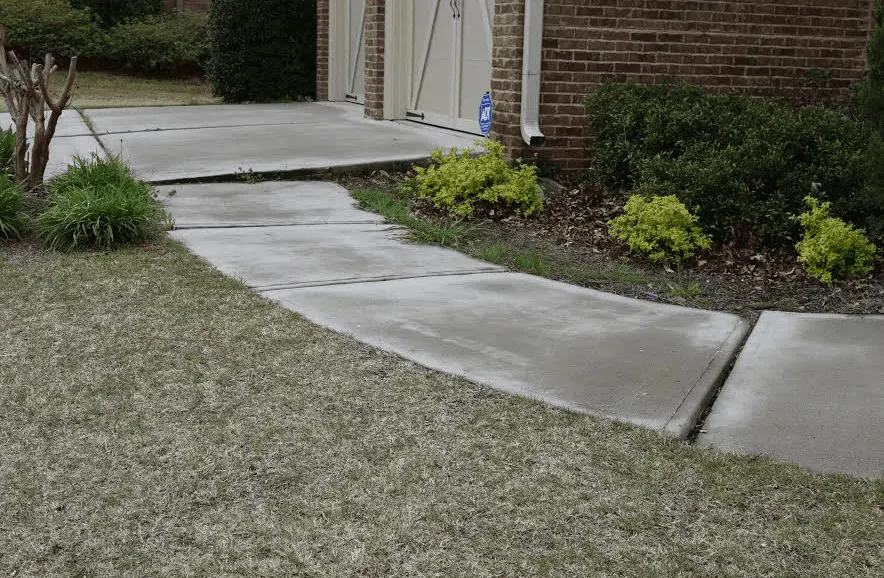
A wide photo of the whole entrance, a close view of the troublesome joint, and a note about when water pools are useful. Tell us which part catches a shoe and whether the door or step behavior has changed. We will measure the pieces and tell you when a separate panel can be kept, when a damaged step needs rebuilding, and when the house connection calls for further investigation.
We will inspect the affected panel, explain what can be kept, and put a useful scope in writing.

