



A patio lift should improve the edge without sending water toward the house.
A dipped patio panel or private apron in Essex can be a leveling candidate if the concrete is still coherent and the proposed rise will not trap water against the house. 603 Basement Solutions checks the whole surface, the door threshold and nearby fixed edges before recommending polyurethane placement. We would not turn a patio concern into a driveway-permit story: Essex’s published permitting guide asks homeowners to contact DPW when installing or relocating road access. That is a separate question from lifting an unchanged private panel. The distinction matters because the right job may be a limited lift, a surface repair, a new pour, or work on the building itself.
The visible dip is only one part of the diagnosis. We map the surface from the house outward and across each joint. We measure the door sill, any landing, the edge that meets soil or another paved surface, and the low point where water has been observed. A patio should not be raised to a visually level plane if that plane sends rain toward a basement entry. We ask for photos taken during or just after rain because a dry-day inspection can miss a water path. Those observations are about the specific property; we are not claiming that a coastal address, a town name or a nearby waterbody explains a slab’s movement.
Concrete integrity is the gate. A continuous settled panel may move as a unit; a broken slab with loose corners may not. We check cracking, rocking, and whether adjacent sections are pinned by steps, retaining edges or wall attachments. ACI RAP-11, Slabjacking describes careful assessment and incremental raising of a suitable slab. It does not tell us that this Essex patio is sound, identify a void’s cause, or allow us to guarantee the final height. Before work, we mark the candidate panel, the target slope away from the building and the limit beyond which more lift would create damage or a worse water route.
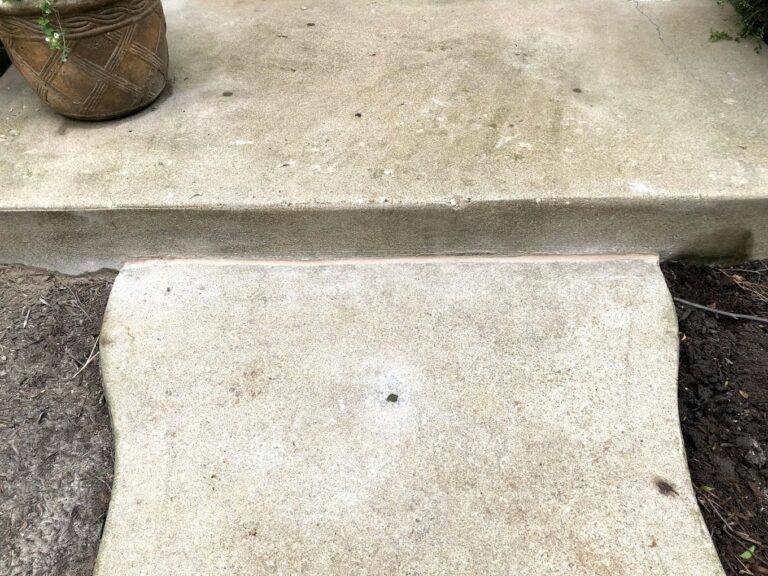
Where a limited lift makes sense, polyurethane can be placed beneath the existing concrete in a controlled pattern. The crew watches the slab and adjoining joints respond. We do not sell the material amount as a quality measure; the desired result is a functional route and stable support within the scope that was agreed. If a panel resists, opens a crack or begins to press into a door landing, the responsible action is to stop and explain the next option. A new slab with a rebuilt base may be appropriate when the existing concrete cannot make the planned geometry.

Essex’s official Introduction to the Permitting Process directs applicants to DPW for installing a driveway or moving a road-access location, and says new or changed driveway access onto a public road needs DPW review. It does not state that leveling a private patio or an existing apron away from the access point is a new driveway installation. Nor does it tell us whether a particular property’s proposed work changes the road connection. We would identify that scope on site and confirm current requirements if the project actually includes a new or relocated entrance.
This boundary belongs in the quote. A homeowner who asks about a patio dip should see the patio panel, fixed landing and water route on the sketch. If the proposal instead reaches the driveway entrance or changes an access location, that is a different job with its own town-side question. We will not imply that an approval has been obtained, that none is needed, or that a private injection is regulated just because an Essex guide discusses driveways. The guide is useful when used narrowly. It is misleading when pasted into a generic “all concrete jobs need permits” paragraph.
We also ask what lies beneath or beside the slab: known drains, utilities, previous fill, or a buried structure. Those facts need verification; we do not invent them for an Essex address. Water entering the basement may require basement waterproofing evaluation even if the patio edge is adjusted. If a foundation wall is moving, concrete leveling cannot carry the structure. The estimate should distinguish an outdoor slope correction from a water-control system or structural repair, and explain the order if more than one service is needed.
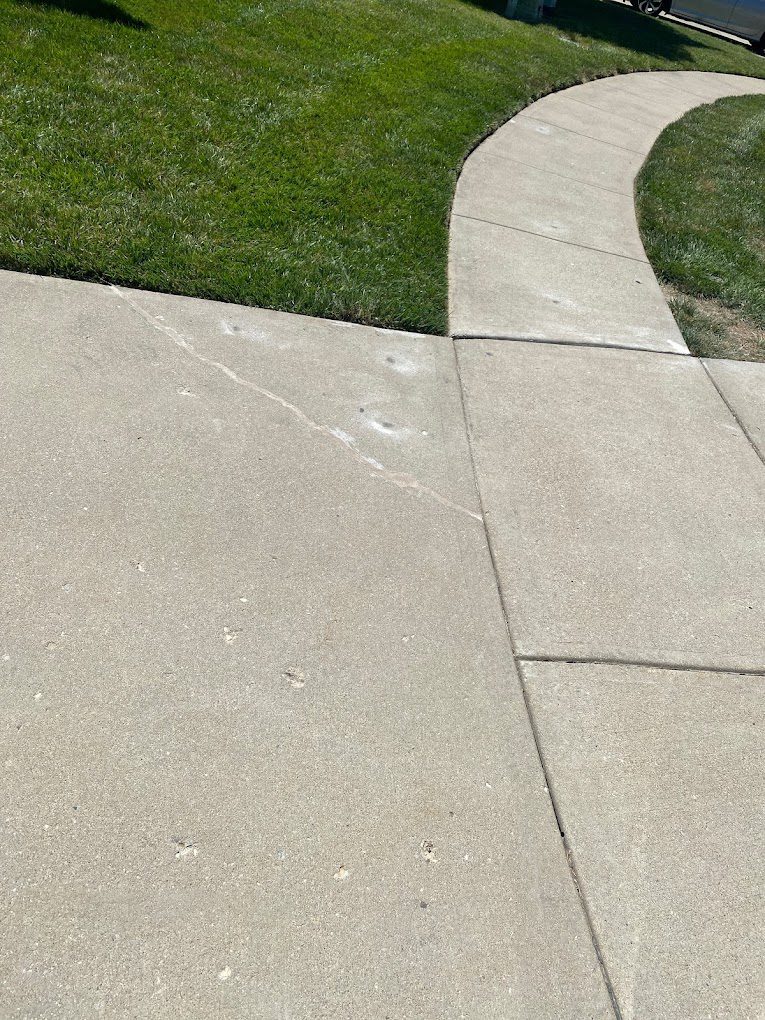
If the slab is at a good elevation but the top is chipped or spalled, concrete repair may restore material without moving the patio. If the panel is fractured or its base and joints need rebuilding to create a safe slope, removal and concrete slab pouring may be more durable. A sound but settled isolated panel may justify leveling. If cracks in a bearing wall, a shifted interior floor or a failing footing appear with the exterior symptom, start with structural and foundation repair. A patio lift should never be sold as a way to stabilize a house.
These are not different labels for one product. They change different things: surface material, existing slab elevation, new slab/base geometry, or the building load path. We would explain which condition is present and which observations would change the recommendation. Sometimes the cheapest injection quote is the wrong choice because the concrete is too broken; sometimes a full replacement quote is unnecessary because one coherent panel can be moved without disturbing the rest. The homeowner should see the physical reason, not just the price.
Send one wide photo from the house and one from the outer edge, showing all connected panels. Add close views of cracks and a ruler at any step. If the problem is water, photograph a rain event and note whether the water reaches a door or foundation wall. Tell us about previous patches, an existing drain or a known buried line. Ask the estimator to show the intended slope in writing and to mark which slab is private work. If the project also changes road access, bring that up before a leveling scope is approved so the DPW question is handled as its own issue.

Google review · Customer experience
Ken Burke ★★★★★
“Generally great experience. The guy I met with that did the estimate was great. The guy that installed it was awesome. Professional experience through and through”
Do not lift broken concrete that cannot move together. Do not make a patio “flat” if that sends water toward a basement door or forces a new unsafe step at a fixed landing. Do not assume an injection can solve active foundation movement or an unidentified drainage failure. And do not use Essex’s driveway-access guidance as proof of the permit status of an unchanged private patio. A limited lift is sensible only when the panel is coherent, the target slope works at every edge, and the true work boundary is clear.
We will inspect the affected panel, explain what can be kept, and put a useful scope in writing.

