



We check the slab, its fixed edges, and the water path before recommending a lift.
On the driveway, we first look at the edge your tires cross and the water path beside it. The right height must work with the neighboring pavement and leave drainage open. At the small entry landing, the door and step set the limit instead. A lift that makes one surface look flatter can still leave the other awkward to use.
We check each panel for cracks and loose corners before proposing an injected material. If either one is too damaged to move as a useful piece, we will say so. The inspection should produce two choices you can understand, not one large concrete price that hides which slab is being repaired.
A panel by the door can settle while the long driveway stays usable. We check the door clearance and the step above it, then look at the soil edge below. If only one sound landing has dropped, you may not need a large driveway project.
We want to know what bothers you when you use the entrance. Does a shoe catch? Does rain sit at the sill? The target height should answer that problem without creating a new one at the step.

A lift is sensible only when the concrete is sound enough to move as a panel. Broken corners can separate further under pressure. The ACI slabjacking guide warns about severely distressed slabs and bound edges. We compare repair and replacement before recommending polymer foam, cement-based material, or a new pour.
If the drainage beside a culvert keeps removing support, a lift alone may not hold. The written plan should mention that cause. We would rather price the right work than tell you that a material name solves water and concrete at once.
Hampton Falls' driveway form identifies a town right-of-way and places driveway-culvert maintenance on the property owner. When a low concrete approach sits near a culvert or ditch, we need to understand the water path before promising a new height. A lift must not become a shortcut around a drainage problem.
Read the Hampton Falls source. Any approval question depends on the actual proposed work.
The Hampton Falls quote should name the private slab or landing we inspected and the target joint. It should list any crack that remains visible and any drainage work outside the lift. Roadside access or culvert work, if relevant, is a separate scope and town question.
Price varies with condition and access. We will not use a flat national average for a driveway we have not seen. The inspection is free; afterward you should know why we recommend lifting, replacing, or leaving a sound section alone.
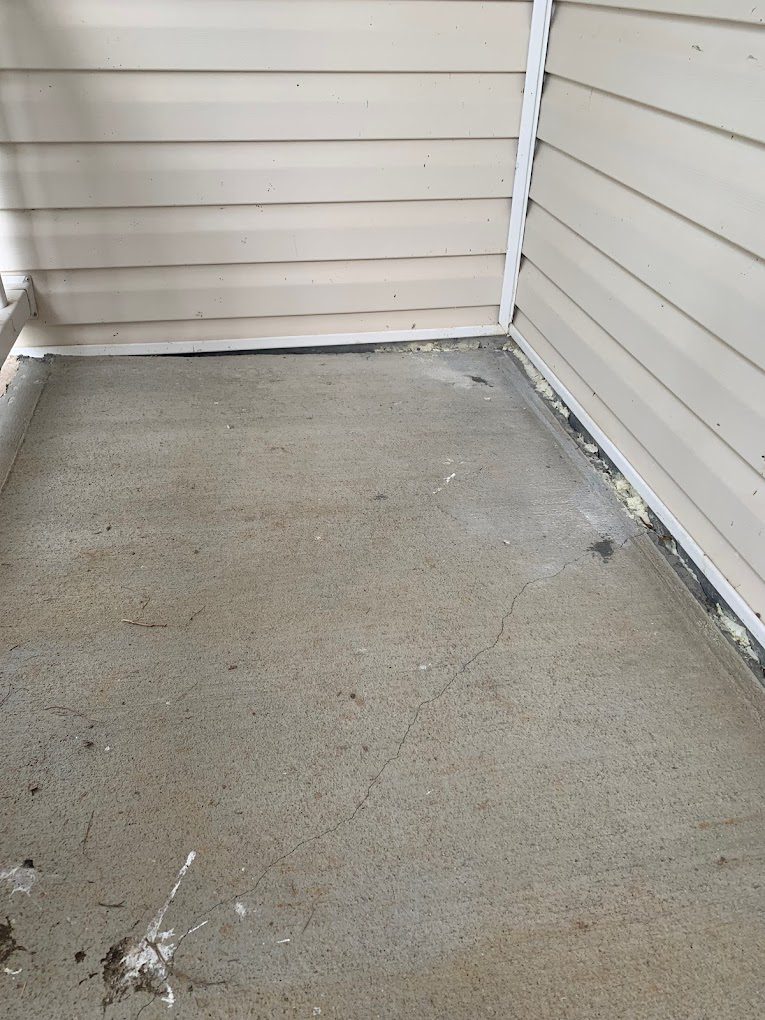
Before-and-after photos should show the same joint and the same door or road edge. Check that the entry is easier to use and that water still follows a safe path. Old discoloration may remain. That is part of the difference between moving a slab and installing a new one.
If the panel binds before the target height, the crew needs to stop. A cracked slab is not a good trade for a perfectly straight line on a level. We explain the limit and decide what repair comes next.
Compare concrete leveling with a new pour for the driveway approach. For surface damage without settlement, compare concrete repair before paying for a lift. If the adjacent wall is moving, that belongs in a separate foundation assessment.
We will check the driveway approach and small entry landing as separate surfaces before writing a repair scope.
Show us the driveway approach in Hampton Falls. We will explain the useful repair limit.

