



We check the slab, its fixed edges, and the water path before recommending a lift.
Stand at the door after rain and show us where the water sits. We check the patio panel against the threshold, the next panel, and the grade beyond it. Lifting the low edge may improve the route for water, but only if the new slope has somewhere useful to send it. A slab that is broken or badly worn may need replacement instead.
The walk near the road is a different surface with a different boundary. We can inspect the private portion without claiming that a patio quote also covers a public sidewalk. Keeping those questions apart gives you a clear price for the slab that is actually bothering you.
A patio that settles toward the house can hold rain against the wall. Raising the low edge might help, but only if the finished slope sends water somewhere sensible. We check the door threshold, downspout, and next slab before recommending a height. We also ask whether water has already found its way into the basement.
If there is a basement leak, we should look at that separately. Concrete leveling can alter surface drainage; it is not a substitute for a proper basement-waterproofing diagnosis when water has crossed the wall.
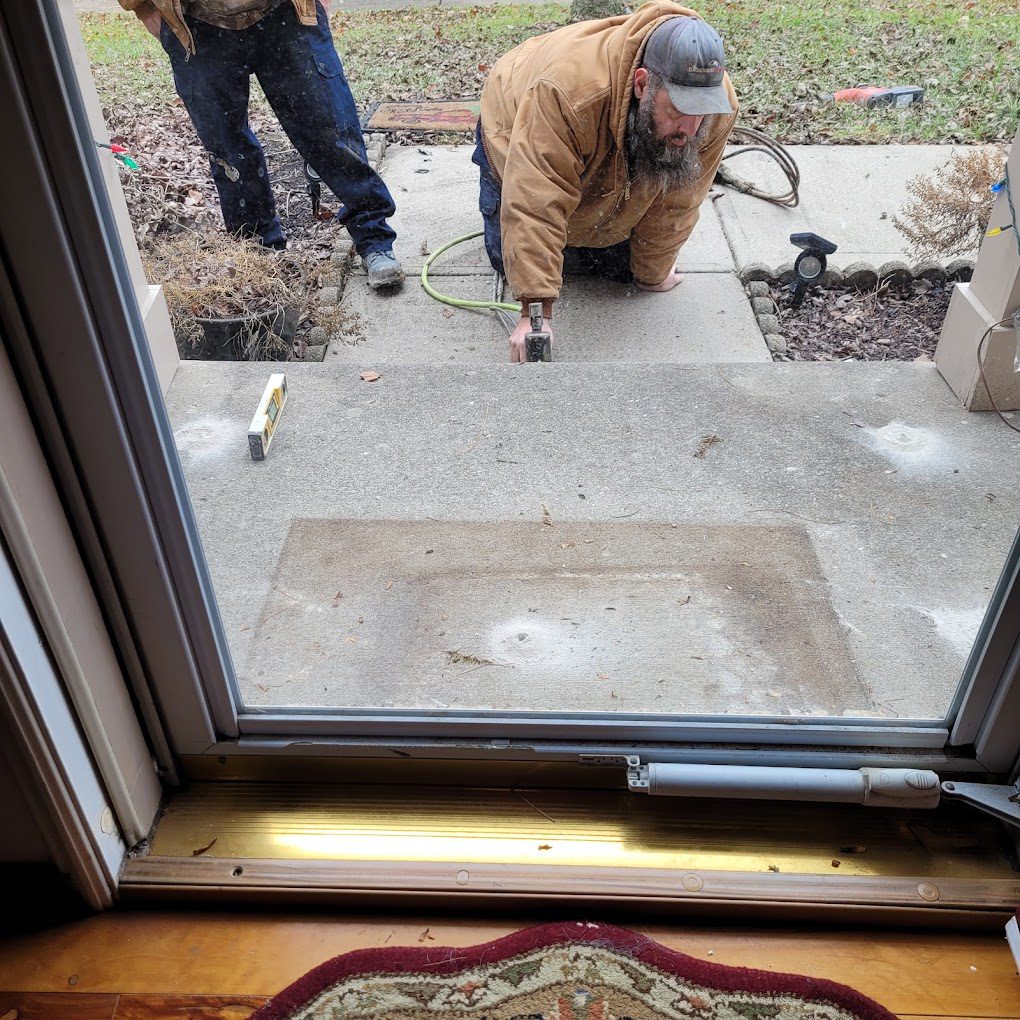
Polymer injection can support and move an intact panel. It cannot rebuild a spalled or broken surface. ACI's slabjacking guide tells contractors to consider replacement when concrete distress is too great. We check the slab edge and top before talking about foam.
We also respect adjacent steps. A panel can bind before it reaches the height you hoped for. Pushing harder may crack it. We should name a useful target and tell you if the slab cannot safely get there.
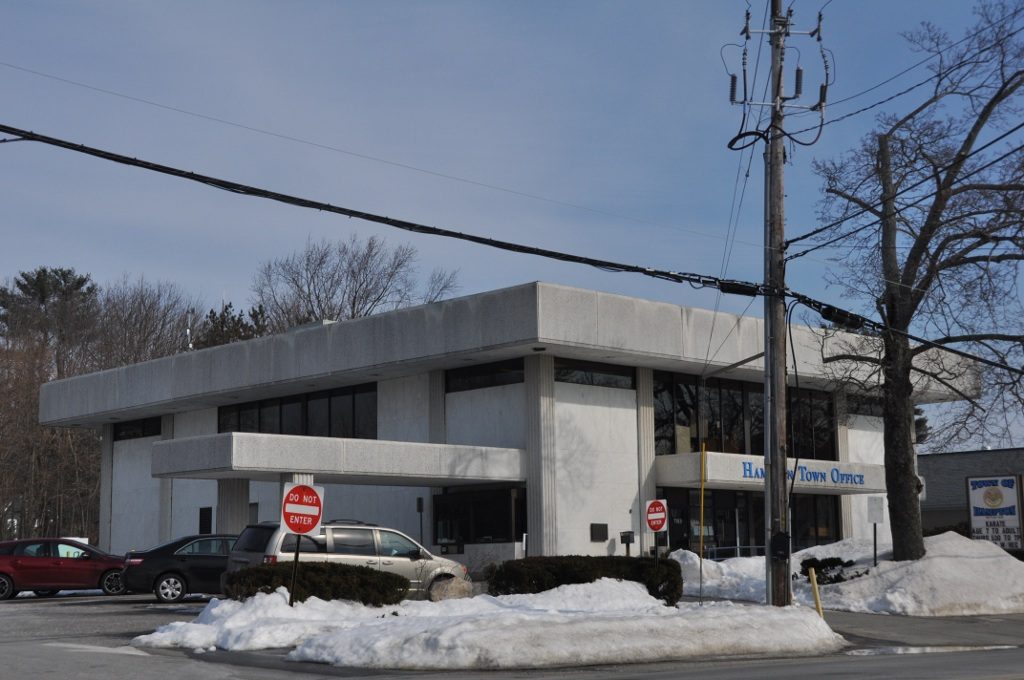
Hampton's driveway application distinguishes a new driveway, resurfacing an existing driveway, and changes to an existing driveway. Its plan marks the property line and town right-of-way. A low private patio is one scope; a repair reaching the roadside approach is another. We will mark the proposed work and confirm any public-side requirement with Hampton before booking it.
Read the Hampton source. The form alone does not decide which permit, if any, a particular slab lift needs.
The scope should identify the private patio panel, the height change, and the direction water will take afterward. It should say what old cracks remain, whether a downspout adjustment is separate, and whether any public sidewalk is excluded. A driveway-apron or street-side change needs its own town check.
We quote after seeing those conditions. A patio by a door is not priced like a long walk. The free visit should leave you with a repair choice, not a product name and a one-line total.
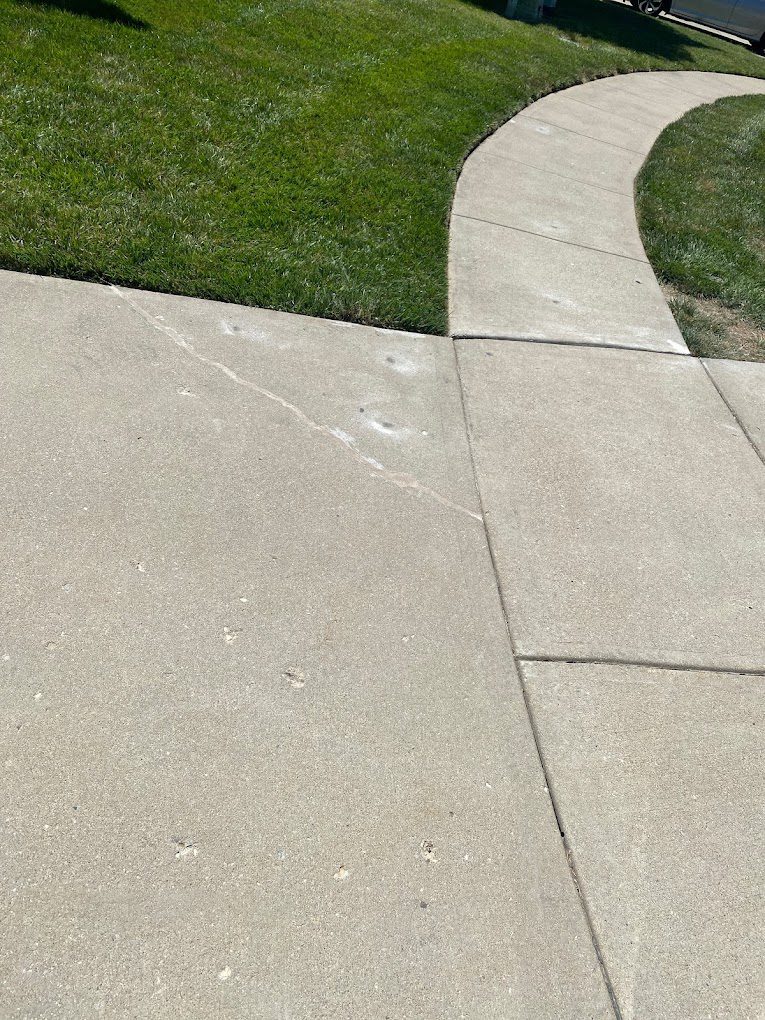
Photograph the patio edge at the door before the job and from the same spot after. Check for the old puddle at the next rain. If the step is still awkward or water now runs to a new bad place, we need to know.
A supported slab may still show stains or cracks. Those are different issues. If appearance is the main reason you called, replacement might be the better conversation at the start, even when a technical lift is possible.
Compare concrete leveling with a new pour for the patio outside the door. For surface damage without settlement, compare concrete repair before paying for a lift. If the adjacent wall is moving, that belongs in a separate foundation assessment.
We will check the patio outside the door and walk near the road as separate surfaces before writing a repair scope.
Show us the patio outside the door in Hampton. We will explain the useful repair limit.

