



A settled walkway can be kept only if the entire door-to-drive route works.
When a Harvard walkway panel drops beside a driveway, replacing the whole route is not necessarily the first answer. A sound, coherent piece may be raised if a controlled lift improves the walking surface without making the driveway connection or doorway worse. 603 Basement Solutions would measure the threshold, adjoining joints, driveway grade and runoff path before suggesting polyurethane leveling. Harvard Public Works has a residential driveway connection or modification form for road-connection work. That is not a blanket rule for a private walk; it becomes a live question if the intended lift requires changing the access connection. The point is to keep a limited concrete repair limited, or recognize when it is no longer limited.
The toe-catching joint is where a homeowner feels the problem, but the acceptable finished height depends on the rest of the route. We would walk from the door over the affected panel to the driveway and look at each transition. We measure the high and low sides of the joints, the panel’s tilt, any stair riser and the grade where a vehicle crosses. This reveals whether the panel sank as one piece, rotated, or broke into independently moving portions. One number at the worst edge does not tell us how much the whole piece can move safely.
A sound panel that has settled might be supported and raised incrementally. A panel with a full-depth crack, unstable corner or badly damaged surface may call for a different method. ACI RAP-11 explains the evaluation and controlled slabjacking of suitable concrete. It is a technical basis for asking what is under the slab and monitoring its response, not a guarantee of lift height or long-term settlement performance on this parcel. We would set target elevations and a stop line in advance, then compare actual movement to that plan during work. If the concrete begins to crack or cannot meet both fixed edges, forcing more lift is not sound practice.
We need to inspect water as a route, too. An uneven walk may direct rain toward a door, or lifting it may send runoff across a driveway. We ask the homeowner where water actually pools and check slope in both directions. We do not assume a Harvard property has a drainage problem because its walk is low. A narrow lift may solve a trip edge but fail if it creates a wet threshold. The proposed finish profile should show where water will go after the panel moves and whether another drain or adjacent surface requires a separate scope.
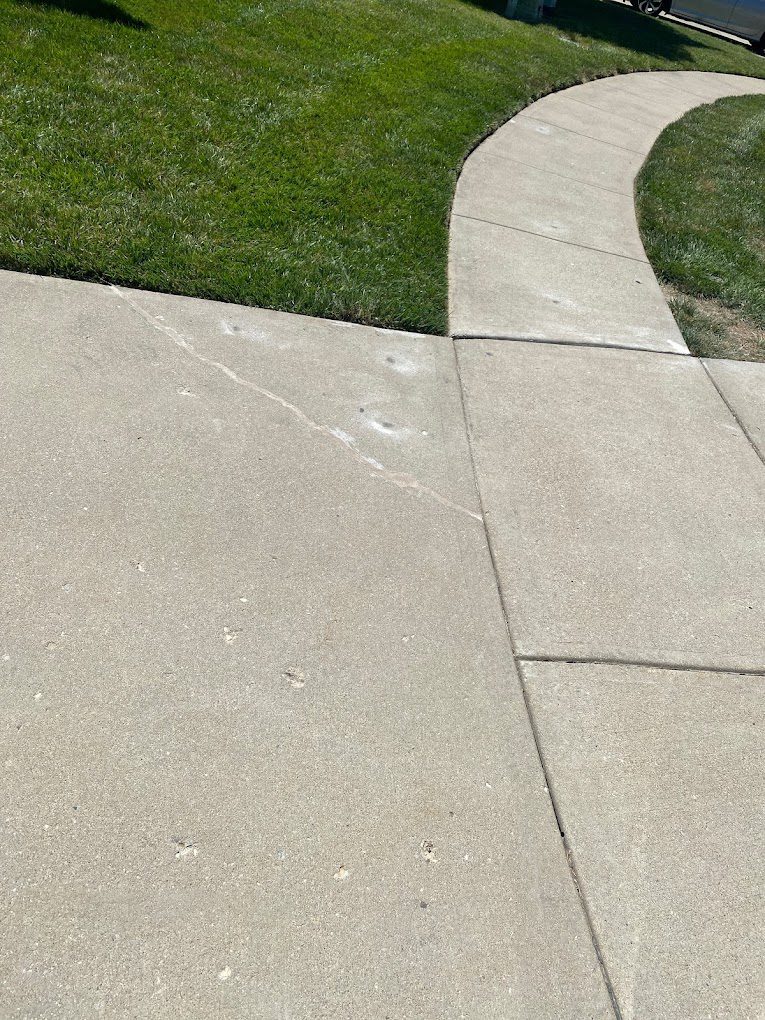
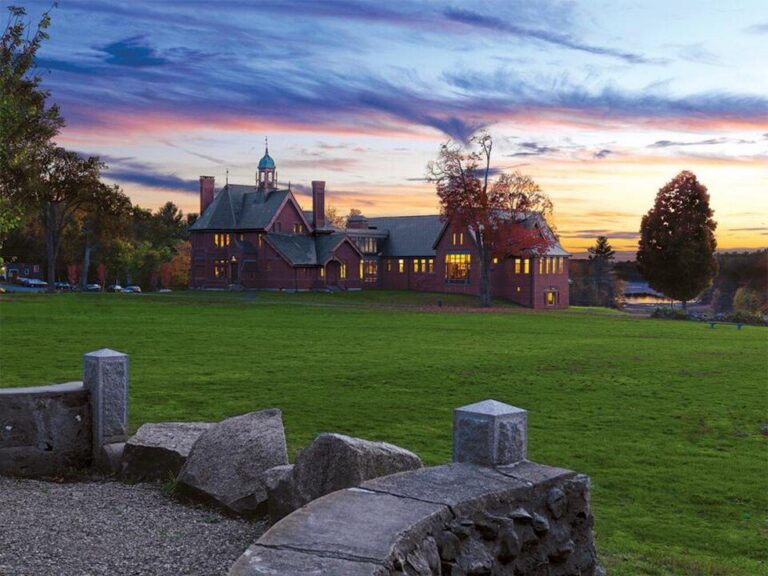
Harvard Public Works lists a Residential Driveway Connection or Modification Permit. The town form distinguishes new construction from reconstructing or resurfacing a driveway connection. Neither source says that injecting beneath an unchanged private walkway automatically needs a driveway permit. If a proposed lift changes the public-way connection, though, the work may be larger than the first panel quote suggests. We would identify the boundary, show the intended geometry, and ask DPW how it classifies that specific change rather than asserting an exemption or approval ourselves.
This separation affects budgeting and expectations. A private walk panel, driveway slab and road-edge connection may meet within a few feet of one another. They can have different owners and constraints. A price for raising a private panel should not imply that the public-side or connection work is included. Conversely, replacing or reshaping a driveway approach should not be hidden inside a simple leveling description. Written scope can name the retained panel, fixed endpoints and any town-facing question. The town form is evidence of a process for connection work, not evidence that every Harvard household must use it for unrelated concrete maintenance.
The same distinction protects the homeowner from a poor lift. If raising one panel makes an abrupt transition at the driveway, a seemingly cheap repair can simply move the trip risk downstream. If the route cannot be brought into a usable shape while preserving water drainage and the existing connection, a larger redesign or replacement may be the more honest recommendation. We should explain that early rather than promise that polyurethane material alone solves all three conditions.
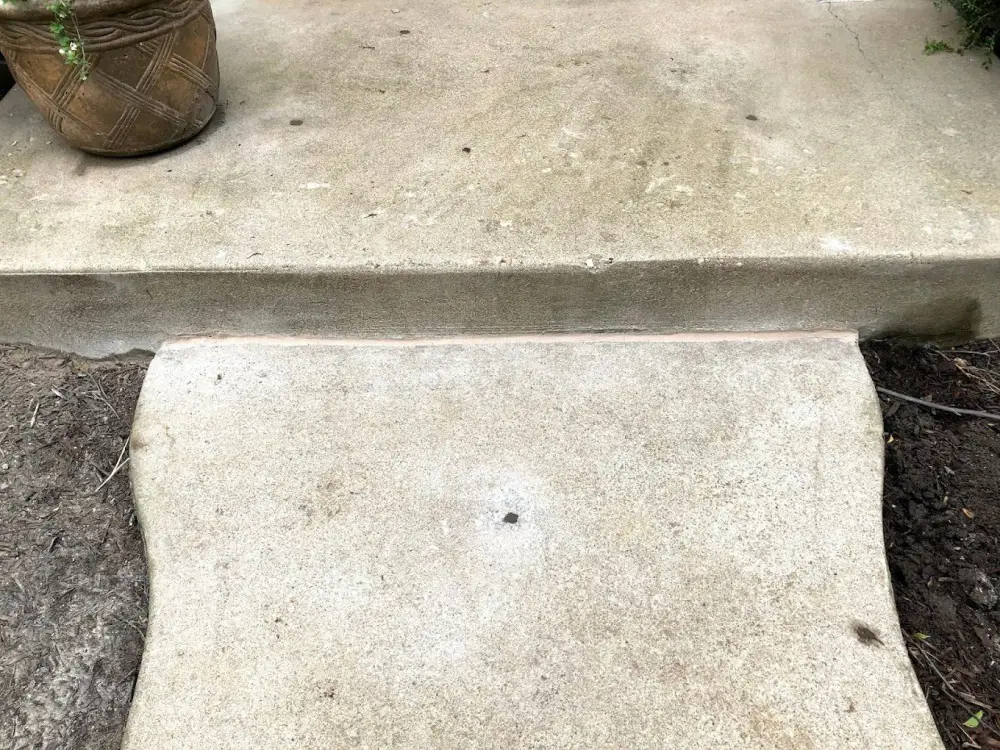
Concrete repair is the branch for a chipped, locally spalled or scaling surface that is otherwise supported and at an acceptable grade. Concrete leveling keeps an intact settled slab and changes its elevation; it does not replace broken concrete or reconstruct the base. Concrete slab pouring becomes more relevant if the panel has fractured, the planned heights conflict at both ends, or the base and connection need new geometry. A pour is a different job, with removal, base preparation, joints and curing in its scope.
If a step or walk moves with a porch, house wall or bearing slab, we would not sell detached exterior leveling as a structural remedy. Structural and foundation repair starts with the load path and building movement. The same visible step can have different causes; a measured inspection needs to determine which surface is moving and which one is fixed. The homeowner should receive a reasoned recommendation, including conditions under which we would stop or change the scope.
Send a wide image from the doorway to the road-facing end of the drive, then detail photos of joints, cracks and any water stain. A ruler can show a lip but cannot show the route’s full grade, so include one view from the opposite direction. If a driveway connection was recently reconstructed, note it; we will not assume it explains the walk without seeing the property. Tell us whether vehicles use the affected panel or pedestrians only, and whether equipment could reach it without working in the road. At the visit, ask for the measured target heights at every adjoining joint and a clear statement of whether the driveway connection is unchanged.

Google review · Customer experience
Craig Gruskowski ★★★★★
“The job of this company was outstanding, they were efficient, clean and did the project on time. I would highly recommend them.”
Do not inject beneath a shattered or rocking panel and call it a coherent slab. Do not choose a lift that gives a level-looking photo but an unsafe step at the next joint, a door-clearance problem or water flowing toward the house. If the necessary correction changes the road connection, treat Harvard’s driveway process as a separate real scope question. Do not describe an unchanged private walkway as permit-required merely because that form exists. And if the house or porch is moving, investigate that support system before touching the exterior path.
We will inspect the affected panel, explain what can be kept, and put a useful scope in writing.

