



The finish grade matters more than a neat photo of one corrected joint.
An uneven Manchester-by-the-Sea entry walk or driveway panel does not automatically need demolition. If one panel is sound and has settled, 603 Basement Solutions can inspect whether controlled polyurethane leveling would give people a safer path while retaining the concrete. The critical check is what the new grade does to water. The town’s stormwater program describes a municipal system that carries runoff from pavement and other surfaces to local waters. It does not tell us that this property connects to a particular inlet or that a private panel needs a stormwater permit. We must measure the actual path from door to drive and observe where rain goes before prescribing a lift.
The visible step may be at one joint, but the panel meets several things that will not rise with it: a door sill, stair, next slab, driveway or landscape edge. We would measure each transition and check the panel’s cross-slope. Raising it to erase the first lip may create a worse one at the other side. We draw a proposed finished line that a homeowner can walk through in their mind. Where a car uses the area, we check the vehicle route as well. A helpful repair should work along the whole path, not only in a close-up before-and-after photo.
The panel’s integrity is a separate gate. We inspect for cracks that go through, corners that have detached, rocking sections and surface wear. A coherent slab at a low elevation may respond to controlled support and lift. Pieces that no longer act together are poor candidates. ACI RAP-11 discusses evaluating and incrementally raising suitable settled slabs. It does not certify a particular Manchester-by-the-Sea panel, determine what caused its movement, or guarantee a permanent result. The crew has to monitor its response and be willing to stop if an edge binds or a crack opens.
Before writing a treatment scope, we ask where runoff currently travels. A stain, puddle after rain, drain or downspout can be evidence, but none should be invented from the town name or its proximity to the coast. We do not assume salt damage, coastal flooding, a mapped storm-drain connection, or a high water table at every address. The lift must preserve an acceptable route away from a door and building wall. If changing the slab height redirects water toward the structure or across a boundary, we would explain that risk and consider another design.
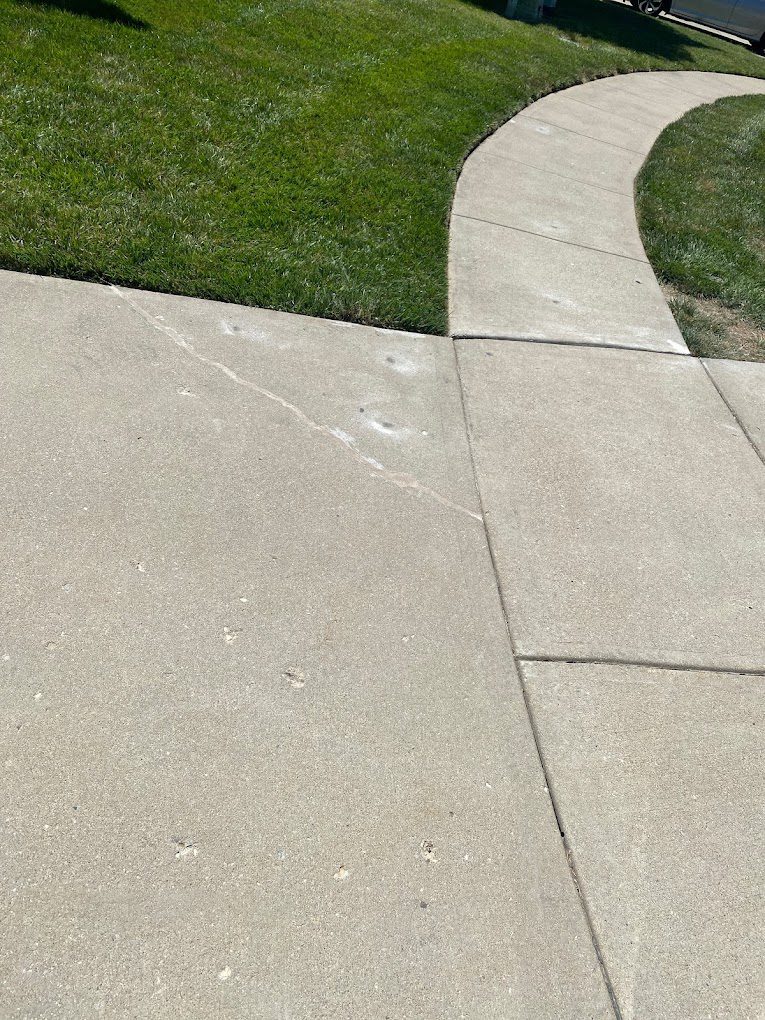
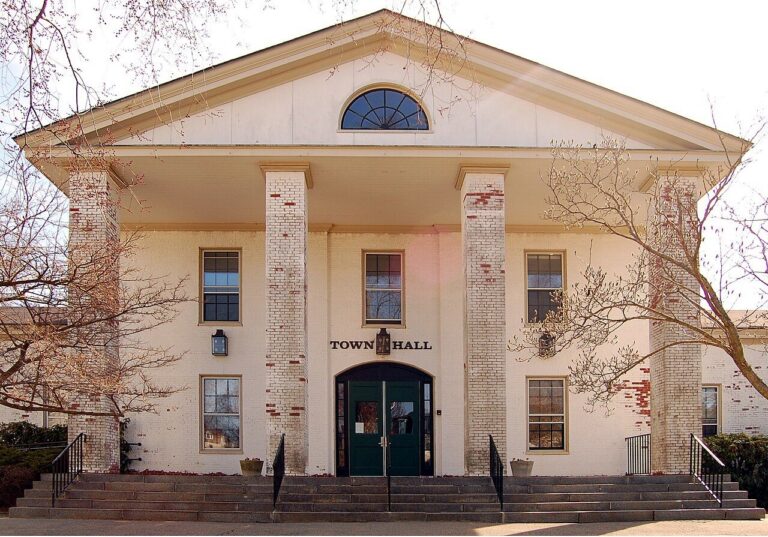
Manchester-by-the-Sea’s Stormwater Management Program says its municipal separate storm sewer system conveys runoff from pavement and other surfaces to local waters. That is public infrastructure context. It does not establish the outfall for this property’s driveway, a legal requirement for injecting beneath an unchanged private walk, or a diagnosis of why any slab settled. Proposed changes to driveway rules and older draft regulations should not be described as enacted requirements. We would ask the town about current rules only if the specific proposed work alters a public surface or falls within a regulated change.
The property-level water question is more immediate. We can document where rain gathers and measure whether a target elevation sends it toward or away from the building. If the low panel currently directs water to a safe route, raising it may remove a trip edge but lose that function. If a panel slopes toward the door, a limited lift might improve both walking and runoff, provided the other fixed edges still work. Neither result can be promised remotely. A good estimate states the intended finished grades, what remains unchanged and what separate drainage work would be needed if the lift alone is insufficient.
We also mark where the work takes place. An entry walk entirely within the parcel differs from an apron or sidewalk crossing. We will not guess public ownership from a pavement seam. A quote for one private panel should not implicitly include municipal concrete or a new driveway connection. If the route can only be fixed by changing a public-side edge, that larger design and town classification should be addressed before anyone promises a small injection job.
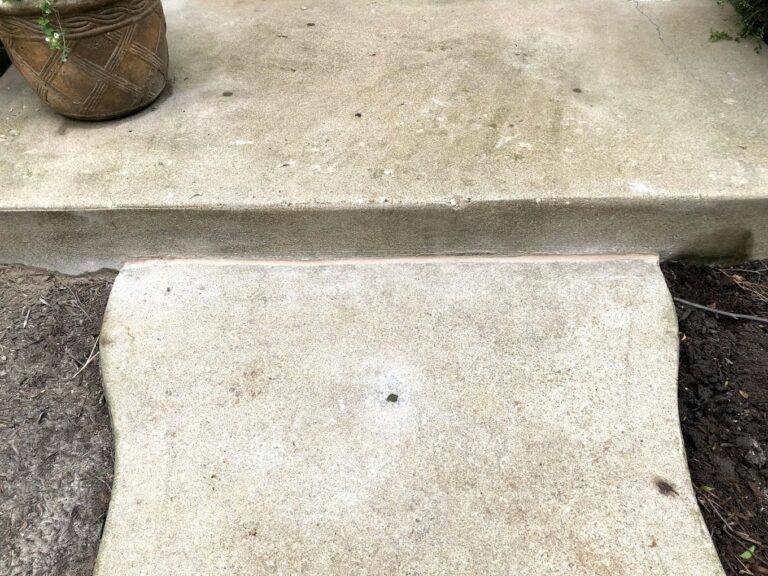
Concrete repair is a material treatment when the surface has chipped, scaled or spalled but remains at a useful elevation. Concrete leveling changes the height of an intact settled piece. Concrete slab pouring replaces concrete when it has broken apart, the base needs redesign, or a new plane is required to meet the fixed door and drive grades. Those are different scopes, with different site disturbance and preparation. We should not recommend replacement solely because a limited lift would be less convenient for the contractor, nor promise a lift when a new slab is needed.
If an attached stoop, bearing floor or foundation wall is moving, begin with structural and foundation repair assessment. Injecting beneath a detached exterior walk cannot stabilize a house. We would explain which observed facts point to the concrete itself and which point to the building. The homeowner should see the uncertainty and stop conditions in writing, not hear that all uneven concrete has the same cause.
Photograph the full route from entrance to parking or drive, then each joint and crack at closer range. Include a view of where rain actually ponds or flows after wet weather, if that happens; do not infer a storm drain connection from where the water seems to head on a dry day. Note known utility covers and downspouts. A ruler helps show the lip, but not the correct finish grade. At inspection, ask for a marked profile at the doorway, joints and far edge, plus a statement of whether the work stays on private concrete.

Google review · Customer experience
morgan1027 ★★★★★
“Cory came out to service my sump pump. He was extremely knowledgeable and professional, and he made recommendations for how I can make improvements (not an upsell – things that would cost me very little money that I could do myself).
Everyone was excellent. I will be using them again for my next basement project.”
Do not inject beneath a fractured panel whose sections will not move together. Do not raise one edge if the next joint becomes less safe or the new slope sends water toward the building. Do not assume the town’s stormwater page proves that your property drains to a municipal inlet or requires a private-slab permit. If fixed elevations cannot be reconciled, replacement geometry may be more honest. If the building itself is moving, diagnose that load path before buying an exterior lift.
We will inspect the affected panel, explain what can be kept, and put a useful scope in writing.

