
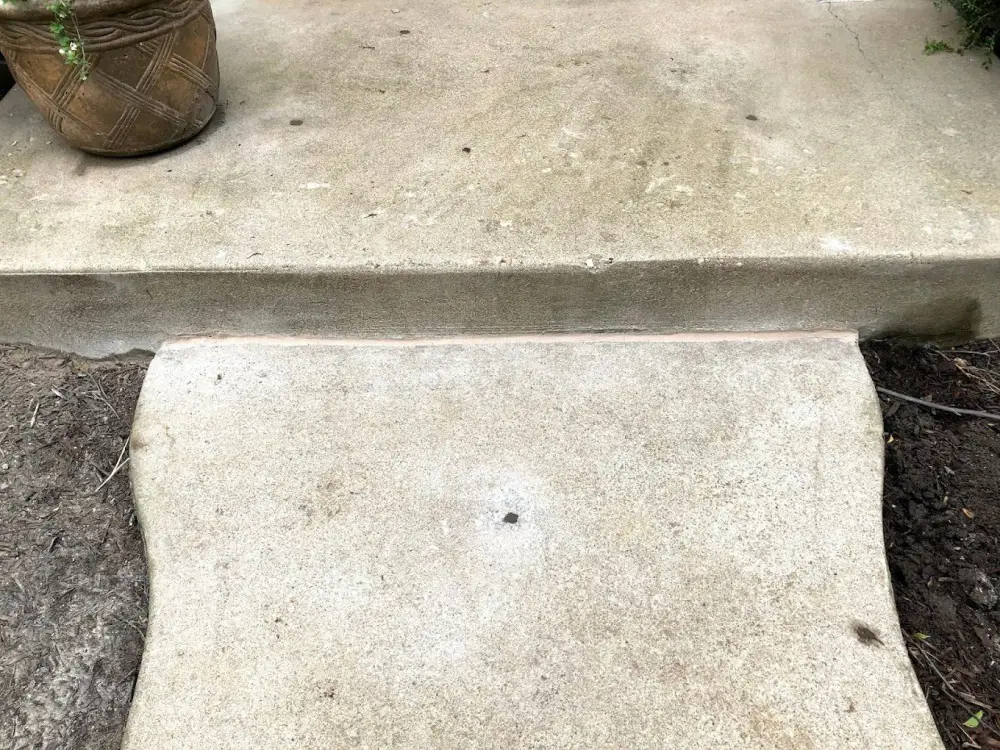
The step in your walkway might be fixable. The first question is whether the slab still has good concrete to work with.
A dropped panel beside your Nashua garage is usually easy to locate. A low section at the street end is different: you need to know whether the proposed work crosses the private property line.
Nashua’s Engineering Department lists permits for right-of-way disturbance and driveway work. That page does not tell us whether your particular leveling repair needs a permit. The boundary and exact work decide which question to ask the city.
We keep the private-slab assessment separate from any public right-of-way scope. No one should quote a street-edge repair as if the line does not exist.
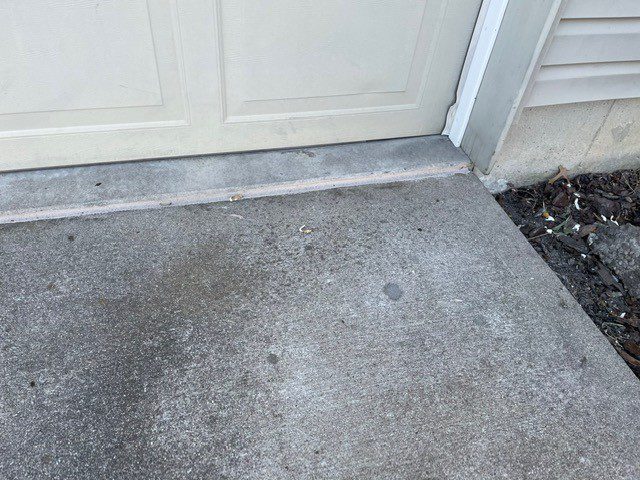
The number that matters is not simply how far the middle of the slab sank. We need to see the joints, the garage threshold, the street-side edge, and the path water takes. Raise one corner without mapping the other edges and you could create a new step or push water somewhere worse.
At a Nashua driveway, we’ll ask you to point out where a tire catches, where you shovel, and whether water reaches the garage. A private front walk needs a different finished edge for someone on foot. That is why we mark the panel and the target result before choosing leveling.
Some slabs cannot move to the height a homeowner first imagines. The American Concrete Institute’s slabjacking guide notes that a bound slab may resist movement and that cracks or joints can change during a lift. A useful transition matters more than a promise of perfect level.
You may have found poly leveling while searching for a way to raise a slab. It is one possible method. Before we recommend it, we need to know whether the panel is intact, how it moved, what it meets, and whether the area below can support a repair.
A separated patio panel may be a candidate. A broken garage floor, a stair tied to the house, or a foundation slab that carries the building needs another conversation. We won’t promise that one injection will solve every low edge.
We measure the drop and the fixed edge. Then we assess whether leveling can leave a useful, safe transition.
We compare replacement concrete with a focused repair. If the building itself is moving, we move to structural assessment.
Slab lifting is a repair to the position of concrete. It doesn’t, by itself, stop continued loss of support below. The ACI guide names settlement, shrinkage, and erosion of the base as reasons a slab can drop. We will not claim which one happened at your house from a map of Nashua or a picture of a crack.
A downspout discharging near a patio, washout beside an exposed edge, or a joint that keeps opening gives us a place to investigate. We look for a water path and ask whether the condition is still active. If the ground is still changing, that risk belongs in the conversation before you pay for a lift.
Sometimes the better decision is to leave an old, stable hairline crack alone. Other times a slab is broken enough that lifting it would just move broken pieces. ACI says a crack’s significance depends on the structure and the nature of the crack. That is why we judge the whole panel, not one mark.
Which panels are included? Where will water go afterward? Does the planned height still work at the garage door, steps, and adjoining walk? What old cracks or surface wear will remain? These answers matter more than the product name.
We inspect before we price because the same-looking lip can come from a sound slab dropping at one corner or concrete failing throughout. If the surface is past saving, we’ll say so. That is a better answer than selling a lift that the slab cannot hold.
Leveling can change the elevation. It does not turn weathered concrete into new concrete. Old staining and worn texture remain. A crack may still show. Where injection holes are used, the repaired spots can be visible after they are filled. We want you to know that before choosing to save the slab.
The target elevation has to work with the garage door and the adjoining panels. We should also talk about surface water. If a low section currently sends water toward the house, lifting may change that route, but we cannot promise the drainage result without looking at the full slope.
If the finish itself is failing, replacement may buy you a better outcome than a lift. If the concern starts under the house, a foundation inspection comes first. You don’t need a concrete-leveling job just because a slab looks uneven.
The quote should name each private panel, the expected height change, the chosen method, and any crack or finish work that is separate. If the work reaches the driveway entrance, the boundary question must be recorded.
It should also name fixed edges, old damage, and any drainage or ground condition that may affect the result. A neat price with no limits attached is not much of a plan.
Price depends on panel size and number, access, the amount of movement needed, and the condition of the concrete and its support. We won’t guess a Nashua price from a national average. After the free inspection, we can put the real scope and price in writing instead of borrowing an average from somewhere else.
A filled injection hole tells you where the crew worked. It does not tell you whether the walkway or driveway now works better. Compare the same joint before and after. Walk the repaired path, look at the garage threshold, and check where the low edge meets the next panel. Those are the places that drove the call.
The ACI guide says the final elevation should be measured during slabjacking. It also warns that injected material can travel toward drains or underground spaces instead of lifting the intended slab. That is why nearby drains and utilities belong in the planning conversation. We won’t assume an unseen void is fully filled merely because the top looks even.
Keep a photograph of the finished edges and a copy of the written scope. If you notice a new lip later, you can point to the same place and ask a useful question instead of starting from memory.
No blanket answer fits every driveway. Nashua distinguishes work in the right-of-way from private-property work. We identify the location and scope before making a permit claim.
Correcting a low section may change where surface water runs. We need to inspect the slope and drainage route before promising that result. A separate water entry problem may need a different fix.
A photo helps us see the symptom. It cannot show the support below, the full crack pattern, or what the slab meets. The free inspection settles the repair choice.
We’ll inspect the Nashua slab, explain where leveling fits, and tell you when it doesn’t.