



The new height of a roadside approach is useful only when runoff still has a safe outlet.
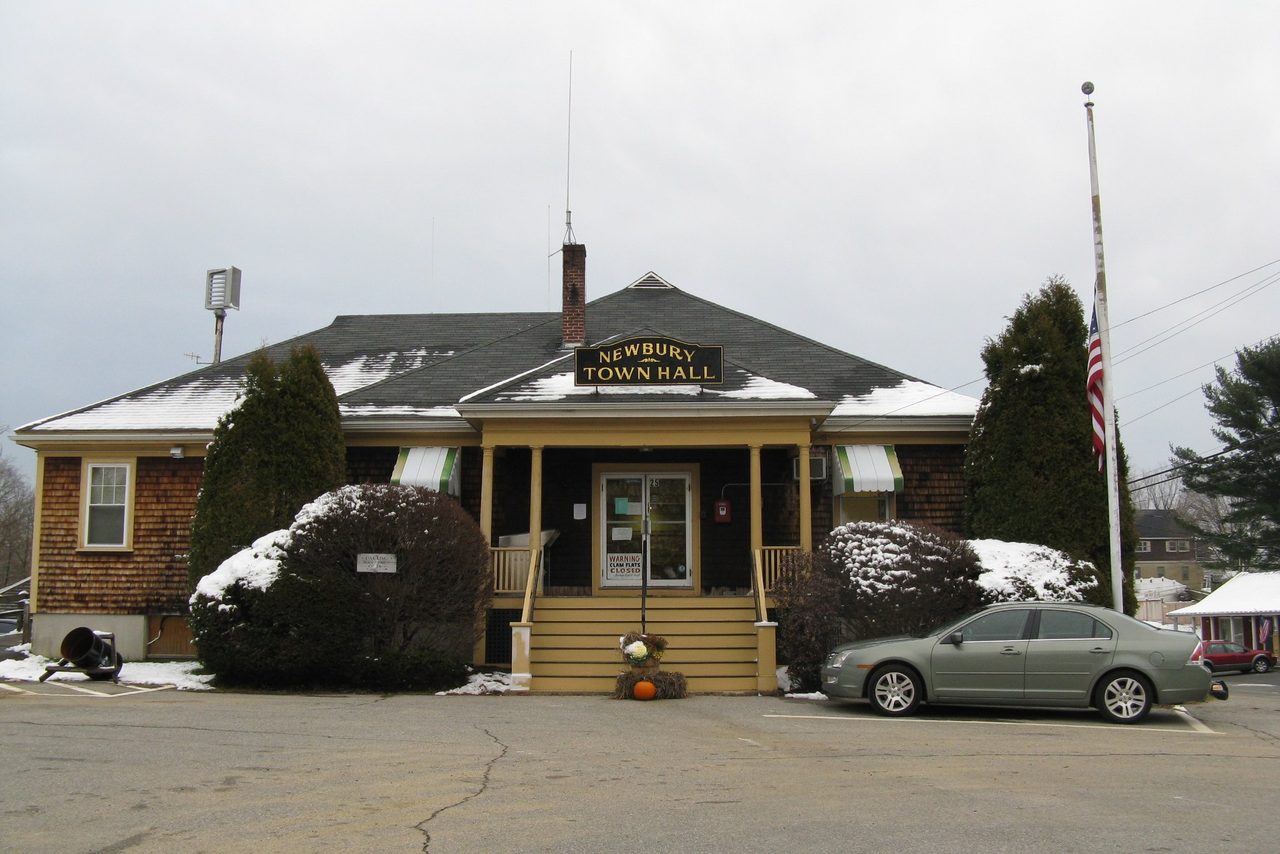
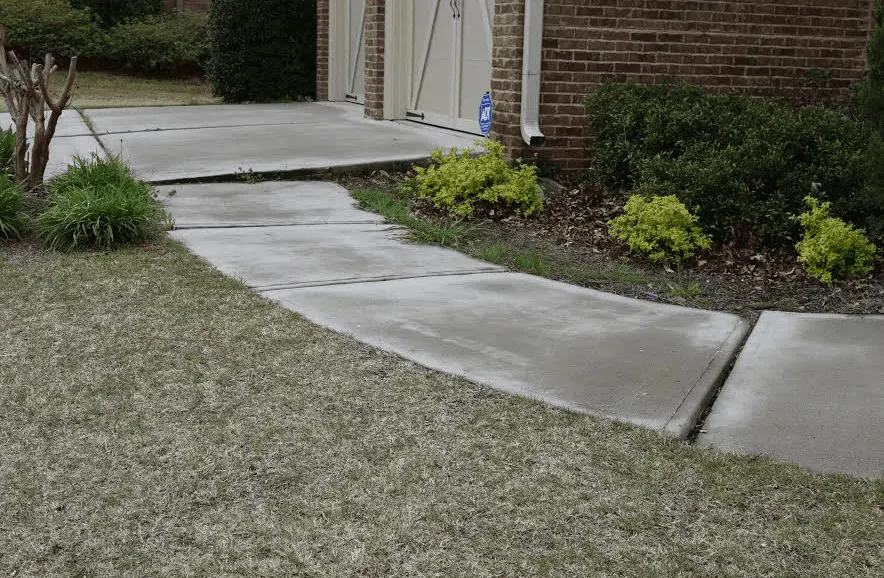
An uneven private approach near a Newbury roadside drainage path needs two answers before a lift: is the concrete still sound, and where will rain go after the panel moves? 603 Basement Solutions measures the approach, the next fixed surface and the drainage route. If work would reach the public right-of-way, that boundary is reviewed separately. Polyurethane leveling is for a suitable settled panel, not a way to rebuild a broken base or change town drainage by assumption.
We take a wide view from the building outward and record each joint. A low private section may be surrounded by a higher parking pad, an old driveway apron or an edge near a ditch or catch basin. Moving the low section can improve one transition and worsen another. We measure the step a person or vehicle actually crosses, the available height at the building, and the slope toward the outlet. The proposed elevation cannot be chosen from the deepest puddle alone.
We inspect cracks and edges. A sound panel that appears to have settled as a unit may be worth preserving. Broken corners, loose sections, repeated patch failures or a washed-out base change that decision. We ask about recent digging or drainage changes, but do not turn an answer into a diagnosis until it matches the observations. We also identify buried services and any culvert, drain or channel before placing an injection hole. This is an inspection at the address, not a claim that a certain soil condition is typical of Newbury.
Water can travel from a roof, upper driveway or road edge. We trace where it is expected to leave the property and whether a raised slab would redirect it toward the house or a neighbor. The plan may require downspout work or grading outside the leveling scope. We say so. If the only feasible lift sends runoff to a doorway or traps it against the next fixed panel, the panel’s new height is not a useful result.

ACI RAP-11 describes slabjacking as a way to fill beneath and raise suitable settled concrete. Its method description does not establish that this Newbury approach has a void. 603 evaluates panel integrity, access, adjacent edges and likely support conditions before selecting polyurethane injection. We set a limited target and watch the panel as it moves. Some old concrete has concealed damage; if movement opens a crack or threatens the adjacent surface, we stop rather than chase a promised number.
Where the defect is only a damaged surface, concrete repair is the more direct discussion. A shattered slab or failed base may require concrete slab pouring after removal and preparation. Building-footing movement or a load-bearing slab concern goes to structural and foundation repair. We do not frame those as interchangeable versions of leveling. The estimate identifies the part that failed and the part each proposed service would change.
The Newbury Department of Public Works says excavation within a public right-of-way requires a street-opening permit. That is a narrow rule. It does not prove an intact private driveway panel needs one, and it does not decide the location of this property’s boundary. We map the proposed work; if it reaches the right-of-way or changes a roadside drainage element, we confirm the town process before promising that scope. If the lift stays wholly on a private panel, the public-way question may be irrelevant, but it is still worth identifying on the drawing.
An approach near a roadside drainage feature can have constraints that an interior patio does not. We do not promise to alter a ditch, pipe or catch basin by raising concrete beside it. We photograph those fixed features and note any stormwater that crosses the approach. If water is entering the basement, a separate basement waterproofing assessment traces the actual entry point. An improved surface slope may help runoff and still leave a wall crack or other indoor source untouched.

Google review · Customer experience
Scott Sieper ★★★★★
“Great job with our foundation project. We had 4 piers installed to prevent further settling and interior concrete leveling work done in the basement. Highly recommend. Would do business with again.”
The scope should show the candidate panel, its present elevations, the targeted change and the intended water outlet. It should identify cracks, joints, public-way exclusions and any related grading. We also state what would prevent a sensible lift: a panel that separates, an obstruction under the drill plan, an incompatible fixed edge, or a runoff path that cannot be made safe. A measured stop rule is more honest than a vague promise to make the approach look level.
We check whether the surface is crossed mostly on foot, by a car, or by delivery and service vehicles. The load and turning line affect which joints matter most. A panel that feels passable at walking speed can catch a vehicle undercarriage at an oblique approach. If several sections are moving differently, one lift may leave a rough sequence of joints. We include that limitation in the comparison with a rebuilt approach.
Send 603 a wide photo from each end, close photos of the joints and any image of water after rain. If you know of prior utility or entrance work, bring that record. We can then compare a limited lift with a replacement or drainage correction on the actual condition, not a generic price per square foot.
Do not inject under fragmented concrete or treat an actively eroding base as repaired by filling one suspected space. Do not approve work that assumes a private/public boundary or redirects runoff without checking it. If the fixed roadside edge or building entrance cannot be matched safely, a new pour or different drainage plan may be the better answer. The useful result is a sound approach with a known water path, not a slab moved for its own sake.
We will inspect the affected panel, explain what can be kept, and put a useful scope in writing.

