



Separate a private-panel lift from any altered town-street driveway entrance.
An existing Pepperell driveway can have one low sound panel while its street entrance remains usable. 603 Basement Solutions can inspect whether controlled polyurethane leveling will restore that panel without rebuilding the whole drive. The essential question is whether the required rise leaves the garage, next joints and intersection with the road working together. Pepperell’s rules address new or altered driveways at accepted-town-street intersections and public-way excavation; they do not automatically turn an unchanged private interior lift into either activity. We first define where the work sits and what finished grades change. A permit or exemption conclusion belongs to the actual scope, not a town-name template.
A driver may feel a bump at the edge of a depressed panel and conclude that lifting it will make the route level. We would measure both joints of that panel, the garage threshold and the road-facing entrance before setting a target. A rise that improves one joint can sharpen the next or alter the vehicle approach. We also look at pedestrian access across the drive and where rainwater travels. The useful result is a full route that a car and person can use, not just a close-up of one corrected lip.
The panel has to be worth keeping. A coherent slab that settled as one piece is different from concrete with a through-break, loose edges or separately moving corners. ACI RAP-11 describes evaluation and controlled raising of suitable settled slabs. It does not diagnose what lies beneath a Pepperell driveway from an image or make polyurethane a structural brace for broken concrete. We would explain the proposed access holes, lift sequence, observation points and what movement would cause the crew to stop. A fixed target in a quote should not overrule a slab that begins opening at a crack.
We ask what changed at the site. Water crossing a joint, previous excavation and inadequate support can leave similar surface symptoms, but the cause cannot be assumed from the town code or a street photograph. We compare adjacent panels and inspect accessible edges, then make the uncertainty explicit. The estimate should state what material stays, whether any base or drainage work is included, and what would shift the recommendation from a lift to replacement. That makes a limited intervention an informed choice rather than a cheap-sounding placeholder.

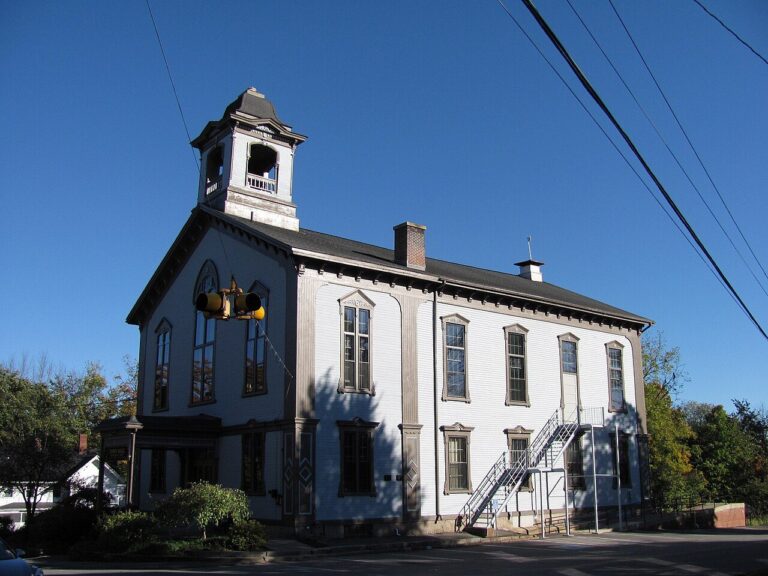
Pepperell’s regulations page states that excavation in a public way needs a street-opening permit. Its driveway chapter addresses a new driveway or alteration where a drive intersects an accepted town street and considers location, grade and drainage. These are narrower categories than every concrete service. If a sound panel well inside the private driveway can move without changing the accepted-street intersection, that is the scope we would describe. We still would not promise a permit exemption without locating the actual work and asking the town about any ambiguous boundary.
If a proposed rise would force a new grade at the road edge, the driveway-chapter questions become relevant. We would identify where the existing entrance meets the accepted street, whether an apron would change and whether any equipment or excavation enters the public way. Those points are not details to discover after injecting under a panel. If the intersection must be rebuilt to make the private drive safe, that is a larger design and review than a one-panel lift. The alternative may be a more modest target height or a new slab profile. We would present that choice openly rather than imply the town’s rules authorize a particular result.
Drainage should be traced from the garage through the driveway to the road-facing edge. A raised slab can redirect water toward a door, across a walking path or against the neighboring panel. Pepperell’s code references drainage at an altered intersection, but it does not prove runoff from a specific property flows in a particular direction. We would ask where water has actually pooled and take on-site slope readings. A proposed lift that reduces a tire bump but creates a water problem has failed the homeowner’s real test. If the necessary grade cannot be made safe, replacement or a separate drainage solution needs to be considered.
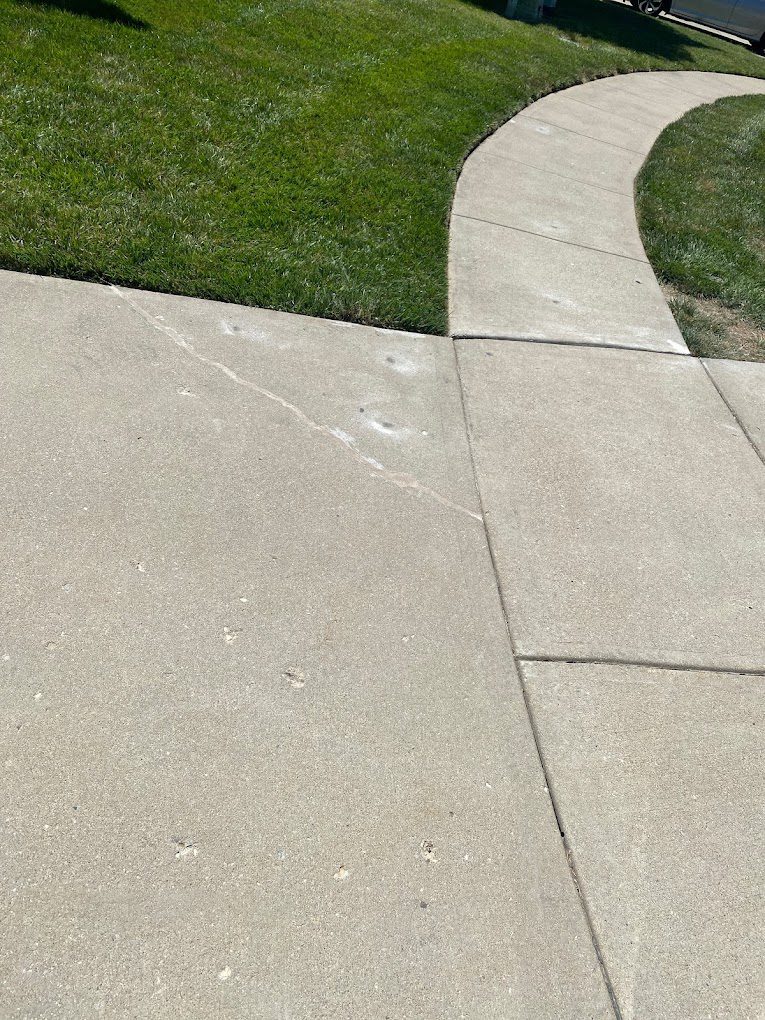
Concrete repair addresses surface damage when the panel is at a useful height. Concrete leveling preserves a suitable settled piece and changes its elevation. Concrete slab pouring replaces material when the panel has failed, the base must be rebuilt or the full vehicle route needs a new profile. A quote should identify the retained and removed pieces, the treatment of joints, how runoff will be checked, and any road-facing work explicitly excluded. The lowest price is not comparable if another contractor included a changed apron or new base.
A driveway panel is not a building foundation merely because it sits beside the garage. If the garage wall, house foundation or bearing floor also moves, structural and foundation repair deserves separate assessment. Injecting below an exterior slab will not stabilize a house load path. We would explain what evidence points to a detached driveway settlement and what would require a structural inspection. That prevents a cleaner driveway transition from being mistaken for a solution to unrelated movement in the building.
Send a wide photo from garage to street and another from the entrance back to the garage. Add close views of both ends of the low panel, cracks, loose corners and any water marks after rain. Tell us where a car scrapes and whether the road-facing connection or curb has been altered before. A ruler at the worst lip is useful for scale, but it cannot establish a safe finished grade by itself. We will measure all the fixed endpoints, define the private-panel scope and point out any intersection or public-way question that should go to the town.

Google review · Customer experience
Chris Chadbourne ★★★★★
“Right on time, professional work, great communication, and would highly recommend the 603 team!”
Do not raise concrete that is breaking apart or cannot move without creating a worse joint, blocked garage or inward water path. Do not treat Pepperell’s accepted-street driveway chapter as proof that every unchanged private-panel lift needs a driveway permit, or treat the absence of public excavation as a blanket exemption from all review. If the road entrance must actually change, separate its grade, drainage and town-facing approval from the leveling estimate. If the garage or house structure is moving, investigate its bearing system before buying an exterior slab-only fix.
We will inspect the affected panel, explain what can be kept, and put a useful scope in writing.

