
A dropped slab may be worth saving. First, we check the concrete and where it meets the rest of your property.
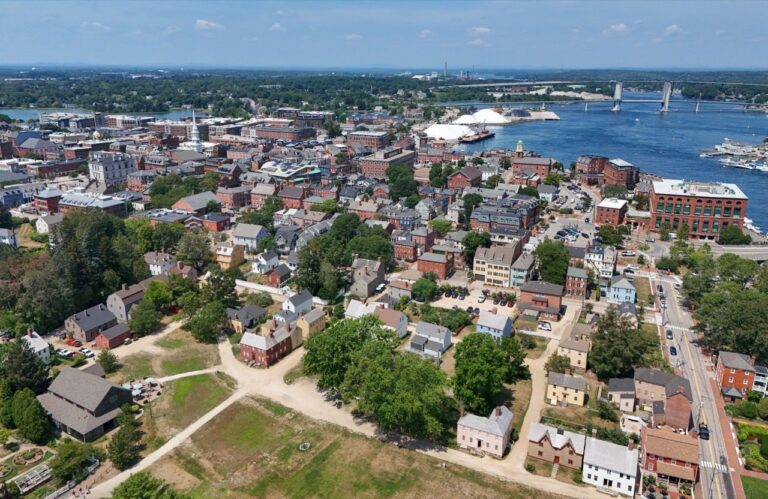
In Portsmouth, the concrete by your front door may meet a public walk or driveway apron built from another material. The city’s sidewalk and driveway-apron policy distinguishes brick and concrete walks and generally calls for asphalt aprons. That matters before anyone prices a concrete lift at the street edge.
Show us the low panel and where you believe the private property ends. We can assess the private slab. Work in public space needs its own scope and city review; we won’t quietly roll it into a driveway quote.
A low edge is a symptom. It doesn’t tell us whether the concrete itself failed or the material under it stopped carrying the load. Fill can settle. Water can carry support away. The American Concrete Institute’s slabjacking guide says lifting can realign a settled slab, but it does not correct poor soil below it. That is why we look around the panel before talking about foam.
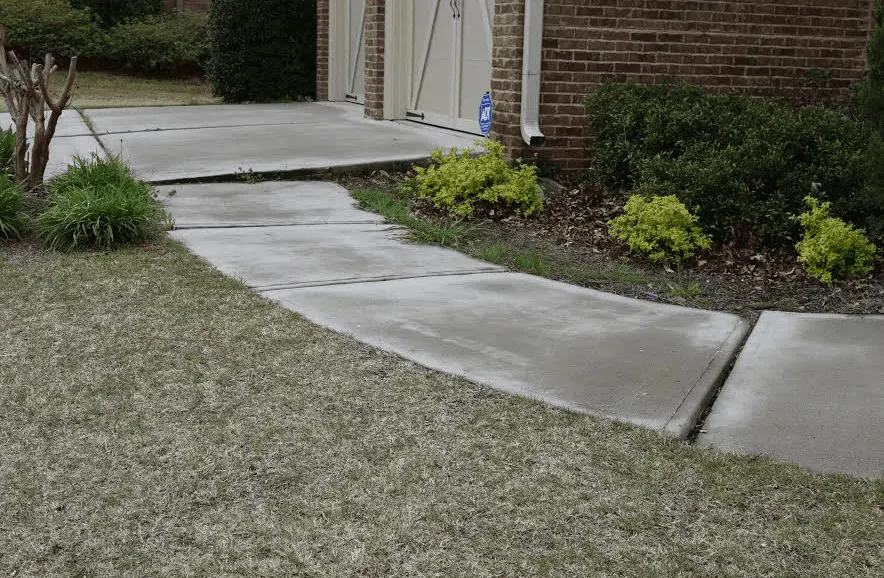
At a Portsmouth entry, we’d check the low joint, the route rainwater takes, the downspout nearby, and any gap where the slab meets a step. One low corner can be a small, contained repair. A run of panels dropping toward the street needs a wider look. We don’t call the cause from a photograph.
Watch the same edge after heavy rain. Does water sit on the slab or leave it? Has the gap changed? Those observations help us, but they do not replace the inspection.
One sound panel has settled below the next. The edge catches a shoe or tips water toward the entry. The surface still holds together when you walk it.
Concrete is crumbling into loose pieces, or the low spot moves with a wall, door, or floor inside the house. A lift won’t rebuild broken material or correct a moving foundation.
We measure the height change, check the joint and edge, and look for water moving below or around the slab. The fixed height of a step or door limits what a repair can safely do. A surface coating can hide a lip, but it cannot restore support below the panel.
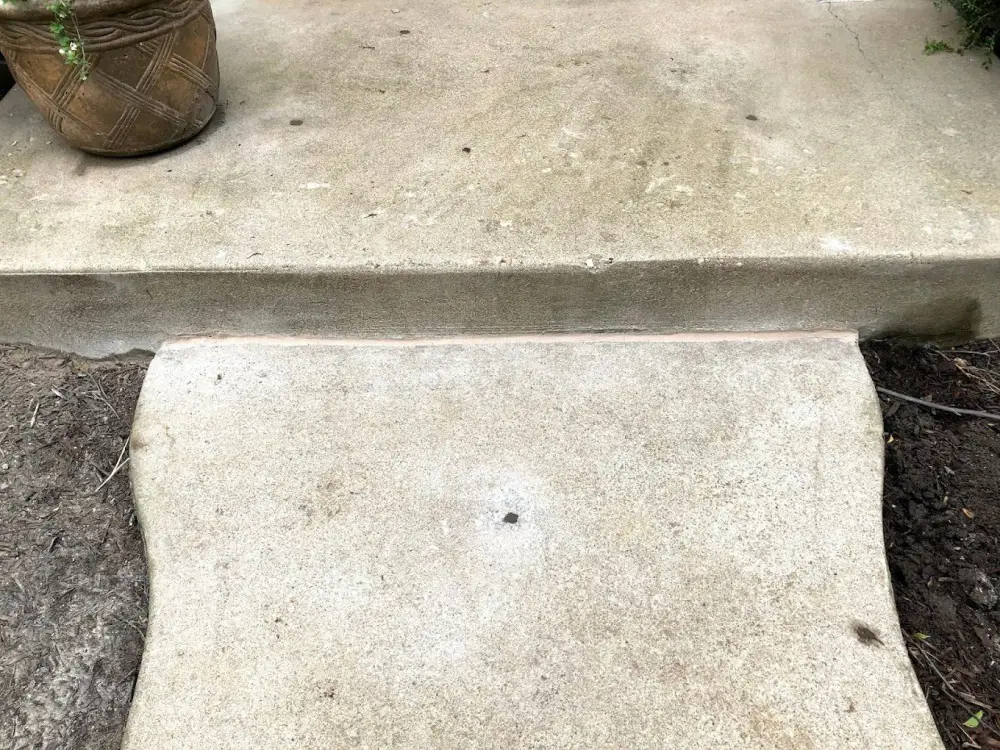
The goal isn’t to force every square inch to one perfect elevation. The slab still has to work at the door, step, garage threshold, and next panel. Raising one end too far can make a new lip at the other. A joint may bind, and an old crack may widen or close as a slab moves. The ACI guide warns about those limits, so a sensible proposal names the target edge and the finish you can expect.
Look closely at the surface, too. Lifting does not remove stains, restore worn texture, or make a patched crack disappear. Injection holes are finished, but the repaired spots can remain visible. If your front entry needs a uniform new finish, replacement may make more sense than saving a slab with a rough surface. We’ll say so.
| What we find | Likely next step |
|---|---|
| Sound, separate concrete that has dropped | Assess concrete leveling; the written scope names the method. |
| Pieces breaking apart or widespread surface loss | Consider slab replacement or another concrete repair. |
| Movement tied to the building | Start with slab foundation repair or a broader foundation inspection. |
Poly leveling is one possible method for an eligible slab. We do not promise it for every Portsmouth property before seeing the concrete.
Poly leveling uses a material injected below the slab to help raise and support it. The hole is smaller than those often used for cement-based slabjacking, according to the ACI guide. That difference alone doesn’t choose the repair. The concrete needs to be fit to move, and we still need to know where the material can go.
A separate, sound patio panel is a better candidate to investigate than a slab carrying part of the house. If a wall, floor, or door inside is changing with the low concrete, we move the conversation to structural assessment. A lift at the surface cannot settle that question.
We also won’t tell you a foam injection permanently fixes a drainage problem. If runoff keeps taking support away, that condition belongs in the repair discussion. Otherwise you’d be paying to move the slab without dealing with why it moved.
Which private panels are included? What height change is the crew aiming for? Where do fixed steps, doors, or brick edges limit the lift? A marked photo makes the scope much clearer than the words “fix sidewalk.”
Ask what happens to old cracks, visible patches, drainage, and any panel left alone. The proposal should separate the work priced today from a possible surface repair or replacement later.
Price follows the actual scope: the number and size of panels, how much support is missing, access, and any work needed at an adjoining edge. We don’t price a Portsmouth slab from a flat online number. The free inspection leads to a written estimate for your slab, not a national average that ignores it.
Public sidewalk or apron work is a separate question. The city policy is useful context, but it does not grant a permit or tell us who owns your particular panel. We identify that boundary before quoting work at the street.
If leveling is the right repair, the plan should identify where material enters beneath the slab and how the crew will check its movement. The ACI field guide describes monitoring the slab at cracks and joints while it rises, then finishing the injection holes. Those are useful questions to ask before a crew starts, even though the exact setup depends on the method chosen for your slab.
Afterward, check the transition by walking it. Look at the entry step, the neighboring panel, and where water now travels. Keep the written scope and photos. If you later see a new gap or renewed settlement, those records show what changed. We don’t want the only record of a repair to be somebody saying, “It looks better from here.”
A repair can be worthwhile without making an old slab look newly poured. That tradeoff should be clear before you sign.
We can inspect the private concrete panel. The material change and the public/private boundary have to be clear first. A brick public walk is not a concrete slab for us to lift under a private driveway quote.
No. Leveling addresses the slab’s position. A crack or worn surface may need separate repair, and badly broken concrete may need replacement.
We price the affected concrete after seeing it. We measure the affected sections and give you a written quote after the free inspection.
We’ll tell you if that Portsmouth slab is worth saving, and what we’d do if it isn’t.