



We check the slab, its fixed edges, and the water path before recommending a lift.
Point to the landing joint that makes you change your stride. We measure it against the next step and the walk beyond. A good repair should improve that passage without pushing the panel into the door or leaving a new awkward rise. The concrete also has to be sound enough to move as one useful piece.
We can look at the driveway approach on the same visit. It may have a different cause and a different finish goal. If the landing is the only thing you want fixed, the quote should stay there. You should not need to pay for a broad driveway plan to correct one entry panel.
We look at the door threshold, step, and first walk panel together. Raise one side too high and the transition may become awkward. Lift without considering drainage and rain may sit at the sill. We set the goal from how you use the entrance.
The driveway approach is measured separately. It has to work with tires and the road connection. A plan that treats both surfaces as one flat sheet would miss the fixed points at each end. The quote should tell you which joint we intend to change.
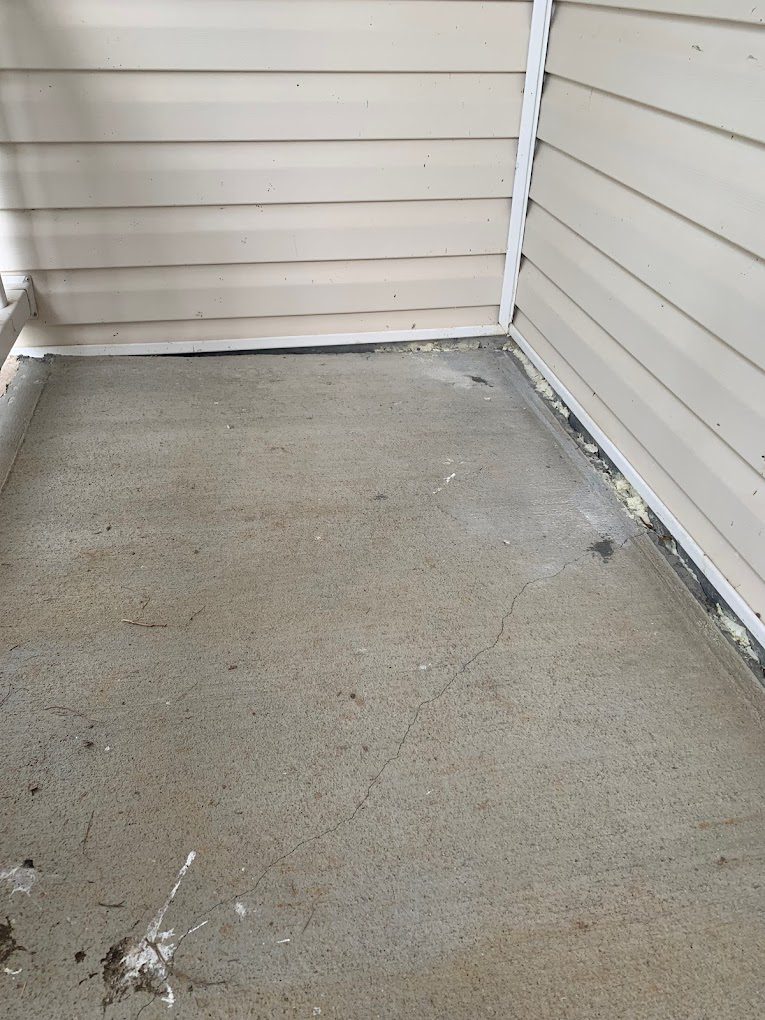
Polyurethane or cement-based slabjacking can move eligible concrete, but it cannot make a shattered panel sound. The ACI slabjacking guide tells contractors to weigh the slab's distress and whether an edge is bound. We inspect those conditions before giving you a material recommendation.
Lost support may also be tied to water. If a downspout empties next to the landing, we discuss that cause. We will not call the job finished by raising a slab while the same water keeps removing its base.
Raymond's town forms page routes driveway permits to Public Works and lists a separate street-opening permit. That keeps a private entry slab separate from a repair that breaks into a street approach. We can scope the concrete first and identify any town-side question before work is booked.
Read the Raymond source. We confirm any approval question against the actual proposed work.
Draw a line around the landing or drive panel. Mark the troublesome joint. The proposal should tell you the useful height goal, visible cracks likely to remain, and any drainage work that is separate. If a street opening or driveway change is involved, it needs its own approval discussion.
Price follows condition and access, not an online national average. We inspect free, then show the repair choice. If replacement is smarter, we would rather give you that answer than sell a lift because it is faster to explain.

Photograph the step from the doorway before work. Afterward, walk it and take the same picture. The point is a safer transition and a door that still operates, not a dramatic wide-angle photo.
A sound slab can move while old stains and cracks remain. If the surface appearance is the main issue, ask about a new pour. We want you to choose that knowingly rather than expect a leveling job to make aged concrete look fresh.
Compare concrete leveling with a new pour for the front landing. For surface damage without settlement, compare concrete repair before paying for a lift. If the adjacent wall is moving, that belongs in a separate foundation assessment.
We will check the front landing and driveway approach as separate surfaces before writing a repair scope.
Show us the front landing in Raymond. We will explain the useful repair limit.

