



Check the entry step, concrete strength, and runoff before raising a settled panel.
An uneven Sudbury entry walk may be a good leveling candidate when one intact panel has settled and a lift would improve the step without directing water toward the house. We measure the first riser, check the panel’s edges, and look for the cause of movement before choosing a method. If the concrete has fractured into loose pieces, replacement may be the more durable choice. The town’s new-driveway rules are a separate issue; they do not automatically govern a private entry-walk lift.
The walk may look lowest where it meets the next panel, but the doorway sets an important limit. If the first step is already high, lifting the adjoining landing can change the riser relationship. We measure the step before proposing a target height. We also check the door swing, the threshold, nearby masonry, and any fixed rail. A useful lift removes a trip edge without creating a new awkward step.
Watch where rain goes now. If the walk is pitched toward the house, raising one end may help or may make the drainage worse, depending on the surrounding panels. A downspout that empties beside the walk can keep washing material from the base. We ask where the water goes after a storm, not only how the concrete looks on a dry day. A repair scope that ignores that route is incomplete.
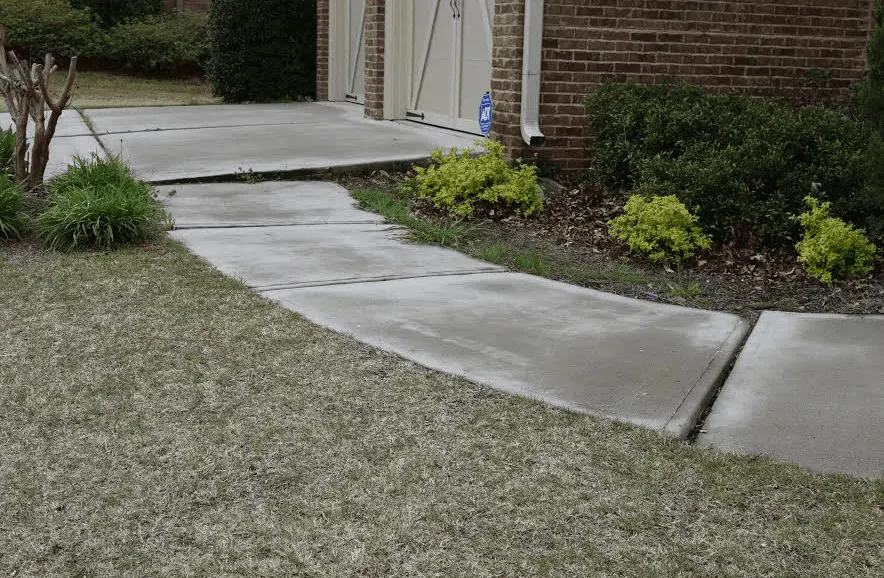
A wide photograph from the entry to the next sound panel helps locate the moving piece. A close view with a straightedge across the joint shows the height change. Note whether the edge has changed since last season and whether water pools after rain. Those observations are useful, but a photograph cannot tell us what supports the slab underneath. We still need to examine the panel and its boundaries in person.
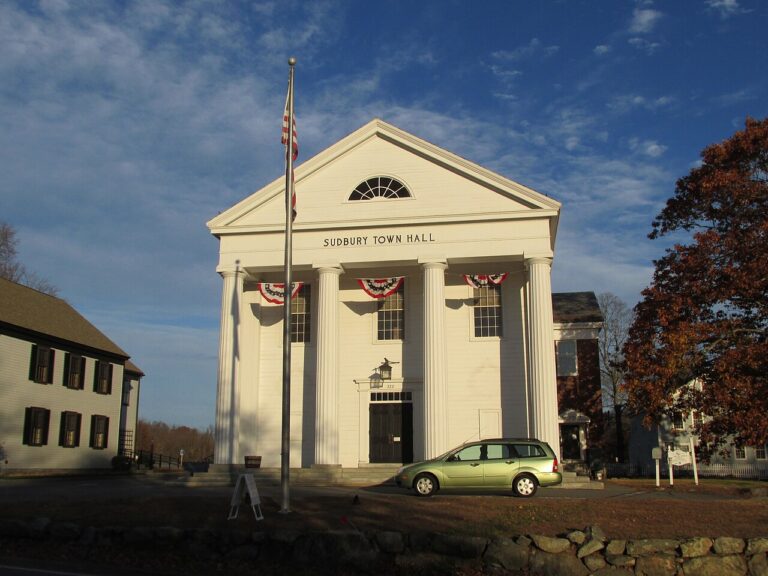
Sudbury publishes driveway rules and regulations for new driveway work. That is a real local consideration if a proposal replaces or constructs a driveway and changes its relationship to the road. It is not evidence that a settled private entry walk needs the same approval. We define the actual work area before making any permit claim.
This distinction matters when a homeowner describes every concrete surface as a driveway job. The short walk between a front door and a private parking area can have a different scope from a new driveway or street-side apron. If the repair reaches a public interface or changes access, we check the relevant town requirements for that exact work. We will not use a general municipal rule to turn a small slab assessment into a larger project.
Lifting works on the position of a slab, not on the strength of broken concrete. We look for a panel that can move together. A clean joint and a single settled edge are different from several full-depth cracks and loose corners. Surface wear alone does not decide the question, but crumbling edges can prevent a useful result. If the slab is sound and the grade can be corrected, leveling may keep material that does not need to be thrown away.
The American Concrete Institute’s slabjacking guide describes lifting out-of-alignment slabs and warns that lifting does not itself correct poor soil. It also discusses binding and cracked panels as limits. We use that principle to examine the base, drainage, and adjacent fixed surfaces. We do not infer a precise injection plan from a web photo or promise that every old crack will disappear.
If the panel is stable but has a localized damaged edge, a concrete repair assessment may be more appropriate. If it is broken into pieces or a lift would create a bad step, we compare new slab placement. We do not substitute an exterior walk lift for an investigation of a moving wall, footing, or indoor floor; those belong in structural and foundation repair.

Google review · Customer experience
Tom Ferrin ★★★★★
“Incredibly professional and thorough. So great to work with. Highly recommend!!”
Not every uneven joint needs immediate work. A small, stable step that does not catch a foot or hold water may be something to measure and revisit. We would also hold a leveling recommendation if the proposed height would send water toward the entry or bind against a fixed step. A lift that merely moves the problem from one joint to the next is not a useful purchase.
Watch for a changing gap, fresh cracking, new water pooling, or movement that continues into a supported element. These are better reasons to call than the age or color of concrete. If you have a photograph from an earlier season, show it to us. A change over time is stronger evidence than a single dramatic angle.
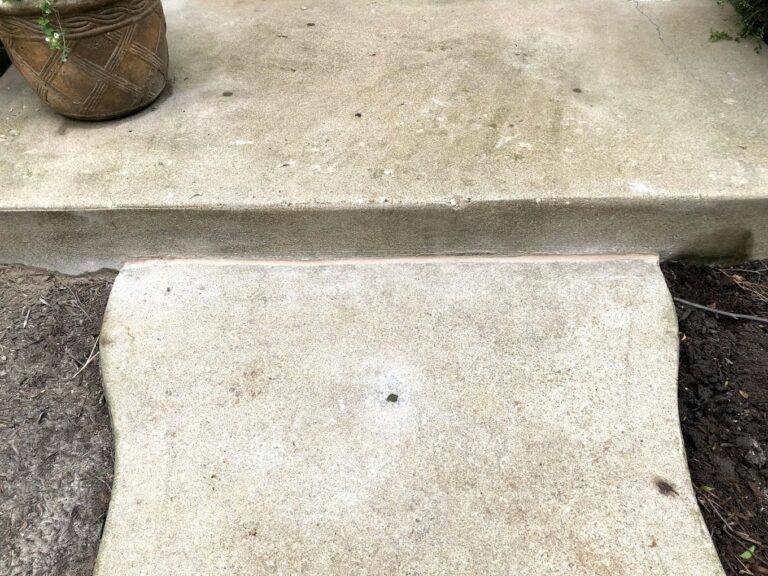
The written proposal should identify the exact panel, measured low edge, target transition at the steps, expected drainage, and fixed boundaries. It should explain why keeping the slab is preferable to replacing it, or why it is not. Ask what visible cracks and stains will remain and what access the crew needs. If the cause of settlement is still active, that uncertainty belongs in the discussion.
603 will inspect the walk, compare lifting with repair or replacement, and put the scope in writing. Bring a wide view of the entry and the joint you are worried about. We can use it to prepare, then make the actual call at the property.
We will inspect the affected panel, explain what can be kept, and put a useful scope in writing.

