



Map repaving and heavy-equipment access before quoting a private-panel lift.
For a low but sound Watertown driveway panel, keeping the concrete and raising it can be a better proposal than replacing everything. Yet the job description must be honest about access: a private-panel lift is not the same as repaving the drive, and bringing heavy equipment across a sidewalk or apron can create a separate city process. We inspect whether the slab can move intact and whether the finished grade works at the garage, adjacent joints and public-facing entrance. Then we describe how equipment reaches it before promising a scope or timeline.
A tire bump at a garage, a low parking surface or a step on an adjoining walk can have different solutions. We look at the whole panel for full-depth cracks, separated corners and edges that crumble under load. A coherent piece that has dropped can be a lifting candidate; fragments that cannot move together are usually a replacement question. We measure both joints, door clearance, vehicle path and water direction. Eliminating one bump by creating another at the far edge would not solve the homeowner’s problem.
ACI RAP-11 describes evaluating and raising appropriate settled slabs in stages. It does not tell us the hidden base condition at a Watertown property or guarantee that a lift will be permanent. Controlled polyurethane injection is one possible method after inspection, not an automatic answer to every uneven surface. A proposal should specify the desired profile, retained material, expected holes, joint treatment, observations during the lift and the condition that would stop it. The exact amount or placement of material cannot be responsibly sold from one close-up photo.
Water and access can overturn an otherwise plausible lift. If the panel is low because water repeatedly runs beneath it, a surface raise without addressing the route may leave the underlying issue. Conversely, raising the piece can send runoff into the garage or across a sidewalk. We ask where water has actually been seen and measure slope rather than inventing a local drainage cause. Where a new grade cannot protect adjoining surfaces, replacement with a redesigned base or drainage treatment may be better than retaining the old slab.

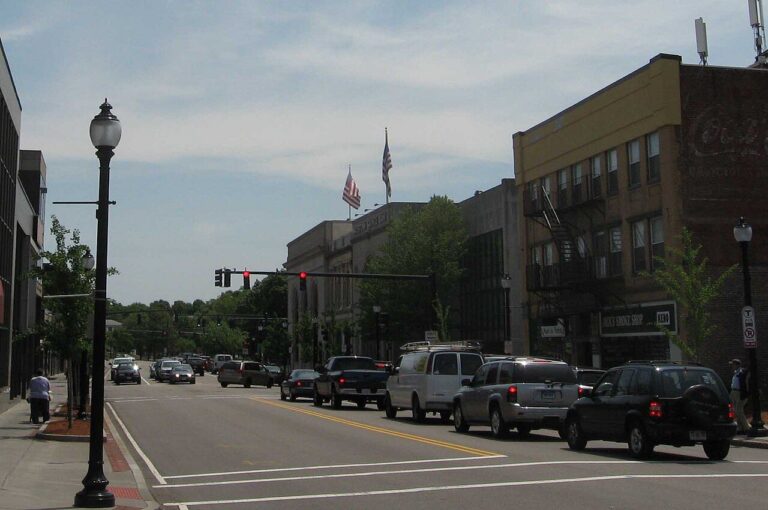
Watertown DPW’s permit page explicitly lists paving existing or new driveways and crossing a sidewalk or driveway apron with heavy equipment under street-opening-permit circumstances. It also discusses public-right-of-way work. That is a reason to document the exact treatment and equipment route, not to declare that every injection automatically needs a permit or is automatically exempt. A homeowner needs to know whether a quote retains a panel, repaves a surface or uses access that changes the municipal question.
We would mark the slab, proposed equipment staging and movement across the property. If the plan is limited to existing private concrete and access stays away from the sidewalk/apron, say so; then confirm the actual scope with DPW where appropriate. If the plan repaves the driveway or crosses the public-facing sidewalk with heavy equipment, the contractor should account for the city’s stated process before booking work. We cannot infer the access route from the town name or silently substitute a lighter tool in the estimate to make a permit question disappear.
The city webpage is not a diagnosis of the low panel. It does not prove the homeowner’s apron is damaged, that the project will include paving or that a particular route will be used. We make those facts visible in the written scope. The contractor should state what is retained, what is excluded, who confirms an applicable city requirement and how the finished grade will be tested. That gives the homeowner a meaningful comparison between a lift and a larger repaving or replacement bid.
Access has a household consequence too. If the driveway must remain available for a resident’s vehicle, the bid should describe the expected work area and when the route can be used again. If the proposed repair touches the only accessible walk, show a safe temporary route rather than assume one exists. We would also note which joints are expected to remain visibly offset after the panel is raised; a small controlled lift may be safer than chasing perfect alignment at one point. If a larger height change is needed to make the garage useful, the homeowner should see why replacement or a different drainage profile is being considered, not discover that limit only after injection.
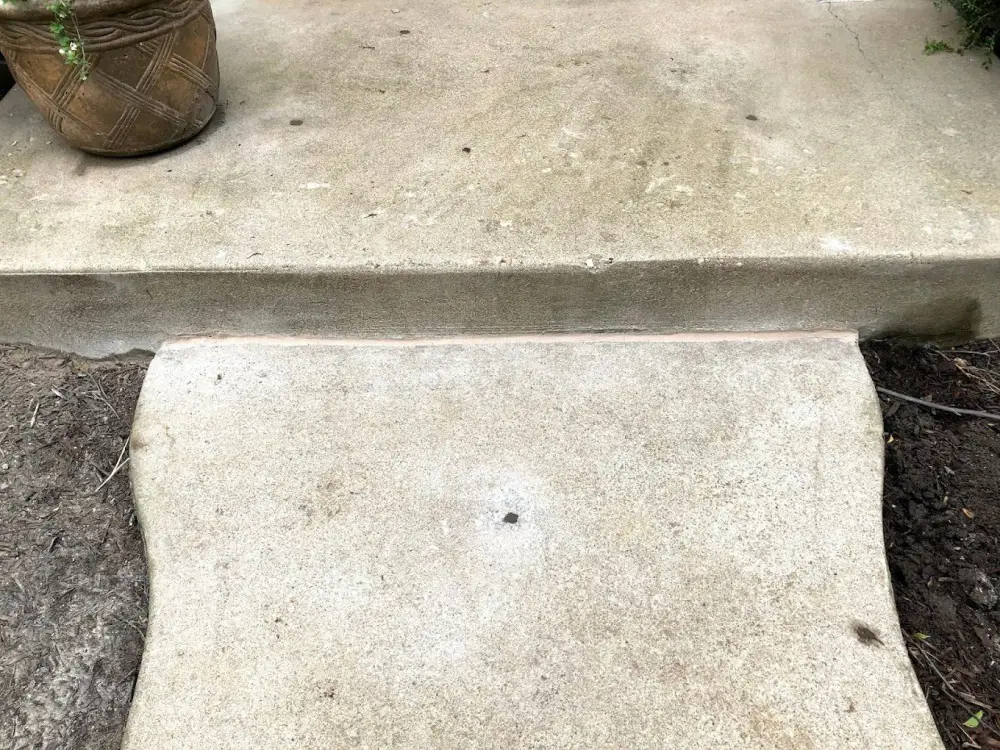
Concrete repair is for chips or spalls on material already at a useful elevation. Concrete leveling retains suitable settled concrete and changes its height. Concrete slab pouring replaces failed material or builds a different base/grade when keeping the panel cannot produce a safe route. A surface patch will not correct an elevation difference; an injection will not make a fragmented slab sound. The estimate should say which condition is actually being treated.
If wall cracks, floor movement or a shifting garage foundation suggest the building is involved, request structural and foundation repair assessment. A driveway repair cannot stabilize the house. We would separate the detached concrete from the bearing structure before recommending a method.
Provide a wide photograph from garage to street, a return view and close-ups of both panel joints. Show cracks or loose corners, water marks after rain and the specific tire or walking conflict. Tell us where equipment could enter and whether the proposal you want involves paving. A ruler shows the size of one step but not the correct final elevation. We will measure the route and write down the stop conditions and any city-access question.

Google review · Customer experience
Matt Dodge ★★★★★
“The team was great all the way around…easy to work with, responsive, and communicative. I would definitely work with them again.”
Do not lift a slab broken into independent pieces, or one whose new height would obstruct a garage, worsen the next joint or direct water toward the building. Do not assume the Watertown permit page automatically approves or forbids an unchanged private injection. If the actual proposal includes repaving or heavy-equipment crossing of a sidewalk/apron, resolve that scoped city question first. If the structure is moving, diagnose it before buying a detached slab treatment.
We will inspect the affected panel, explain what can be kept, and put a useful scope in writing.

