



A private walk and public-side sidewalk are separate scopes; the first riser sets the useful height.
A raised edge along a Wellesley walk is a leveling question only after we find out which panel moved and who controls it. A private walk near the house can be evaluated for lifting when the concrete is intact. A sidewalk or driveway apron in the public way is a separate scope. We check the first step, the water route, and the town-side boundary before recommending any lift.
The doorway end tells us whether the problem changes the first riser or sends water toward the house. Measure the step there, then walk the full length of the path. Is one panel lower than its neighbors, or are several joints rising and falling? A single sound panel is easier to evaluate than a chain of slabs moving in different directions. We should not price the full walk from the worst photograph.
The street end is a different question. A private path can meet a sidewalk, curb, or driveway apron where ownership and work rules change. The Wellesley Engineering Division lists public-way work, sidewalks, curbs, driveways, and drainage improvements among activities that may need its review. Its apron and curb-cut policy separately governs those street-side features. We do not treat a private panel by the front steps as if it were automatically a public sidewalk project.
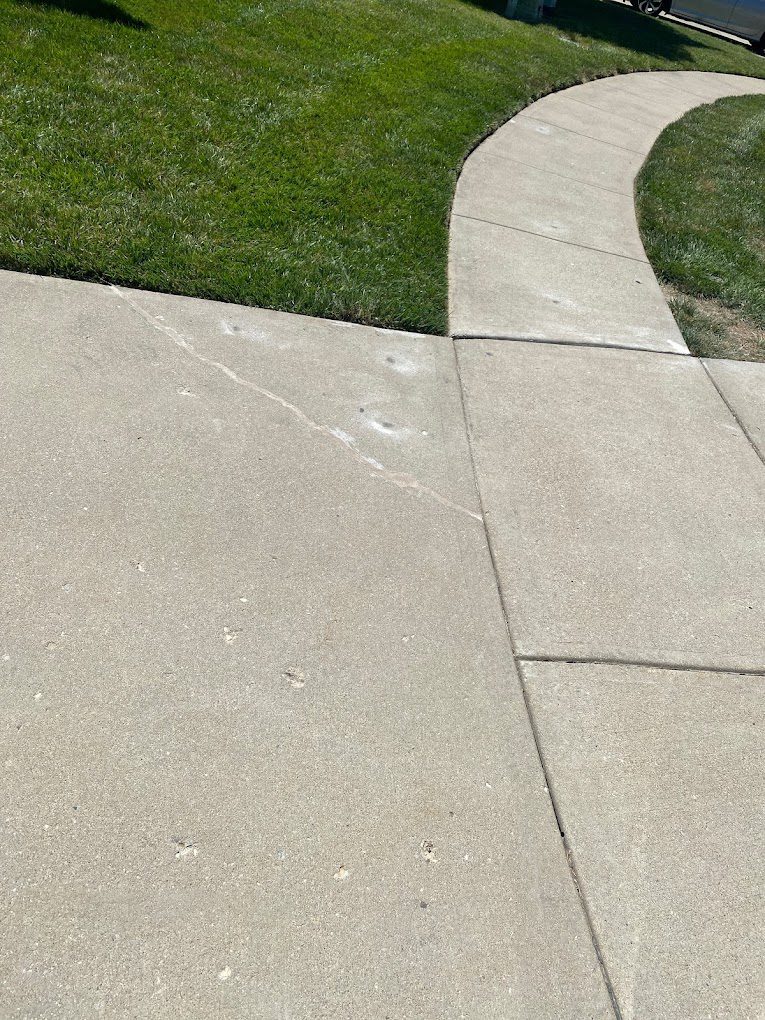
The first step may already be higher or lower than the others. Raising the landing or nearby panel changes that relationship. We check the door swing, step edges, and any fixed masonry before deciding on a target height. You do not want a smooth path that ends in an awkward step at the house.
We also watch runoff. A lift that leaves the walk sloping toward the threshold can trade a trip edge for a damp entry. Downspouts and bedded landscaping may put water on the panel again after the work. A proposal that names the height but ignores the water path is unfinished.
For a leveling candidate, the slab should have enough sound concrete to move as one piece. We map cracks and test loose corners. A dirty line at a joint can be harmless. A corner that breaks away when touched points toward a different job. A patch may fit a stable damaged edge; a shattered panel may call for replacement. Lifting does not make unsound material sound.
The American Concrete Institute’s slabjacking guide describes lifting slabs-on-ground that lost alignment and warns that the method does not itself fix poor soil. It also notes that existing cracks and binding can limit the result. That is why we look beneath the visible height difference as best the site allows. We do not promise an injection product, hole pattern, or exact lift from a remote picture.
If the walk is near an attached garage, we ask whether the garage slab and house foundation show independent movement. An exterior panel can settle without the house moving. The opposite can also happen. A sticking door, changing wall crack, or floor slope inside the house deserves a structural inspection rather than an exterior-only quote.
Wellesley says permits may be required for sidewalk, curb, and driveway activities, and its page specifically discusses repair or replacement of a sidewalk in the public right of way. That is useful when the affected panel reaches that boundary. It is not a blanket rule for every private walkway section. We mark the limits of the proposed 603 work and confirm any town requirements that actually apply to that scope.
If part of the walk is town-controlled, an estimate for only the private portion should say so plainly. If equipment would occupy a public way, the access plan needs that discussion before scheduling. The street-facing edge should not be quietly folded into a generic “level walkway” line. Homeowners deserve to know what is included and what is somebody else’s responsibility.

Google review · Customer experience
Karen R ★★★★★
“603 Basements were awesome! They provided a detailed project plan and quote during their initial site visit and made all the contracts and payments digitally online for quick and easy communication. The team showed up time every day and were finished at 4-4:30pm each evening. They did an amazing job with exceptional quality and kept the site clean throughout the day. The team leader kept us informed throughout the day on their progress, and conducted a job site walk through each evening describing the work they did and what the plan was for tomorrow. Outstanding job…10/10!!”
A stable panel with a chipped lip may need concrete repair rather than movement. A panel broken across several lines may be better served by replacement pouring. If the slab can move but the first riser or drainage becomes worse, we may recommend leaving it alone while we look at a different fix. No amount of foam changes an unsafe geometry at the steps.
You may not need work today. If the joint is stable and the walk remains usable, we can document the difference and tell you when to recheck it. The new evidence to watch is a changing height, fresh fracture, pooling water, or a door that starts to catch. A weathered color alone is not a leveling emergency.
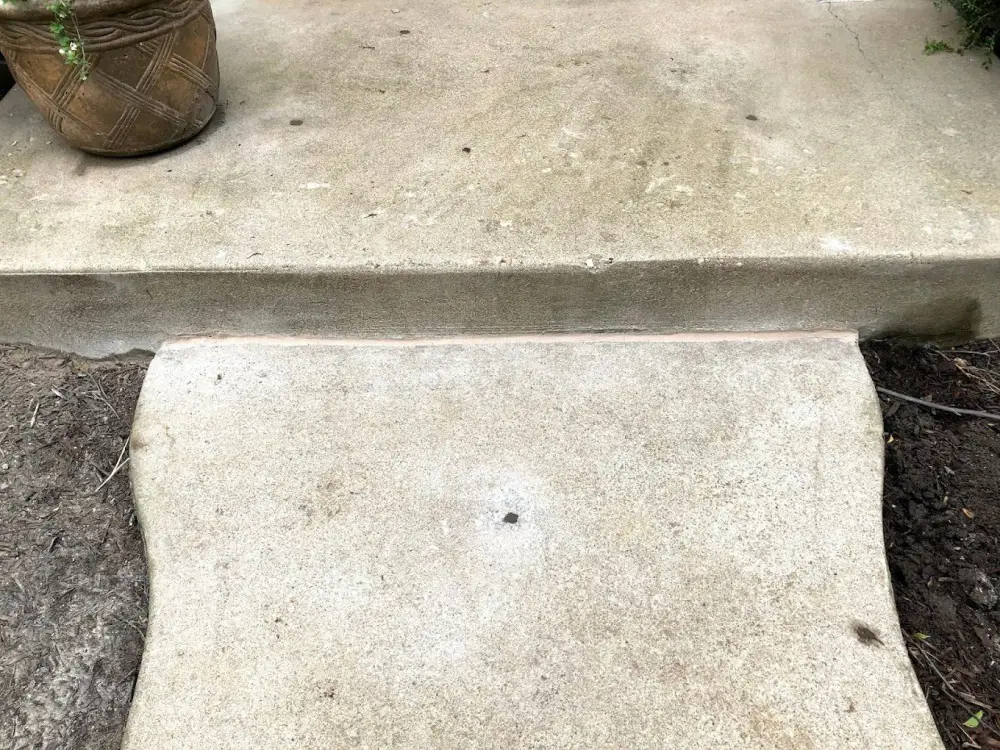
The estimate should name the panel, starting height, target transition, fixed step and threshold, water direction, access route, and any public-side exclusion. It should say which cracks or stains will remain. If another contractor quotes removal, ask them to show where the panel is too weak to lift. If we quote lifting, ask us to show why we think it can move without a new edge or drainage trouble.
Bring one wide photo from the door to the street and one close photo with a straightedge at the problem joint. Those help us prepare for the free inspection. They cannot show the hidden base or decide the permit boundary. We’ll walk it with you and make the call on site.
We will inspect the affected panel, explain what can be kept, and put a useful scope in writing.

