



A low slab, a broken edge, and a moving crack are three different repair decisions for your Amherst concrete.
Sound surrounding concrete with a limited damaged edge may support a focused repair.
A sound but low slab belongs in a concrete-leveling assessment.
Broken pieces may need a new pour. Movement tied to the building needs a structural check.
Before anyone talks about mudjacking, crack injection, or a new pour, walk the slab and name what you see. A panel that is sound but low is a leveling question. A broken corner, a spalled surface, or a chipped edge is a surface or edge repair question. A slab that is cracked, heaved, and hollow underfoot is a removal and replacement question. A crack that keeps widening or tracks through a wall is a movement question that may belong with a foundation or structural review. These are not the same job. The repair decision follows the diagnosis, and a good contractor will tell you which category you are in before quoting a method.
Plenty of concrete can stay. A sound panel that is low by the garage apron may be a candidate for lifting rather than replacement. A front walk with a chipped edge or a shallow surface spall may be repairable in place. Broken pieces that move separately may need removal. Widespread loss of support changes the plan. A crack tied to building movement needs a structural assessment first. Those are removal or engineering questions, not cosmetic ones. The honest answer is that a repair can preserve a slab only when the slab itself is still doing its job. If the panel is sound and simply out of position, replacement is often unnecessary.
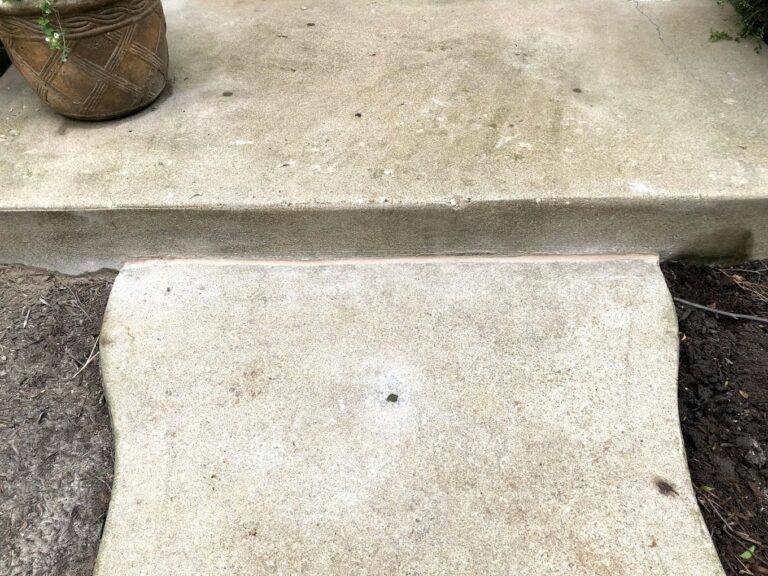
Repair selection starts with what failed. A low but sound panel points toward slabjacking assessment, which looks at whether the slab can be lifted and supported without cracking. A broken edge or surface defect points toward horizontal repair preparation: clean the area, remove loose material, and rebuild the section so it bonds and drains. A crack that is only a shrinkage or joint crack may need sealing, not structural work. A crack that is wide, offset, or connected to wall movement points toward a structural review before any cosmetic fix. The method should follow the defect, not the other way around.
ACI's horizontal repair guide is general technical guidance, not a specification for this house.
The draft makes no town-specific permit claim and directs public-side questions to the town. If work touches the road approach or a town-owned edge, mark that boundary. Ask Amherst Public Works about any town-side work. Keep that boundary clear before pricing.

The most common mistake is treating a movement crack like a surface crack. If the cause is ongoing settlement or a failing base, sealing the crack will not stop it from reopening. Another mistake is lifting a slab that is already broken into pieces; the lift may not hold because the slab cannot act as a unit. Drainage is the third trap. If water still collects at the garage door after rain, a repair may fail again unless the water is redirected. Movement involving the building needs a structural assessment; a surface patch cannot settle that question. A repair that ignores the cause is money spent twice.
Access and water control set the real scope. A garage apron may be reachable with equipment, while a front walk may need hand work and protection for nearby landscaping. The garage threshold is a fixed height, so a proposed lift has to account for door clearance. If water collects at the garage door after rain, the repair plan has to account for where that water goes. Slope, downspouts, and the height of the finished surface all affect whether a repair will last. These are not guesses about local soil or water table. They are things to observe on the property and confirm in writing before work starts.

Ask for a written estimate that names the defect, the proposed repair, and the limits of the work. It should state whether the slab is being lifted, patched, or replaced, and what is excluded. Measure the affected area and record the elevation change at the garage and walkway before pricing either surface. Note whether water collects at the garage door after rain and whether downspouts or grading are part of the fix. A good estimate also says what will not be done. If the contractor cannot explain why the method fits the defect, the estimate is not ready. The goal is a scope you can compare, not a number you have to trust.
Sometimes the correct call is to do nothing, or to do much less. A hairline crack in a sound slab may only need monitoring and sealing. A low panel that is not causing water problems or a trip hazard may be left alone until it actually interferes with use. A small chipped edge on a front walk may be a patch, not a replacement. If the crack is stable and the slab is sound, spending money on a lift or a new pour may not buy you anything. The homeowner should be willing to hear that. A repair is justified when it solves a real problem: water, movement, safety, or function. If none of those are present, wait and watch.
Look at behavior, not only width. A stable hairline crack in a sound slab is usually a surface or joint issue. A crack that keeps widening, has offset edges, or tracks into a wall may be tied to movement and needs a structural review before any patch. If the slab is sound and only low, that is a leveling question, not a structural one. When in doubt, get the cause identified first. We can then recommend the right repair for your concrete.
Show us the concrete and we will tell you what is worth fixing, what can stay, and what still needs checking.

