



Not every low slab needs lifting, and not every crack means the house is moving.
Sound surrounding concrete with a limited damaged edge may support a focused repair.
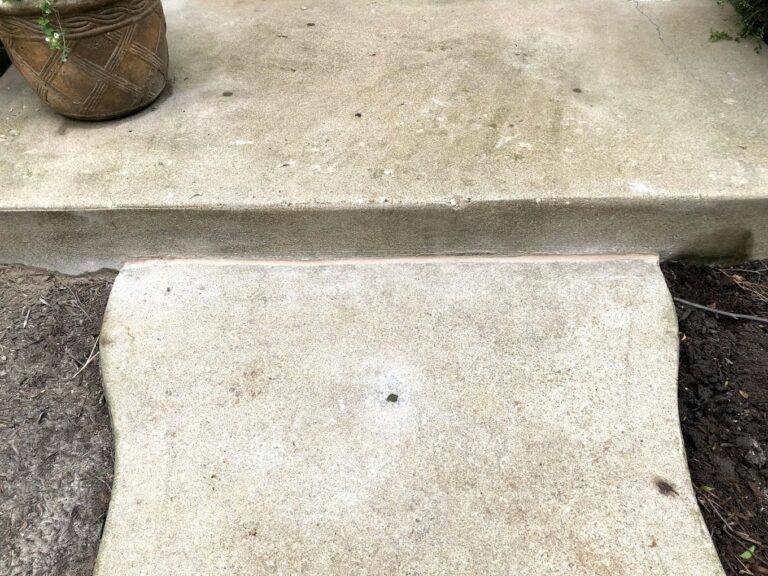
A sound but low slab belongs in a concrete-leveling assessment.
Broken pieces may need a new pour. Movement tied to the building needs a structural check.
The diagnosis comes before the repair name. A sound panel that sits low is one condition. A broken edge, a spalled surface, a settled approach, and a crack that keeps opening are others. We would walk the driveway approach and the walkway beside the house. We ask where water goes, how the slab meets the foundation wall, and whether the distress is stable or changing. A crack by itself does not prove the building is moving. Movement shows up in patterns: offset edges, separation at the wall, doors that no longer line up. The inspection decides whether this is a surface repair, a lifting candidate, or a removal and re-pour.
A slab can often stay if the concrete is sound, the base under it is not pumping or hollow, and the problem is elevation or a local surface defect. A low driveway approach or a settled walkway panel may be a candidate for lifting rather than replacement. What tends to go is concrete that is broken into loose pieces, badly scaled across the whole surface, or tied to a base that has failed. A repairable broken edge is a smaller scope than a slab that has lost its support. The honest answer sometimes is that a section should be removed and re-poured, and sometimes it is that the slab is doing its job and should be left alone.

Repair selection follows the failure, not the other way around. A surface defect points toward preparation and patching. A low but sound panel points toward lifting assessment. A crack that is stable and tight is a different conversation than one with offset or ongoing movement. ACI RAP-7 covers horizontal concrete repair preparation, ACI RAP-11 covers slabjacking assessment, and ACI RAP-1 covers structural concrete cracks. What they support is the sequence: identify the mechanism, then choose the method. If the crack is structural, that is a different scope than cosmetic patching, and it may need an engineer rather than a concrete crew.
ACI's horizontal repair guide is general technical guidance, not a specification for this house.
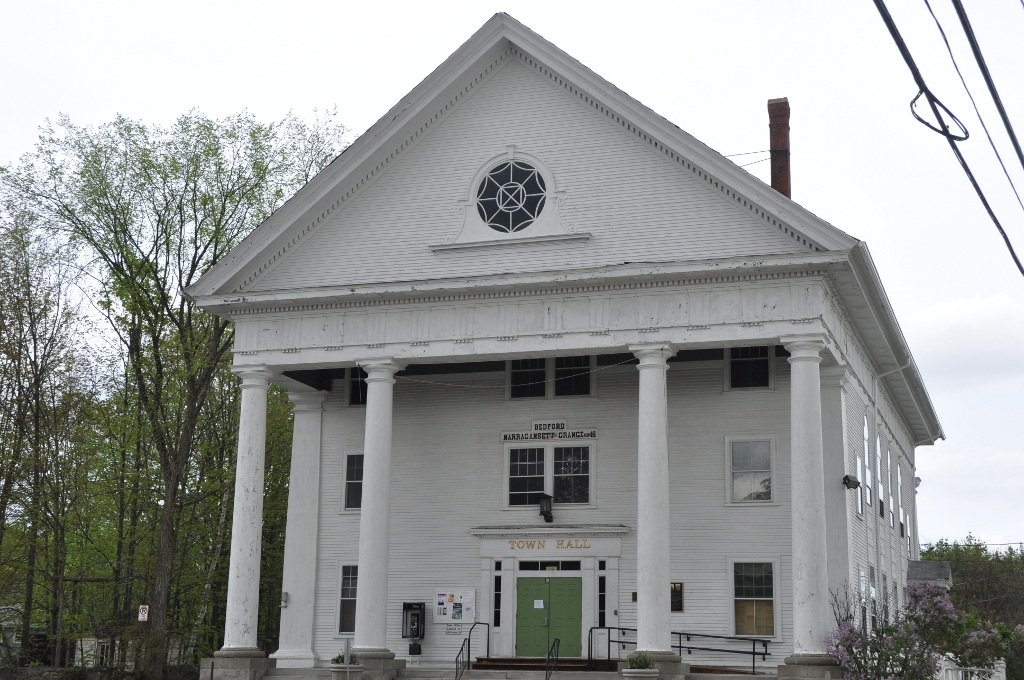
Bedford's road-construction standards say a residential driveway in the town right-of-way cannot divert or interrupt ditch-line runoff. That matters when a driveway approach near the street is part of the work. A lift cannot be planned just by making the slab look flat. The water path along the road edge and the private drive still has to work after any height change.
Read the Bedford source. We check the approval path against the proposed scope.
Some conditions sit outside a concrete repair quote. A crack tied to building movement may need evaluation before anyone patches it. A slab that settled because the base is washing out may need the water source corrected, not the slab lifted. A failed retaining wall, a widening foundation crack, or a heaving floor can point to drainage, soil, or structural issues that a surface repair will not fix. We will say so. When a repair cannot solve the cause, we tell you before work begins, so you can decide how to proceed.
On a Bedford lot, the fixed points are the house and the street. At the house, compare the slab with the threshold and the foundation wall. If the slab has dropped below the sill, water can run toward the building. If it has risen, the door may not clear. Near the street, the driveway approach has to shed water without sending it into the ditch line or blocking runoff. Before setting a target height, trace where the driveway sheds water. A lift that makes the slab look flat but changes the drainage path is not a finished repair. The site constraints, not the slab alone, set the practical limit on how much height can change.
A written estimate should name the area, the observed condition, and the proposed scope. It should say whether the work is patching, lifting, removal and re-pour, or no work. It should note what is excluded, such as drainage correction, base repair, or structural evaluation. Measurement matters because a repair priced by the square foot is not the same as one priced by the crack or the panel. For a driveway approach, the estimate should state how the finished grade will meet the street edge and the private drive. If a contractor cannot explain the water path and the fixed points, the number is not ready. Ask what is being measured and why.
Sometimes the right answer is no work. A sound slab that is slightly low but still sheds water away from the house may not need lifting. A tight, stable crack in a driveway may be a monitor-it item. A surface blemish on a walkway may not justify the disruption of a repair. The decision turns on function: does water go where it should, does the slab meet the house correctly, and is the distress changing. If the answer is yes, yes, and no, the honest recommendation may be to leave it alone and revisit it if conditions change. A smaller repair, such as a local patch or edge rebuild, can also be the better call than a full replacement.
You cannot tell from width alone. A tight crack with no offset and no separation at the house is often a surface or shrinkage crack. A crack with vertical offset, widening, or matching movement at the foundation wall deserves a closer look. In Bedford, we would compare the slab with the threshold and foundation wall and trace where water goes. If movement is suspected, an engineer may be the right next step before any repair.
Show us the concrete and we will tell you what is worth fixing, what can stay, and what still needs checking.

