



A broken corner and a dropped panel are different jobs. We check which one you have before naming a repair.
Sound surrounding concrete with a limited damaged edge may support a focused repair.
A sound but low slab belongs in a concrete-leveling assessment.
Broken pieces may need a new pour. Movement tied to the building needs a structural check.
If the damaged concrete meets the street, first mark the work boundary. Concord's driveway guidance is unusually clear: the owner or contractor needs a driveway permit before work on a driveway. A broken corner near the garage and a cracked entrance at the road can look like one problem on a photo, but they can involve different surfaces and approval questions. We inspect both ends. At the garage, we check the door threshold, the tire path, and where rain collects. At the street, we identify what the proposal would change before scheduling the job. The quote should not hide either end under one vague line.
A loose top layer cannot be lifted back into sound concrete. A sound panel that dropped cannot be fixed by smearing a patch over the low joint. We tap and examine the damaged edge, measure the change in height, and look for support loss before choosing a method. ACI's guide to horizontal repair begins with removing unsound material and preparing what stays. Its slabjacking guidance deals with moving an intact piece. Both assume the cause matters. If the slab is badly fractured, we may recommend a new pour instead of charging for a patch or lift that cannot last. We would rather give you that answer up front.
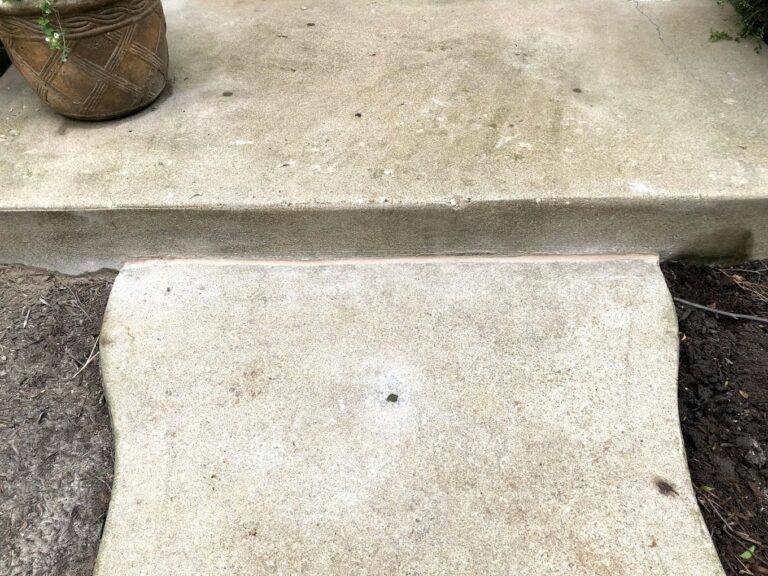
A patio corner beside the house can break because of surface wear, movement, or repeated water at the same spot. We follow the downspout and grade before guessing. If a new surface repair leaves water against the wall, the repair has not solved the homeowner's problem. If a sound panel needs height correction, we set a target that still lets the door open and rain leave the house. None of that proves an underground condition from sight alone. We write down what we can see and what remains covered by concrete. A drainage change can be a separate line in the estimate.
ACI's horizontal repair guide is general technical guidance, not a specification for this house.
Concord Engineering publishes a driveway-permit route. The city's FAQ says a driveway permit is needed before driveway work; a private patio or basement floor is a separate scope.
Read the Concord source. We check the approval path against the proposed scope.
A crack in a walkway does not mean the foundation failed. We check whether the building shows related movement: doors that recently stick, a wall that has shifted, or a floor that changed slope. If the signs stay in a separate outdoor panel, the job may remain concrete repair. If movement runs into a load-bearing part of the house, we inspect the structural system before recommending a surface fix. A new patio patch would be an expensive distraction from a moving footing. The opposite is also true: one stable hairline in a patio does not justify a foundation job.
We mark the exact Concord panel or edge and say why it can be kept, leveled, patched, or removed. That makes competing quotes easier to compare. A patch may differ in color from old concrete. Leveling will not erase old cracks. Replacement changes access while the new slab cures. We put those limits next to the scope. If the work reaches the driveway, the permit route is checked before construction. If it is only a patio or entry landing, we do not drag a street-side rule into the job. You should know what the free visit answered and what it did not.

A photo helps most when you can take the next one from the same place. Put a ruler beside the opening, include a fixed edge in the frame, and note when you took it. That does not diagnose the cause. It does show whether a line or height difference changed while you waited for an inspection. If the concrete is loose, keep people off the edge instead of testing it with a shoe. If a door or wall inside the house changed at the same time, photograph that too. We can then compare the outdoor slab with the building without pretending one picture proves they moved together. Sometimes the record points to a small patch. Sometimes it tells us to pause the concrete quote and inspect the support first.
Old concrete has a color and texture a fresh repair may not match. A lifted panel can still carry an old crack. The injection points, if that method is chosen, can remain visible after they are closed. A new pour changes the surface but does not promise to correct water coming from a wall or a downspout. We will say which of those outcomes matter to you before pricing the work. If the patio is sound and the issue is only appearance, you may decide to leave it alone. If the lip catches a foot or sends water toward the house, the useful target is function first. The written scope should name that target and the finish limit, not just say "fix concrete."
Sometimes. We check whether the remaining panels are sound, identify the specific repair, and confirm the driveway permit route before work.
Show us the concrete and we will tell you what is worth fixing, what can stay, and what still needs checking.

