



A low patio and a broken slab edge are not the same repair, so start with the right question.
Sound surrounding concrete with a limited damaged edge may support a focused repair.
A sound but low slab belongs in a concrete-leveling assessment.
Broken pieces may need a new pour. Movement tied to the building needs a structural check.
Diagnosis begins with behavior, not with the crack. A patio outside the door that slopes toward the house is a drainage and support question. A walk near the road that has a broken edge may be a local edge repair. A surface with map cracking and no vertical movement is often a surface issue. A crack that widens with seasons, or one paired with a sticking door nearby, points to movement that needs a different look. We check slope, edge condition, joint condition, and whether the panel is still sound underfoot. The goal is to place the slab in one of four buckets: sound but low, repairable edge or surface, removal and re-pour, or movement-related crack. That placement drives everything after it.
Not every slab earns a full replacement. A sound panel that is low but intact can sometimes be lifted or left alone if drainage is acceptable. A chipped or spalled edge can be repaired without tearing out the field of the slab. A surface that has scaled but is structurally sound may only need a surface repair. Removal and re-pour may fit a slab broken into moving pieces or one with a failed base. Compare that scope and price with a repair before deciding. The written scope should name which panels stay, which get repaired, and which get removed. That list is what keeps a small edge job from quietly becoming a full tear-out.

Repair selection follows the diagnosis. A sound but low panel is assessed for lifting, which depends on access, panel size, and whether the void under it can be reached. A broken edge or spalled surface is prepared and rebuilt as a local repair, with the surrounding sound concrete left in place. A slab that has failed structurally is a removal and re-pour candidate, because patching moving pieces does not restore a stable surface. A crack tied to building movement is not treated as a flatwork repair until the movement question is addressed.
ACI's horizontal repair guide is general technical guidance, not a specification for this house.
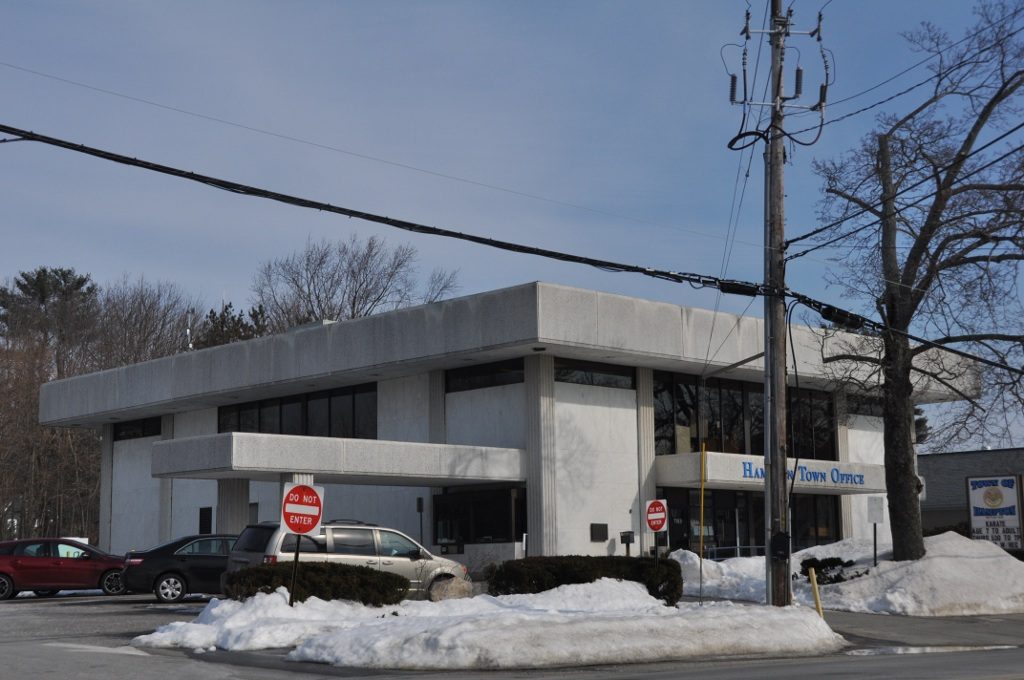
Hampton's driveway application separates a new drive, resurfacing, and changes to an existing drive, and its plan marks the town right-of-way. That matters here because a repair that reaches the sidewalk edge may touch a public-side question the town controls. The same document does not set an excavation-permit rule for a slab lift. We use it only to show why the scope line near the right-of-way should be marked before work, not to claim a permit outcome.
Read the Hampton source. We check the approval path against the proposed scope.
The common failure is treating every crack as structural or every low slab as a lift candidate. A surface crack in a stable panel does not need piers, and a structural slab does not always need piers either. Another risk is repairing a surface over a base that is still moving, which brings the same failure back. A repair that reaches the sidewalk edge can cross into a public-side question the town controls, and that is outside a private flatwork quote. Hidden conditions under a slab, such as a failed base or a void that cannot be reached, can change the scope after opening. We write those limits into the estimate so you can see where the repair stops and where a different trade or the town may need to step in.
Access, slope, and the boundary line shape what is practical. A patio outside the door may be reachable with small equipment, while a walk near the road may sit close to a boundary line that limits where work can go. Drainage matters: a panel that sheds water away from the house is doing its job even if it is not perfectly level. The slope away from the foundation is part of the inspection, not an afterthought. We also look at how the slab meets steps, walls, and other flatwork, because a repair that ignores those connections can leave a trip edge or a new water path. These constraints are why the same crack can have two different scopes on two different properties.

A useful estimate is a measurement document, not a verbal guess. It should name the panels in scope, the repair type for each, and the limits of the work. If lifting is considered, the estimate should say what is being assessed and what would rule it out. If removal and re-pour is the path, the estimate should separate removal, base preparation, and the new pour. We do not promise a specific method. The estimate gives you a clear decision point: approve the repair, ask for a smaller scope, or stop and get more information.
Sometimes the honest answer is no repair. A sound panel that is slightly low but still drains away from the house may not need work. A hairline crack in a stable slab may only need monitoring. A surface blemish that is not getting worse may be left alone. If the only issue is appearance and the slab is performing, spending money does not improve the function. The smaller-work path is a local edge repair or a surface repair instead of a full replacement. We will tell you when the scope can shrink and when it cannot. The decision is yours, and a clear no-work recommendation is a valid result of the inspection.
Not necessarily. A sound panel that is low but intact may be a candidate for lifting or may be left alone if it still drains away from the house. A full replacement is usually reserved for slabs that are broken into moving pieces or have a failed base. The inspection and written scope will say which path fits your slab, and you can decide from there.
Show us the concrete and we will tell you what is worth fixing, what can stay, and what still needs checking.

