



That low slab by the road might just need a lift, or it might need a full replacement.
Sound surrounding concrete with a limited damaged edge may support a focused repair.
A sound but low slab belongs in a concrete-leveling assessment.
Broken pieces may need a new pour. Movement tied to the building needs a structural check.
Cracks get attention, but they are not the first question. On a Hudson driveway panel or front path, we ask whether the concrete is still doing its job. Is the panel sound but low? Does water sit against the house? Is the lip at a walking surface a trip hazard? A crack can be cosmetic, a joint that opened, or a sign of movement under the slab. We do not treat every crack as structural. We look at width, direction, offset, and whether the slab has settled or heaved. The repair decision follows the diagnosis. If the slab is stable and the crack is not changing, monitoring may be the honest answer.
Not every slab needs to come out. A sound panel that has settled evenly can sometimes be lifted back toward grade. A broken corner or a spalled surface may be repairable with a partial-depth patch if the base is intact. But a slab that is cracked through, crumbling, or moving as separate pieces is usually a removal and re-pour candidate. The same goes for a slab with poor drainage that keeps pulling water under the edge. On a front path, we measure the lip where people actually walk. If the offset is small and stable, grinding or a small patch may be enough. If the slab is hollow or rocking, patching will not last.
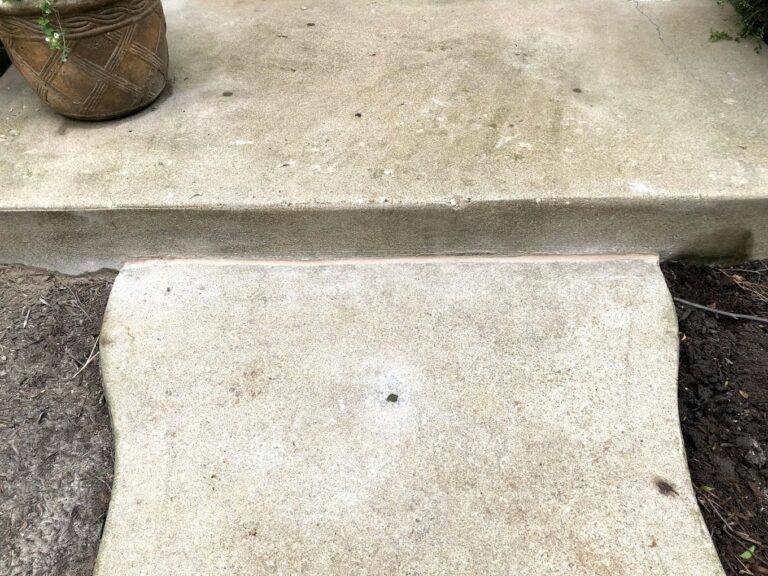
Repair selection starts with what moved and why. For a low but sound driveway panel, slabjacking assessment looks at whether the slab can be lifted without cracking. That is not always the right call. If the slab is thin, badly cracked, or sitting on failed base, lifting may not hold. For a surface defect, preparation matters more than the patch material. The area must be clean, sound, and properly shaped before repair. For a crack associated with building movement, the fix may belong to the foundation or drainage scope, not the flatwork. We do not claim to follow a specific industry standard on every job. We use the method that fits the slab in front of us.
ACI's horizontal repair guide is general technical guidance, not a specification for this house.
Hudson Engineering lists driveway applications among its work. A particular road-connection project and drainage scope still require town confirmation. For a concrete section near the road, record how water moves before picking a lift height. If the job reaches the driveway connection, the municipal drainage question belongs in the plan. That is why we trace runoff along the curb or swale and compare the low panel with the road approach before recommending work.
Read the Hudson source. We check the approval path against the proposed scope.
Some concrete problems point to a bigger issue. If a slab moves because of a failing retaining wall, a broken drain line, or water running against the foundation, patching the concrete will not fix it. We can identify that and tell you the repair falls outside a concrete repair scope. We do not claim leveling is always cheaper or that a structural slab always needs piers. Those are decisions for a site-specific evaluation. If we cannot help, we will say so.
The same crack can mean different things on different sites. Slope, runoff, and how water leaves the property matter as much as the concrete itself. On a driveway, we compare the low panel with the road approach and trace runoff along the curb or swale. On a front path, we look at where water ponds and how the walk meets the steps. We do not infer soil type, water table, or typical local house construction. Those are site-specific. What we can do is observe drainage patterns, check for hollow spots, and note any movement at the building. If the slab is near a foundation, we keep exterior flatwork decisions separate from structural repair decisions.

A useful estimate starts with measurements. We record slab dimensions, crack widths, and the height difference at the worst spot. On a driveway, we note the distance to the road approach and where water crosses the curb. On a front path, we measure the lip at the walking surface. We take photos and mark the areas that need repair. The written estimate separates what can stay, what can be patched, and what needs removal. It does not include engineering unless we say so. If the scope depends on a drainage fix, we write that as a condition. You should know what you are buying before work starts.
Sometimes the best repair is no repair. A hairline crack in a stable slab that is not widening and not letting water in may only need monitoring. A low panel that does not pond water or trip anyone may not justify the cost of lifting. A small spall on a path that is not getting worse can wait. We will tell you if the slab is sound enough to leave alone. We will also tell you if a smaller repair, like grinding a lip or sealing a joint, is enough. The goal is not to sell a replacement. The goal is to fix what is actually broken and leave the rest alone.
Not necessarily. A single low panel that is otherwise sound may be a candidate for leveling. A cracked panel that is still stable might be patched or left alone. Replacement is usually for slabs that are broken into pieces, crumbling, or moving as a whole. The decision depends on the slab condition, drainage, and how you use it. We can measure it and give you a written scope with options.
Show us the concrete and we will tell you what is worth fixing, what can stay, and what still needs checking.

