



A low slab, a broken edge, and a moving crack are three different repair decisions.
Sound surrounding concrete with a limited damaged edge may support a focused repair.
A sound but low slab belongs in a concrete-leveling assessment.
Broken pieces may need a new pour. Movement tied to the building needs a structural check.
Diagnosis begins with movement and support, not appearance. A hairline crack that has stayed the same width for years is usually a maintenance item. A crack that is wider at one end, has a vertical offset, or keeps opening points to something changing under or beside the slab. A sound-but-low panel that has settled evenly is a different case from a slab broken into several rocking pieces. For a hypothetical Pelham parking pad, check the pad against the garage door and watch whether the gap changes. For a front step, compare the tread to the entry threshold. Those fixed edges tell you whether the concrete moved or the building did.
Not every slab needs removal. Concrete that is sound, not crumbling, and still supported can sometimes be left alone or repaired at the surface. A chipped step edge, a spalled patch, or a shallow crack can be cleaned, prepared, and patched without tearing out the whole pour. A low but intact panel may be a candidate for lifting rather than replacement. The decision hinges on whether the concrete is still one piece and whether the subbase is stable. If the panel is cracked through, rocking underfoot, or draining toward the house, keeping it in place may cost more later than dealing with it now.

Repair selection follows the failure mode. Surface damage calls for preparation and patching. A settled but sound slab calls for an assessment of whether lifting is practical. A slab that is broken, badly undermined, or tied to a structural concern calls for removal and re-pouring or a referral. ACI RAP-7 discusses horizontal concrete repair preparation, ACI RAP-11 discusses slabjacking assessment, and ACI RAP-1 discusses structural concrete cracks. The practical point is that the method should match the cause. Patching a moving crack or lifting a broken slab usually wastes money.
ACI's horizontal repair guide is general technical guidance, not a specification for this house.
Pelham's driveway-entrance permit application identifies the proposed access location. A dropped private parking pad is a different scope from changing a road entrance. Keep that boundary clear in the quote. A small leveling or repair request should not be assumed to require driveway reconstruction, and a private flatwork repair should stay separate from any structural slab quote.
Read the Pelham source. We check the approval path against the proposed scope.
Some conditions are outside a normal concrete repair scope. A crack associated with building movement, a failing foundation wall, or a slab that has dropped because of a broken drain line is not fixed by patching the surface. If the concrete is part of a structural system, a repair contractor should not guess at load capacity. If the soil under a slab is washing out, the source of the water matters more than the patch. And if the work would change a driveway entrance onto a road, that is a separate permitting question. A repair quote should state clearly where concrete work ends and where engineering, drainage, or excavation begins.
Access, drainage, and fixed edges shape what is practical. A parking pad may sit tight against a garage door, a step against a threshold, and both have a finished height that cannot be guessed. Slope matters: water should leave the slab, not pond on it or run toward the building. That does not describe a load-bearing slab. It simply means private pad repairs and road-entrance changes are different scopes and should be quoted separately.
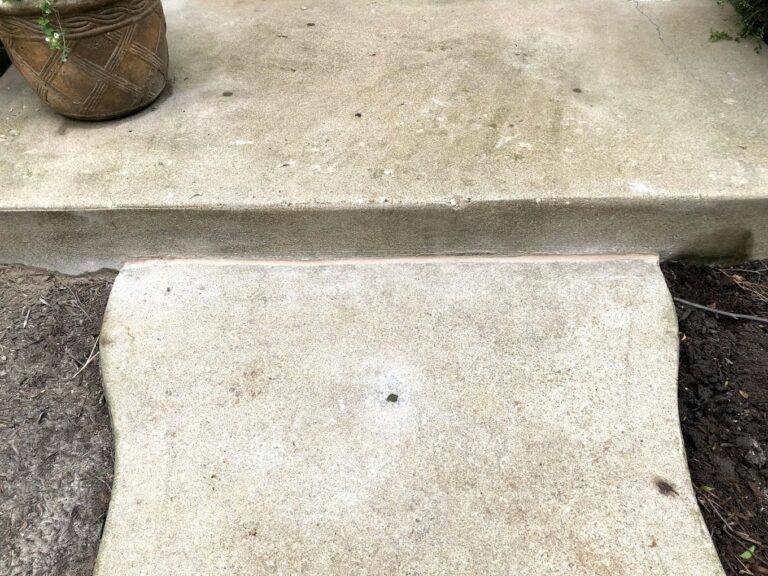
A useful estimate starts with measurements and photos, not a lump sum. It should identify the slab or step, note the crack width and any offset, and state whether the concrete is sound, broken, or moving. It should say what will be removed, what will be poured or patched, and what will be left alone. If leveling is proposed, the estimate should explain how the result will be checked against the garage door or threshold. If the scope depends on what is found after opening, that should be written as a condition. Ask for the exclusions: drainage, soil correction, and structural review are common ones.
Sometimes the honest answer is to wait. A stable hairline crack in a slab that drains correctly may only need monitoring. A low panel that is not tripping anyone and is not getting worse may not justify the cost of lifting. A small chip on a step can be patched or left until it spreads. The decision to do nothing is valid when the concrete is sound, the movement is not progressing, and no safety or drainage issue exists. If you are unsure, mark the crack with a date and check it in a few months. That record is more useful than a rushed repair.
Look at movement, not only the crack. If the width is stable, the slab is sound, and water drains away, monitoring may be enough. If the crack is widening, has a vertical offset, or the slab rocks, get an inspection. A repair may still work for a sound but low panel. A broken or moving slab may need removal and re-pouring. The right next step is a site review with measurements and a written scope. We can help you decide which path fits your slab.
Show us the concrete and we will tell you what is worth fixing, what can stay, and what still needs checking.

