



A chipped step and a low driveway panel may look like one problem. They are not.
Sound surrounding concrete with a limited damaged edge may support a focused repair.
A sound but low slab belongs in a concrete-leveling assessment.
Broken pieces may need a new pour. Movement tied to the building needs a structural check.
A broken corner at the front step is easy to point at. The harder question is whether the remaining concrete is sound and still supported. We look for loose edges, the step above, and where water travels after rain. A chipped but stable patch is one conversation. An intact panel sitting low is another. When a slab is breaking into loose pieces, removal and a new pour may be more honest than a cosmetic cover or a lift that cannot rebuild the surface. We make that distinction in front of you, not from one photograph. The free inspection is where the repair or no-repair decision starts.
A driveway panel can settle without cracking apart. If the concrete is intact, the edges are not crumbling, and the low spot is not holding water against the house, leveling may be a reasonable option. The same is true for a patio slab that has dropped evenly. The decision depends on whether the panel can move without binding and whether the support problem has been understood. We do not assume leveling is always cheaper or always right. If the surface is already breaking into pieces, a lift will not rebuild it. In that case, keeping the slab is not a favor to you.
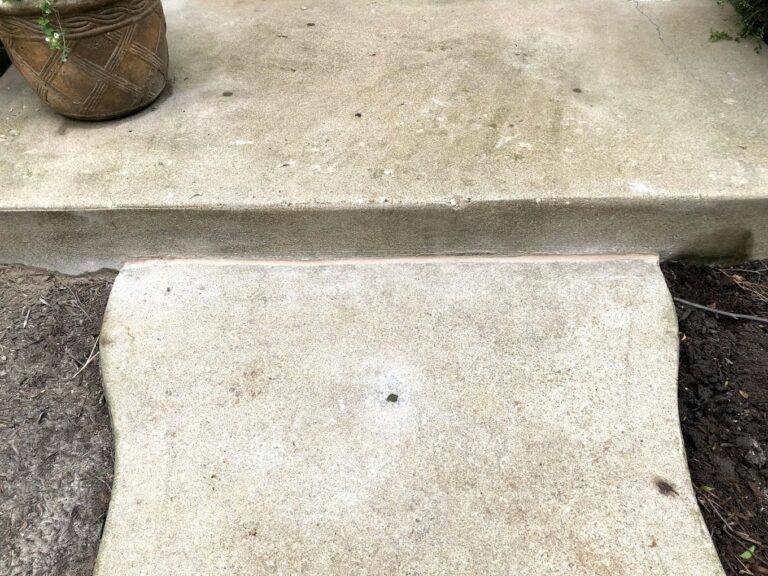
Surface loss and settlement are different defects. Concrete that has broken apart may need removal and replacement. We also check whether the damage keeps returning. A small surface patch on a corner that keeps breaking may be a short-lived answer. The written scope should name the exact panel, the reason for the recommendation, and the finish you can expect. Old stains and cracks do not vanish because a slab was lifted. A patch may look different from the surrounding concrete. Those limits belong next to the price.
ACI's horizontal repair guide is general technical guidance, not a specification for this house.
Portsmouth's city policy distinguishes brick public walks from driveway aprons. That distinction matters when exterior flatwork near the road is being considered, because it helps mark where a private concrete scope may end. It does not decide who controls a particular panel at your address, and it says nothing about a load-bearing slab or foundation. Any question about a city-side walk or apron stays open until the city answers it.
Read the Portsmouth source. We check the approval path against the proposed scope.

A patio crack beside the wall may be a patio problem. It may also be one clue in a wider movement pattern. We check the wall, nearby doors, the indoor floor, and whether the crack has changed. We do not call a house unstable because of one line in exterior concrete. But if the building and the slab appear to move together, a flatwork patch would answer the wrong question. That is when we move the inspection toward foundation repair or slab foundation repair. The written quote should show which work is included and which concern remains open. Do not hide a foundation question under a cosmetic repair.
Portsmouth's walk and apron policy is useful when the trouble is near the road. It tells us to mark the public and private boundary before writing a private-concrete quote. It does not tell us whether an individual leveling, patch, or replacement project has permission to proceed. A driveway panel beside the garage has a different set of fixed edges: the door, adjacent pavement, and any drain. We measure where the tire catches and where water collects. If a proposed repair reaches a city-controlled walk or apron, that question goes to the city before anyone assumes it belongs in this estimate.

A useful Portsmouth proposal names the exact panel, the reason for the recommendation, and the finish you can expect. Replacement affects access and cure time. Drainage correction should be separated from the concrete work. If a public-side boundary still needs an answer, it stays an open item rather than a promise buried in the quote. We also note what the repair will not fix: old stains, mismatched patch color, or a crack that has been moving for years. Take a photograph of the problem joint first. It gives both of us a fair way to compare the result after the work is done.
Some cracks and chips do not need work yet. A hairline crack in a driveway panel that has not changed may be a maintenance item, not a repair project. A small chip at a step edge may stay stable for years. We will say when none of the treatments is justified. That is not a sales tactic. It is the same decision sequence we use when the damage is real. If the concrete is sound, the support is intact, and water is not being directed toward the house, the honest scope may be monitoring and a written note. You can revisit it if the crack widens or the panel drops.
Sometimes, but they are two scopes. We inspect each piece and its support before deciding whether either one is worth keeping. A chipped but stable step may take a focused patch. A sound but low driveway panel may qualify for leveling. If the step is breaking into loose pieces, a patch may be short-lived. The written scope separates them.
Show us the concrete and we will tell you what is worth fixing, what can stay, and what still needs checking.

